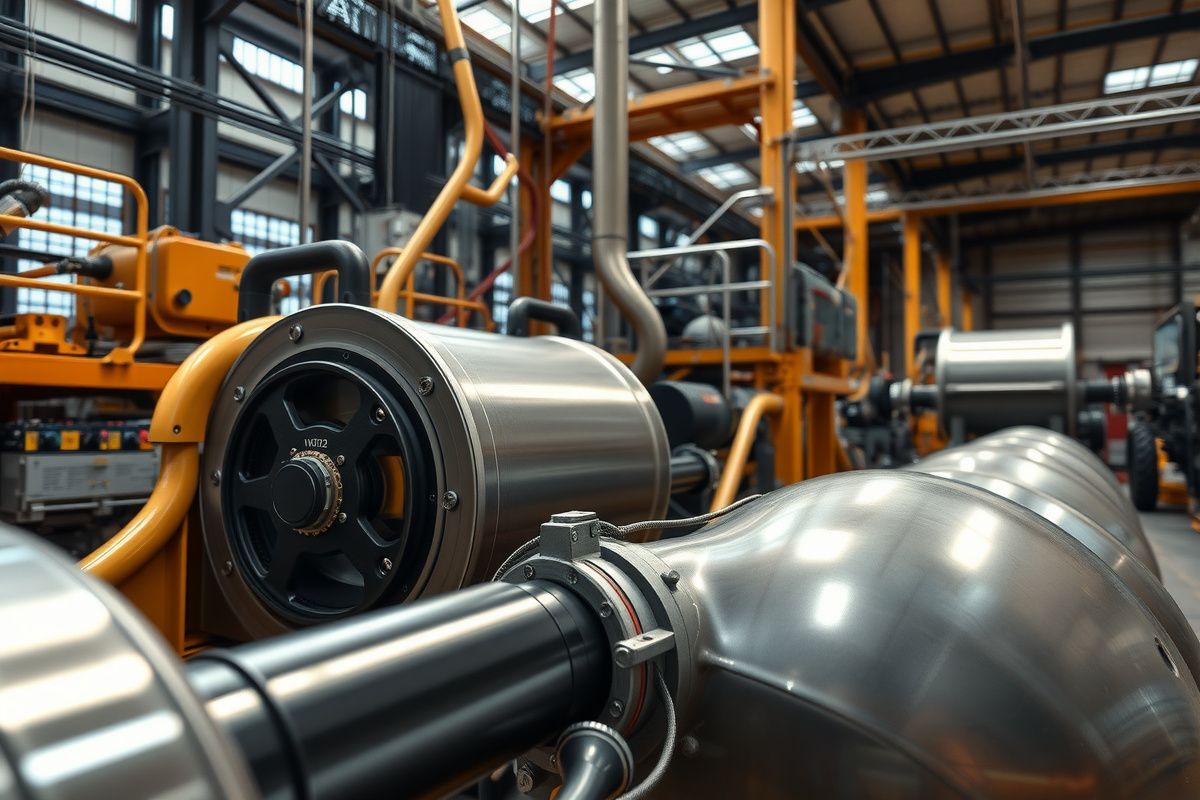
In the modern world, where resources are becoming increasingly limited and environmental challenges are acquiring a global scale, industrial symbiosis acts as a critically important strategy for sustainable development. This innovative approach allows enterprises to rethink traditional production models, transforming waste from one process into valuable resources for another. It contributes not only to a significant reduction in the volume of generated waste but also to the optimization of raw materials, energy, and water usage, which is a key to increasing competitiveness and reducing production costs in conditions of growing economic and environmental responsibility.
The relevance of the topic of industrial symbiosis for Ukrainian industry, in particular for enterprises working with large volumes of by-products and waste, is undeniable. The implementation of such strategies allows not only to comply with stricter environmental standards but also to create new business models based on the principles of the circular economy. This opens the way to innovation, increased production efficiency, and the formation of a more sustainable industrial landscape where every element of the system works for the common good, minimizing negative environmental impact and maximizing economic benefits for all participants.
Principles of Industrial Symbiosis Functioning
Industrial symbiosis is based on the idea that waste from one industrial process can be used as raw material for another, creating closed loops of materials and energy. This principle fundamentally differs from the linear "extract-produce-use-dispose" model, moving towards a circular economy model. The technical essence lies in identifying synergistic links between different enterprises, where by-products, excess heat, steam, or even wastewater can be redirected to other participants in the symbiotic network, where they acquire new value. Such an approach requires a deep analysis of production processes, the chemical composition of waste, and the potential needs of other industries.
The operating principle of industrial symbiosis encompasses not only material exchange but also infrastructure integration, knowledge sharing, and joint investments in innovative processing technologies. For example, excess heat from a metallurgical plant can be used to heat nearby greenhouse farms or to generate electricity at another enterprise. The complexity lies in coordination and logistics, as well as in ensuring the quality of "waste" meets the "consumer's" requirements. This often includes the development of standardized processes for the preparation and transportation of these secondary resources, allowing for maximum efficiency and safety throughout the entire cycle. Similar approaches help effectively solve problems related to the management of complex industrial waste.
Practical Aspects of Implementing Synergy Between Enterprises
The application of industrial symbiosis covers a wide range of industries, from heavy industry to agriculture. One classic example is the Kalundborg Industrial Park in Denmark, where a power plant, an oil refinery, a pharmaceutical company, and a plasterboard manufacturer exchange water, steam, gases, and other by-products. Thus, sulfur, a by-product of oil refining, is used for sulfuric acid production, and ash from coal combustion is used in cement production. This demonstrates how seemingly different industries can find common ground for resource optimization.
In Ukraine, the potential for implementing industrial symbiosis is significant, especially in large industrial regions. For example, metallurgical enterprises can exchange slags with the construction industry, using them as fillers for concrete or road surfaces. Chemical plants can transfer their organic by-products for the production of biofuels or fertilizers, similar to how the issue of "Anaerobic liquids from biowaste processing" is resolved in agriculture. This not only reduces the need for primary resources but also creates new economic opportunities and markets for secondary raw materials, increasing the overall sustainability and environmental responsibility of the country's industrial sector.
Ecological Processing of Industrial Waste within Symbiotic Networks
Industrial symbiosis plays a key role in transforming industrial waste from a problem into a valuable resource, significantly reducing the environmental burden. Instead of ending up in landfills, by-products are transformed into raw materials for other productions, which significantly reduces the volume of generated waste. This requires a thorough analysis of the composition and properties of each type of waste, as well as the development of effective methods for their preparation for further use. For example, spent solvents from chemical enterprises can be regenerated and reused, or ash from coal combustion can become a component of building materials, which is an excellent example of resource efficiency.
In the context of industrial symbiosis, UtilVtorProm company provides professional services for handling a wide range of industrial waste that can potentially be integrated into symbiotic networks. Such waste may include: 10 01 02 (fly ash, slags, and dust from coal combustion), which can be used in construction; 07 01 04*** (other organic solvents, washing liquids, and mother liquors), subject to regeneration for reuse; and also 19 08 05 (sludges from wastewater treatment), which after appropriate processing can become raw material for other processes. UtilVtorProm provides environmental services to enterprises, helping them effectively manage waste, transforming it into secondary resources, and contributing to the development of a circular economy, particularly in the context of handling materials such as "Aluminum waste," which can often be reintegrated into the industrial cycle.
UtilVtorProm's Integrated Approach to Circular Economy Integration
UtilVtorProm company is a reliable partner in the field of environmental services, offering a comprehensive approach to industrial waste management and promoting the integration of circular economy principles in enterprises. Our activities are licensed and comply with the highest environmental safety standards, ensuring professional collection, transportation, storage, and processing of various types of waste. We don't just provide services; we help enterprises transform waste-related challenges into opportunities for sustainable development and economic benefit. By contacting UtilVtorProm, you receive not only quality service but also expert support in building more efficient and environmentally responsible production processes that contribute to strengthening industrial symbiosis. We invite you to cooperate to achieve your environmental and economic goals.