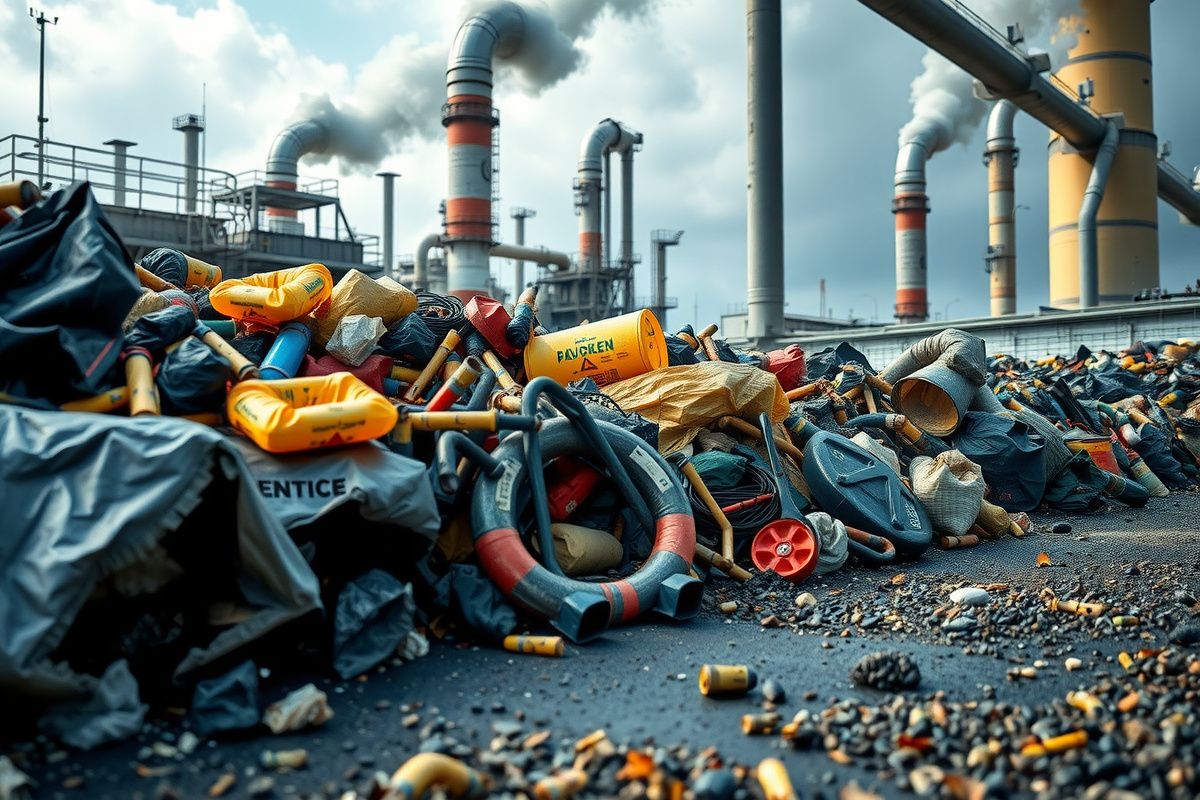
Industrial waste is one of the most serious environmental problems of our time, posing a significant threat to the environment and human health. Every year, millions of tons of various wastes, ranging from toxic chemicals and heavy metals to organic pollutants, enter the soil, destroying its natural structure and biodiversity. This leads to the degradation of agricultural land, pollution of water resources, and the accumulation of hazardous substances in food chains, directly affecting the quality of life and well-being of the population.
The urgency of the problem of soil pollution by industrial waste in Ukraine increases every year, especially given the intensive development of industry and the insufficient implementation of effective waste management systems. Therefore, the search for and application of innovative methods for cleaning contaminated soils is a critically important task for ensuring environmental safety and sustainable development. The company UtilVtorProm actively contributes to solving these challenges by offering comprehensive solutions for environmental services to enterprises.
Chemical composition and migration mechanisms of toxic substances in soil
Industrial waste is characterized by an extremely diverse chemical composition, including petroleum products, phenols, pesticides, heavy metals (lead, cadmium, mercury, chromium), cyanides, radionuclides, and other organic and inorganic compounds. These substances can enter the soil through leaks, accidents, improper storage, or uncontrolled discharge, and then migrate vertically and horizontally, contaminating groundwater and spreading over significant areas. The mechanisms of their migration depend on many factors, such as soil type, its acidity, moisture, the presence of organic substances, and climatic conditions, which complicates the prediction and localization of contamination.
The consequences of soil pollution by industrial waste are long-term and multifaceted, as toxic substances can remain in the soil for decades, constantly affecting ecosystems. They suppress the vital activity of soil microorganisms, destroy soil fertility, make it unsuitable for agricultural use, and can cause mutations in plants and animals. Studies similar to "Analysis of fly ash from the combustion of emulsified hydrocarbons" demonstrate how complex mixtures of pollutants deposited on the soil can be, requiring a deep understanding of their properties for effective remediation.
Innovative biological and physicochemical approaches to soil remediation
Modern innovative methods for cleaning soils from industrial waste are based on the principles of biological decomposition, chemical neutralization, and physical removal of pollutants. Among biological methods, bioremediation occupies a special place, which uses microorganisms (bacteria, fungi) to degrade organic pollutants into less toxic or non-toxic compounds. Phytoremediation, in turn, involves the use of certain plant species capable of accumulating, stabilizing, or decomposing pollutants in the soil, which is an environmentally friendly and economically viable approach.
In addition to biological methods, physicochemical methods are actively developing. Electrokinetic methods, for example, use an electric field to move heavy metal ions and other polar pollutants from the soil to special electrodes. Chemical stabilization involves adding reagents that bind toxic elements, reducing their mobility and bioavailability. Soil washing, solvent extraction, and thermal desorption are also used to remove pollutants. In this context, the analysis of "Anaerobic liquids from biowaste treatment" can provide valuable information for optimizing bioremediation processes, especially when working with liquid industrial waste that pollutes the soil.
Responsible industrial waste management for soil protection
Effective industrial waste management is key to preventing soil contamination. This includes not only cleaning already contaminated areas, but also, first and foremost, minimizing waste generation, proper sorting, collection, temporary storage, and processing. An important aspect is the implementation of modern production technologies that allow reducing the amount of hazardous substances and reusing valuable waste components. Compliance with strict environmental norms and legislative requirements is mandatory for all industrial enterprises to ensure an adequate level of environmental safety.
UtilVtorProm provides comprehensive environmental services to enterprises, helping them responsibly manage industrial waste. We work with various categories of waste that can cause soil pollution. These include soil and stone waste containing hazardous substances (17 05 03*), waste containing hazardous substances not otherwise classified (19 03 04*), as well as fly ash and bottom ashes containing hazardous substances (10 01 04*). Our specialists ensure professional collection, transportation, storage, and processing of these wastes, preventing their negative impact on the environment.
Professional partnership with UtilVtorProm for environmental safety
UtilVtorProm is a licensed company that offers professional services in the field of industrial waste management. Our activity is aimed at supporting enterprises in complying with environmental standards and minimizing their impact on the environment. We use modern technologies and an individual approach to each client, developing optimal solutions for the collection, transportation, storage, and processing of hazardous and other types of industrial waste. By contacting UtilVtorProm, you get a reliable partner who guarantees effective and safe waste management, contributing to the preservation of natural resources and soil purity. We invite you to cooperate to ensure the environmental safety of your enterprise and the environment as a whole.