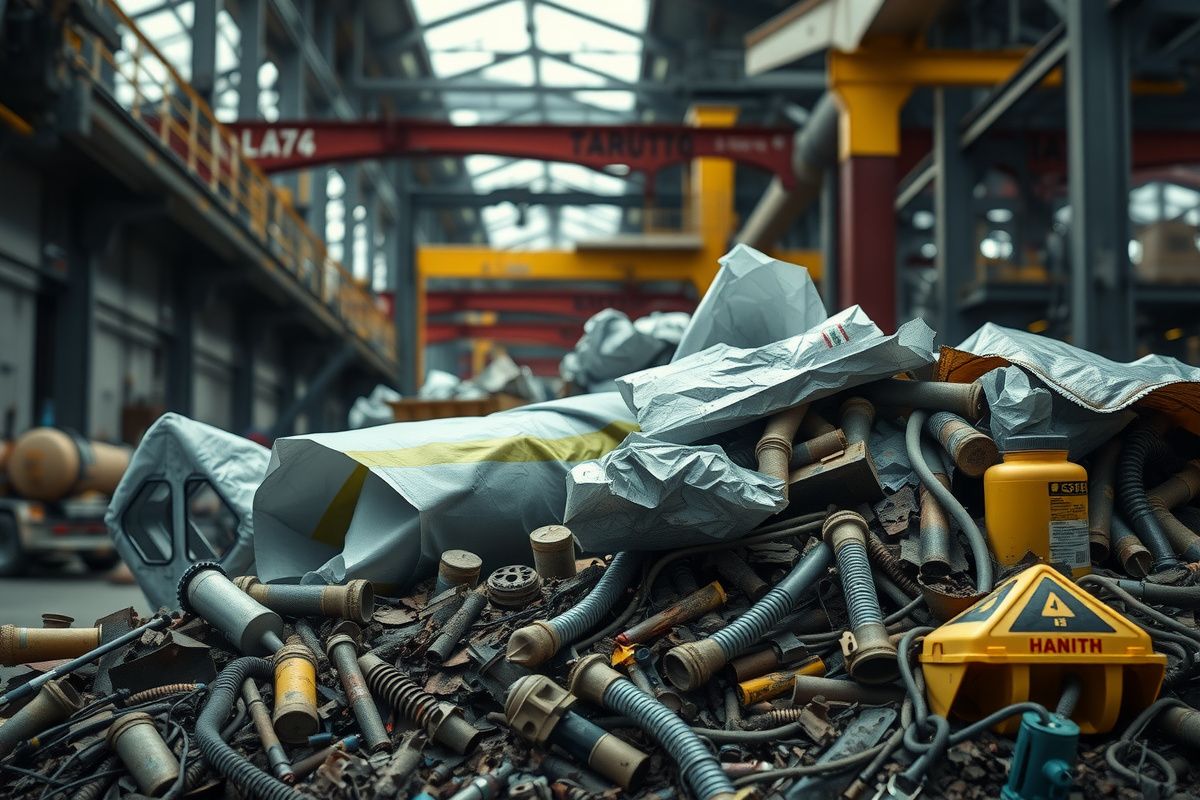
The problem of hazardous waste management is becoming increasingly relevant in modern industrial society, posing serious environmental and economic challenges to humanity. Rapid technological development and increasing production volumes inevitably lead to an increase in the amount of waste, much of which contains toxic, corrosive, flammable, or reactive substances. Improper storage, transportation, or processing of these wastes threatens irreversible consequences for the environment, polluting soils, water resources, and atmospheric air, and also creates a direct danger to human health. Effective solutions in this area are critically important for sustainable development and the preservation of natural ecosystems for future generations, requiring a comprehensive approach and the involvement of specialized companies.
The urgency of this topic is also enhanced by increasing legislative requirements for enterprises regarding responsible hazardous waste management, including the need for activity licensing and adherence to strict environmental standards. Every industrial enterprise, regardless of the scale of its operations, faces the need to develop and implement effective waste management strategies to minimize risks and avoid significant penalties. In this context, the services of professional companies, such as UtilVtorProm, become indispensable, as they provide a full cycle of environmental services, from collection to safe processing, ensuring compliance with all norms and regulations. This allows enterprises to focus on their core activities, confident in the responsible handling of their hazardous residues.
Chemical Complexity And Classification Of Hazardous Waste
Hazardous waste is characterized by an extraordinary variety of chemical compositions and physical properties, making its identification and classification a complex but critically important stage in the management process. These include substances with one or more dangerous properties: toxicity, carcinogenicity, mutagenicity, teratogenicity, corrosivity, flammability, explosiveness, reactivity, infectivity. For example, spent battery cells, both lead-acid and other alternative types, are a prime example of waste requiring a special approach due to their heavy metal and electrolyte content. Understanding these properties allows for the selection of the most effective and safe methods for their collection, storage, and subsequent processing, preventing the uncontrolled release of harmful substances into the environment.
The technical characteristics of hazardous waste are determined by its aggregate state (solid, liquid, gaseous), the concentration of hazardous components, flash point, pH level, radioactivity, and other indicators that influence the potential threat. Each type of waste, from chemical production residues to medical waste containing cytotoxic and cytostatic medications, requires individual analysis and the development of a specialized management program. The principle of neutralization or processing is based on transforming hazardous substances into less harmful forms, stabilizing them, or completely destroying them. This may include thermal treatment, chemical neutralization, physico-chemical separation methods, or biological degradation, which are chosen depending on the specific composition and properties of the waste.
Industries That Generate Hazardous Waste
A wide range of industrial sectors are sources of hazardous waste generation, due to the diversity of technological processes and the use of specific materials. The chemical industry, for instance, generates significant volumes of still bottoms and reaction residues, spent solvents, and dyes. Metallurgical enterprises produce slags, dross, dust from gas cleaning, as well as spent oils and emulsions containing heavy metals. The oil refining industry faces the problem of managing oil sludge, spent fuels such as gas oil or diesel fuel, and various filtering materials. Each of these industries requires individual solutions for the effective and safe management of their specific wastes.
The healthcare and pharmaceutical sectors are also significant sources of hazardous waste, including infectious materials, sharp objects, drug residues, especially cytotoxic and cytostatic ones, as detailed in the article on their safe handling. The construction industry, in turn, generates waste containing asbestos, mercury, and other harmful substances, requiring special attention during demolition and construction work. For example, asbestos-containing building materials, once widely used, are now a serious threat and require specialized processing. The energy sector produces ash, slag, and other wastes from fuel combustion. Even the agricultural sector can generate hazardous waste in the form of pesticide and agrochemical residues.
The electronics industry and mechanical engineering also produce a significant amount of hazardous waste, such as spent battery cells, electronic components with heavy metals, spent lubricating-cooling liquids containing halogens or other dangerous additives. These wastes are often complex multi-component mixtures that require careful segregation and specialized processing to extract valuable resources and neutralize harmful components. Given this, hazardous waste management strategies must be adapted to the unique needs of each industry, considering the specifics of their production and the types of waste generated, which emphasizes the need for deep knowledge and experience in this field.
Comprehensive Solutions For Hazardous Industrial Residue Management
Effective hazardous waste management requires a systemic approach that covers all stages: from their collection and temporary storage on the enterprise's premises to transportation, processing, and final disposal. Each stage is strictly regulated by legislation and international standards to minimize risks to the environment and human health. Special attention is paid to the correct labeling and packaging of waste, the selection of appropriate transport vehicles and routes, and ensuring the safety of personnel working with hazardous substances. For example, wastes such as spent oils (HWС 16 01 07*) or contaminated absorbents and filtering materials (HWС 15 02 02*) require airtight packaging and transportation by specialized vehicles with appropriate permits.
UtilVtorProm company provides a full range of environmental services to enterprises, ensuring professional and licensed handling of a wide spectrum of hazardous waste. We work with various categories, including asbestos-containing waste (HWС 17 06 05*), battery cells classified as hazardous (HWС 16 06 01*, 16 06 02*, 16 06 03*), and many others. Our activities cover collection, transportation, temporary storage, as well as environmentally safe processing and disposal of waste in accordance with all current regulations. We guarantee full compliance with environmental standards and provide all necessary documentation, confirming the legality and transparency of the process, which is key to our clients' reputation and responsibility.
Professional Solutions From UtilVtorProm For Your Business's Environmental Safety
Cooperation with UtilVtorProm is a choice of professional approach and reliability in the field of hazardous waste management. Our company holds all necessary licenses and permits for its activities, ensuring full compliance with Ukrainian and international environmental legislation. We offer individual solutions for each client, developing optimal schemes for waste collection, transportation, and processing, considering their specifics and volumes. Our team of highly qualified specialists has many years of experience working with the most complex types of hazardous materials, using modern equipment and advanced technologies. Contact UtilVtorProm to ensure the environmental safety of your enterprise and contribute to preserving a clean environment.