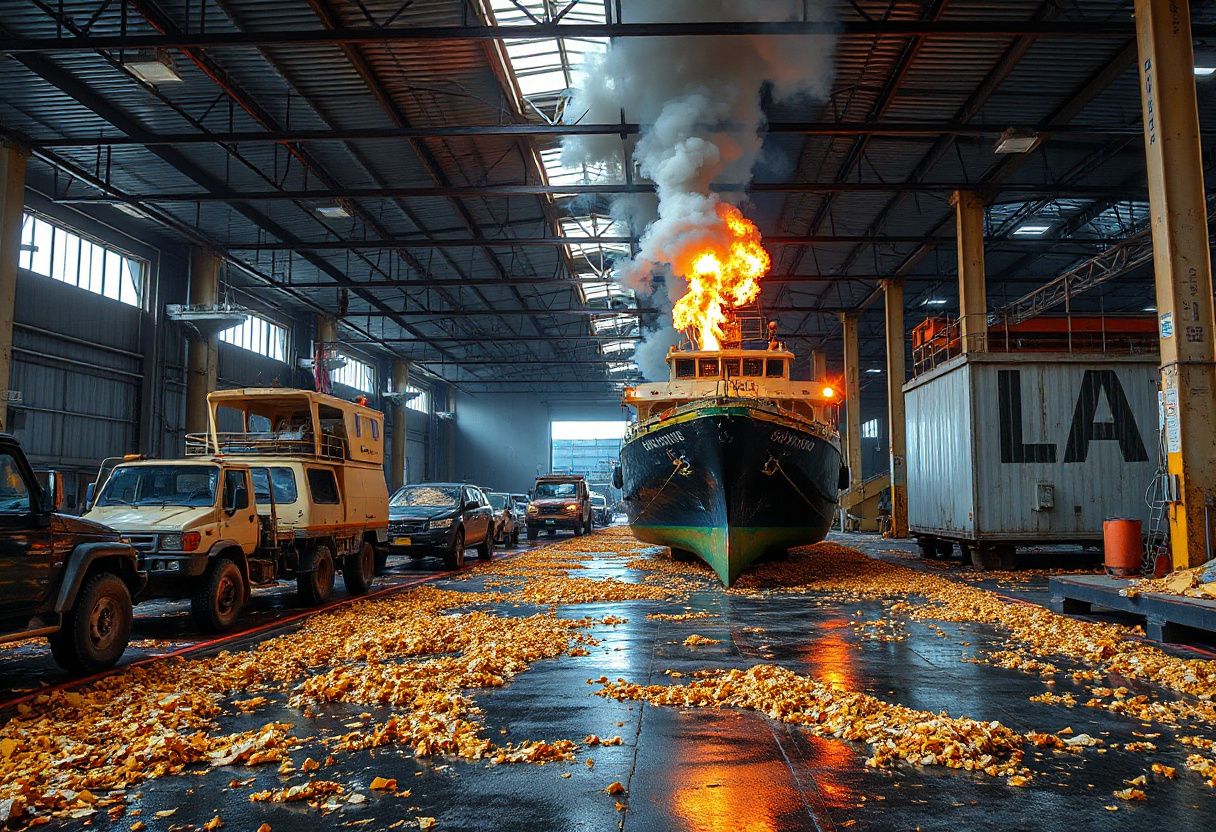
The accumulation of toxic paint residues in dock complexes creates a constant threat of organic vapor ignition. Accidental discharge of toxic solvents into the coastal waters causes mass mortality of benthic organisms and fish. Prolonged storage of opened containers with material residues leads to the evaporation of xylene, toluene, and toluenediisocyanate directly into the working area of paint shops. Contaminated soils around shiprepair sites lose their capacity for natural self-restoration for decades.
During the anticorrosive treatment of ship metal hulls, craftsmen apply two-component epoxy and polyurethane enamels with a high solids content. Flushing Graco airless spray equipment requires significant volumes of technical solvents, which quickly become saturated with heavy pigments. Hazardous sludge quickly settles. The curing rate of material residues directly depends on the temperature regime in the workshop and the concentration of the added amine-based hardener. An incorrect choice of the liquid phase treatment method leads to the blocking of drainage utilities.
Application of epoxy resins and mixtures with code 08 01 11*
Protection of ship hulls requires the application of thick-layer coatings with high resistance to salt water. The composition of such mixtures includes toxic heavy metals, in particular zinc and titanium compounds. Waste paint and liquid sludges after mechanical cleaning of painting booths form hazardous substances with the code 08 01 11*. The efficiency of subsequent neutralization of these materials depends on the proportion of volatile organic components. The presence of more than 15% aggressive acetone or ethyl acetate in the liquid mass makes its direct disposal at conventional landfills impossible. The liquid fraction requires preliminary phase separation and high-temperature thermal destruction in special reactors with additional gas afterburning.
Thermal neutralization of toxic substances at 1100 °C
High-temperature incineration of shipbuilding sludges is carried out in special high-temperature furnaces at a stable temperature of at least 1100 °C. What equipment is capable of ensuring the complete destruction of stable aromatic ring compounds without the formation of toxic furans in flue gases? The answer lies in the use of two-stage incinerators with a long gas phase residence time. The mixture is fed into the combustion chamber through special nozzles under a pressure of up to 6 bar for maximum atomization. The resulting dry precipitate completely loses its toxic properties and fire hazard upon completion of the procedure. The solid residue is transferred for further neutralization to specialized sites.
Regulations for the collection of solvents under code 14 06 03* at shipyards
Flushing the technological equipment of shipyards generates significant volumes of contaminated organic solvents. This type of liquid residue is officially classified under the classification code 14 06 03*. The completeness of spent solvent regeneration directly depends on the degree of its contamination with solid inclusions of pigments and binders.
At shipyards, spent solvents are collected in sealed steel barrels with an anti-corrosion coating and corresponding hazard labeling. Temporary storage sites must be equipped with explosion-proof forced exhaust ventilation and pallets to collect potential spills. Fluid leakage causes ignition. Transportation of accumulated materials outside the enterprise is carried out by specially equipped trucks with a permit for the carriage of dangerous goods. The processing of shipbuilding paint waste is carried out by the certified enterprise UtilVtorProm on special equipment.
Initial contact with the client enterprise begins with a detailed analysis of the component composition of the identified waste. Specialists visit the site to accurately determine the volumes of accumulated solvent residues. Next, the collection schedule is agreed upon. After this, UtilVtorProm accepts the batch of materials for further environmentally safe processing.