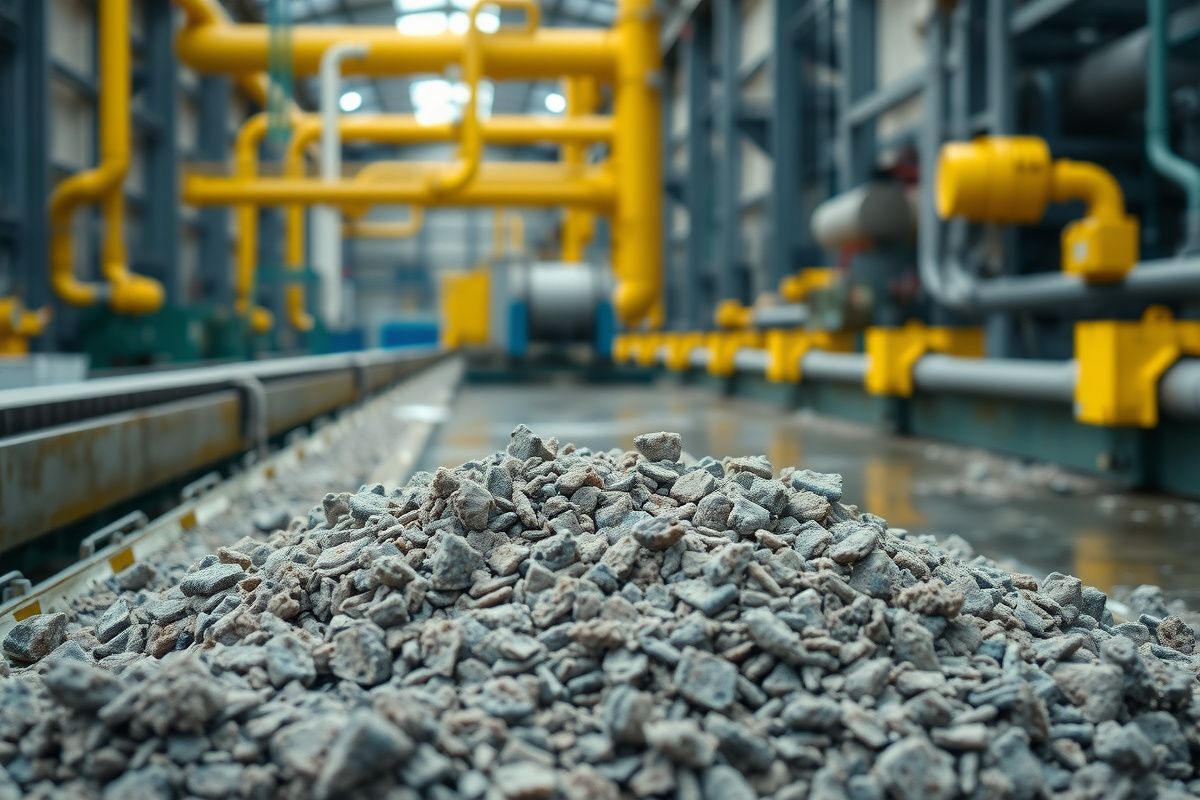
In modern industrial production, one of the most pressing challenges is the effective management of industrial wastewater sludge. These wastes, generated as a result of industrial wastewater treatment, often contain a significant amount of organic and inorganic pollutants, heavy metals, pathogenic microorganisms, and other hazardous substances. Improper handling can lead to serious contamination of soil, water bodies, and air, posing a threat to human health and the ecosystem as a whole. Therefore, the development and implementation of innovative methods for processing and utilizing industrial sludge are critically important tasks for ensuring sustainable development and minimizing the negative impact of industry on the environment. Effective management of industrial sludge also opens up opportunities for the recovery of valuable resources, such as biogas, fertilizers, or construction materials, which contributes to the circular economy and reduces dependence on primary raw material sources.
UtilVtorProm, as a leading specialist in environmental services for enterprises, pays special attention to the development and implementation of comprehensive solutions for managing industrial wastewater sludge. Our goal is not only to ensure safe and efficient processing of these wastes but also to maximize their potential for obtaining secondary resources. This allows enterprises not only to comply with strict environmental regulations but also to optimize their production processes, reducing costs and improving their environmental reputation. Modern technologies allow turning industrial sludge from a problem into a valuable resource, which is an important step towards creating a more sustainable and environmentally responsible industry. Our experts constantly explore new approaches and technologies to offer clients the most effective and economically viable solutions.
Technological aspects of industrial wastewater sludge treatment
Industrial wastewater sludge is characterized by an extremely complex and variable composition, which depends on the type of production, the technologies used, and the composition of the initial wastewater. The main components of sludge are organic substances (proteins, fats, carbohydrates), mineral impurities (sand, clay, salts), heavy metals (lead, cadmium, mercury), petroleum products, as well as various chemical compounds and microorganisms. The moisture content of sludge can range from 80% to 99%, which significantly complicates its transportation and further processing. For effective handling of such waste, various methods are used, including mechanical, physicochemical, and biological processes. Mechanical methods, such as thickening and dewatering, are aimed at reducing the volume of sludge and increasing the content of dry matter, which is the first step towards their further processing. These include gravity thickening, flotation, centrifugation, and filter pressing, which significantly reduce the volume of sludge and prepare it for further treatment stages.
Physicochemical methods of sludge treatment include coagulation, flocculation, chemical stabilization, and thermal drying. Coagulation and flocculation are used to aggregate small particles into larger flocs, which facilitates their settling and dewatering. Chemical stabilization, for example, liming, reduces the mobility of heavy metals and pathogenic microorganisms, making the sludge less hazardous. Thermal drying, in turn, significantly reduces the moisture content of sludge, transforming it into a granular or powdered product, which facilitates its storage, transportation, and further use. Biological methods, such as anaerobic digestion (methane generation) or composting, are used to decompose organic substances contained in the sludge. Anaerobic digestion allows obtaining biogas, which can be used as an energy source, and composting converts sludge into organic fertilizers. The choice of a specific method or their combination depends on the composition of the sludge, its quantity, the availability of necessary equipment, and economic feasibility.
Modern approaches to the use of industrial wastewater sludge
Modern technologies allow not only effective processing of industrial sludge but also its use as secondary resources, which promotes the principles of the circular economy. One of the most promising directions is the production of biogas through anaerobic digestion. This process allows converting organic components of sludge into a mixture of methane and carbon dioxide, which can be used to generate electricity, heat, or as fuel for vehicles. After anaerobic digestion, digested sludge remains, which, after additional treatment (e.g., composting or thermal drying), can be used as organic fertilizer. This allows returning nutrients (nitrogen, phosphorus, potassium) back into agricultural circulation, reducing the need for mineral fertilizers and improving soil fertility. Such solutions are implemented in many enterprises with significant volumes of organic sludge, particularly in food production and agro-industrial complexes.
Another important direction is the use of treated sludge in construction. After appropriate thermal treatment (e.g., drying or incineration with subsequent sintering), sludge can be used as additives to building materials such as cement, concrete, or ceramics. This reduces the cost of primary raw materials and also reduces the volume of waste sent to landfills. For example, ash formed after sludge incineration can be used as a filler in the production of building blocks or road pavements. There are also technologies for converting sludge into granules or briquettes, which can be used as alternative fuel in industrial furnaces. The choice of a specific method of use depends on the chemical composition of the sludge, its physical properties, and the requirements for the final product, as well as on economic feasibility and the availability of appropriate technologies and infrastructure. UtilVtorProm provides consultations and develops individual solutions for each client, taking into account the specifics of their production and local conditions.
Environmentally safe management of industrial wastewater sludge
Improper handling of industrial wastewater sludge poses a serious threat to the environment, so its collection, transportation, storage, and processing must be carried out in accordance with strict environmental standards and legislation. Industrial wastewater sludge is classified as hazardous waste due to the potential content of toxic substances. According to the National Waste List (NWL), these wastes may have different codes, depending on their origin and composition. For example, sludge from urban wastewater treatment plants containing industrial impurities may be classified as 19 08 05* (sludge from the treatment of municipal and/or industrial wastewater not falling under code 19 08 06). Sludge from industrial wastewater treatment containing hazardous substances may have code 19 08 07*. Sludge from industrial wastewater treatment that does not contain hazardous substances may be designated with code 19 08 08. Our company UtilVtorProm provides a full range of environmental services for enterprises, including identification, classification, collection, transportation, processing, and disposal of industrial sludge, ensuring full compliance with all regulatory requirements.
We understand that each type of industrial sludge requires an individual approach, so our specialists conduct a detailed analysis of the waste composition and develop optimal schemes for its management. This includes choosing the most effective treatment methods that minimize environmental risks and maximize opportunities for resource recovery. UtilVtorProm has all the necessary licenses and permits to carry out activities in the field of hazardous waste management, and our production facilities are equipped with modern equipment, allowing us to provide services at the highest level. We strictly adhere to all environmental standards and norms, ensuring transparency and traceability of each stage of waste management. Our goal is not only to help enterprises get rid of waste but also to facilitate their transition to more sustainable and environmentally responsible production models. We constantly invest in new technologies and staff training to provide our clients with the most modern and effective solutions in environmental management.
Comprehensive waste management solutions from UtilVtorProm
UtilVtorProm is a reliable partner in the field of environmental services, offering comprehensive and individualized solutions for the management of industrial wastewater sludge. Our services cover all stages – from initial consultation and waste analysis to their safe processing and disposal. We have many years of experience working with enterprises in various industries, which allows us to deeply understand the specifics of their needs and offer the most effective technologies. All our activities are carried out on the basis of valid licenses and permits, which guarantees full compliance with legislative and environmental norms. We use modern equipment and advanced processing methods, which allows us to ensure high quality of services and minimize the negative impact on the environment. By contacting UtilVtorProm, you get not just a service, but a reliable partner who will help your enterprise meet the highest environmental standards and achieve sustainable development goals. Contact us today to discuss your needs and receive an individual offer that will optimally meet the specifics of your production and budget.