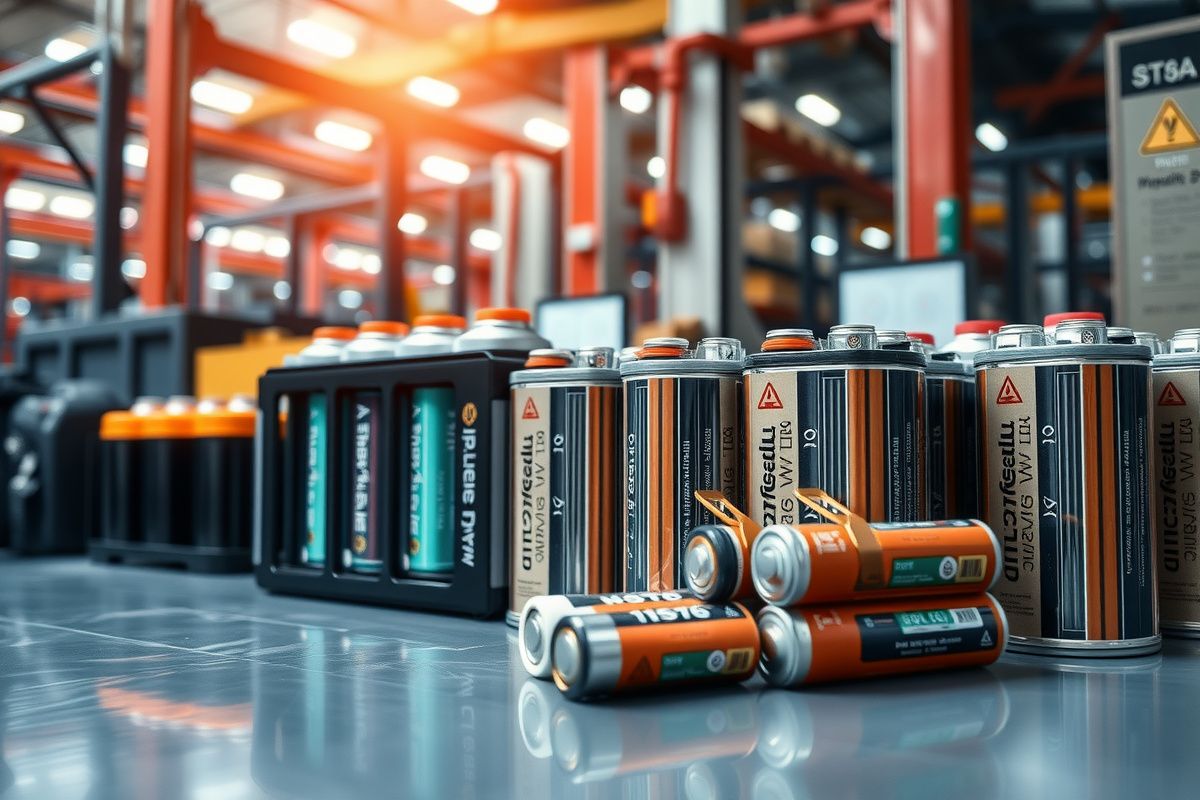
Modern industry is inextricably linked to the use of rechargeable batteries of various types and capacities. From electric vehicles and energy storage systems to industrial equipment and backup power sources, batteries are a key element in many technological processes. However, their service life is limited, and over time they turn into waste containing valuable and often hazardous components. Effective recycling of spent industrial batteries has become not just an environmental necessity, but also an economically viable process that allows rare metals to be returned to circulation and reduces the burden on the environment.
The relevance of this topic is growing every year, as the volume of battery production and consumption is constantly increasing. Ensuring sustainable development requires the introduction of innovative recycling technologies that allow for maximum extraction of useful materials and minimization of secondary waste generation. UtilVtorProm actively works in this direction, offering comprehensive solutions for ecological and safe handling of spent industrial batteries, helping enterprises meet the highest environmental standards.
Diversity of Chemical Compositions of Industrial Batteries
Industrial batteries are represented by a wide range of chemical systems, each of which has its unique technical characteristics, composition, and operating principle. The most common are lead-acid batteries, which are used in cars, uninterruptible power supplies, and large energy systems. They consist of lead plates, electrolyte (sulfuric acid solution), and a casing. Lithium-ion batteries, due to their high energy density and lower weight, are used in electric vehicles, portable electronics, and renewable energy storage systems. Their composition includes lithium salts, cobalt, nickel, manganese, and graphite.
In addition, there are nickel-cadmium (Ni-Cd) and nickel-metal hydride (Ni-MH) batteries, used in industrial tools, medical equipment, and some types of transport. Cadmium is a toxic metal, which makes the recycling of Ni-Cd batteries particularly important from an environmental point of view. The operating principle of all these batteries is based on reversible chemical reactions that allow them to store and release electrical energy. Each type of battery requires a specific approach to recycling that takes into account its chemical composition and potential environmental risks.
Application of Spent Industrial Batteries and Possibilities for Their Recovery
Spent industrial batteries find application in a wide variety of industries, covering a broad spectrum of industrial equipment and infrastructure facilities. Lead-acid batteries, used in electric cars, forklifts, uninterruptible power supplies for server centers and telecommunication systems, as well as in backup power systems of large enterprises, are a typical example. Lithium-ion batteries are the basis for powering electric buses, electric bicycles, industrial robots, energy storage systems from solar and wind power plants, and also in medical equipment.
Nickel-cadmium and nickel-metal hydride batteries are often found in high-power electric tools, emergency lighting, alarm systems, and other devices where reliability and stable operation are required. Recycling these spent power sources allows the extraction of valuable metals such as lead, lithium, cobalt, nickel, copper, as well as acids and plastic. These materials can be reused in the production of new batteries, other industrial products, or as raw materials for the metallurgical and chemical industries, significantly reducing the need for primary resource extraction.
Proper Handling of Industrial Battery Waste: Environmental Standards
Handling spent industrial batteries requires strict adherence to environmental norms and rules, as many of them contain hazardous substances that can harm the environment and human health. It is important to understand that these wastes are classified as hazardous. For example, for lead-acid batteries, waste codes apply: 16 06 01* (lead batteries), 16 06 02* (nickel-cadmium batteries), 16 06 03* (mercury batteries), and also 16 06 05* (other batteries and accumulators containing hazardous substances). Improper storage or disposal of such batteries can lead to soil, water, and air pollution with heavy metals and toxic compounds.
According to legislation, enterprises are obliged to ensure environmentally safe handling of these wastes. UtilVtorProm provides a full range of environmental services for enterprises, including collection, transportation, temporary storage, and recycling of spent industrial batteries. We guarantee compliance with all regulatory requirements, the use of modern technologies, and full transparency of the process, which allows our clients to be confident in the responsible and safe handling of their waste.
Effective Cooperation with UtilVtorProm in Battery Recycling
UtilVtorProm is a reliable partner in the field of industrial battery waste management, offering a professional approach and licensed activities. We possess all necessary permits and certificates for the collection, transportation, storage, and recycling of hazardous waste, ensuring full compliance with environmental and legislative norms. Our team of specialists is ready to provide qualified consultation, develop an individual waste management plan for your enterprise, and ensure timely and safe execution of all works. Contact us today to discuss your needs and get an optimal solution for environmentally responsible handling of spent batteries.