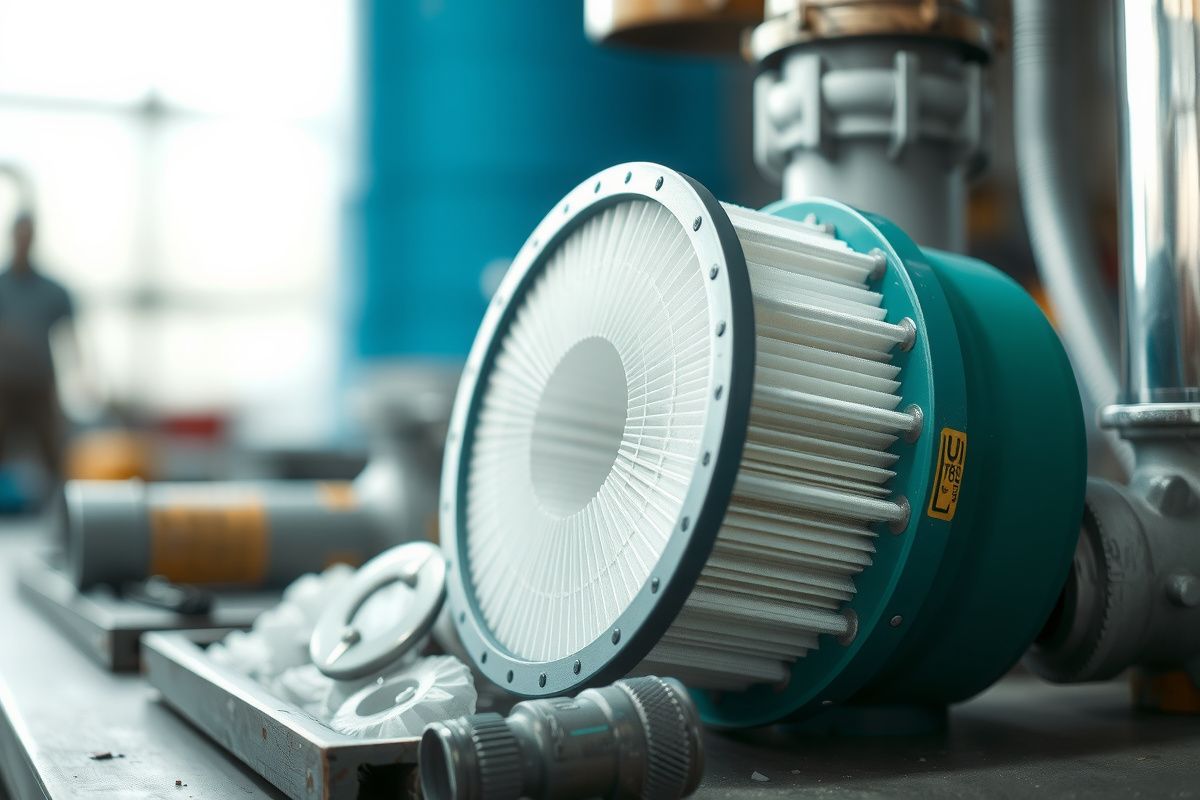
Recycling and disposal of spent industrial filter elements is one of the most urgent and complex tasks for modern industry. With increasing production volumes and tightening environmental standards, the issue of effective waste management becomes critically important. These elements, used to clean air, liquids, and gases from various contaminants, after exhausting their resource, turn into a source of potential danger to the environment and human health. They can contain toxic substances, heavy metals, petroleum products, microorganisms, and other harmful components that require a specialized approach to collection, transportation, processing, and disposal. Improper handling can lead to contamination of soils, water resources, and atmospheric air, as well as severe penalties for enterprises. Therefore, finding and implementing innovative and environmentally safe methods of handling spent filter elements is a priority for any responsible production.
The relevance of this topic is also reinforced by the fact that the variety of industrial filters determines the variety of their composition. Each type of filter, depending on its purpose and operating environment, may contain a unique set of materials and accumulated contaminants. This requires an individual approach to developing recycling and disposal strategies that take into account the specifics of each type of waste. From paper and fabric filters to metal and ceramic, from adsorption to membrane – each requires careful analysis to determine optimal handling methods. An effective system for handling spent filter elements not only reduces the negative impact on the environment but also contributes to resource savings through the possible extraction of valuable components and their reuse in production. UtilVtorProm offers comprehensive solutions for environmental services for enterprises, ensuring a full cycle of handling these complex wastes.
Technological features and composition of industrial filters
Industrial filter elements are key components in many production processes, ensuring the purification of raw materials, intermediate products, and final waste. Their effectiveness is based on various operating principles, including mechanical filtration, adsorption, absorption, ion exchange, and reverse osmosis. The composition of filtering materials can be extremely diverse: from cellulose fibers, synthetic polymers (polypropylene, polyester, polyethylene), and fiberglass to metal meshes, ceramics, activated carbon, zeolites, and diatomite. Each material is chosen taking into account the specifics of the contaminants to be removed and the operating conditions, such as temperature, pressure, and chemical aggressiveness of the environment. For example, filters made of paper or synthetic fibers are often used to clean air from dust, while filters made of fluoroplastic or stainless steel can be used to clean aggressive liquids.
After use, filter elements become saturated with the pollutants they were designed to remove. These can be solid particles, heavy metals, petroleum products, organic compounds, bacteria, viruses, and radioactive elements. It is these accumulated contaminants that make spent filters hazardous waste requiring special handling. For example, oil filters from automotive and industrial machinery contain residues of engine oils and metal particles, and air filters from chemical production can be saturated with toxic vapors. Water purification filters can contain heavy metal salts and microorganisms. Understanding the chemical composition and physical properties of these contaminants is fundamental to developing effective and safe methods for their processing and disposal, minimizing risks to the environment and human health.
Industrial application of filter elements
Industrial filter elements are widely used in virtually all sectors of the economy where there is a need for purifying liquids, gases, or air. In the oil and gas industry, they are indispensable for purifying oil and gas from impurities; in the chemical industry – for filtering reagents and final products, as well as for purifying emissions and wastewater. Metallurgical enterprises use filters for purifying air from dust and smoke, and also for filtering cooling liquids. In the food industry, filter elements ensure the purity of water, ingredients, and finished products, which is critically important for compliance with sanitary standards and product quality. The pharmaceutical industry and biotechnology require the highest degree of purification, so high-tech filters capable of removing even the smallest particles and microorganisms are used here. Medical institutions use filters in ventilation systems and for water purification.
In addition to the mentioned industries, filter elements are actively used in energy, particularly in thermal and nuclear power plants, for water and air purification. In mechanical engineering and automotive industry, they are an integral part of lubrication systems, hydraulic systems, and cooling systems. Ventilation and air conditioning systems in industrial and public buildings are also equipped with various filters to ensure air purity. Examples of specific equipment where filters are used include compressors, turbines, hydraulic presses, wastewater treatment systems, industrial vacuum cleaners, paint booths, as well as smoke extraction and aspiration systems. Each of these applications generates specific spent filters that require an individual approach to their collection, processing, and disposal, taking into account their potential hazard level and the composition of contaminants.
Rules for handling spent filter elements
Handling spent industrial filter elements requires strict adherence to environmental norms and safety rules. These wastes, depending on their composition and degree of contamination, can be classified as hazardous. For example, filters containing petroleum products, heavy metals, or toxic chemical substances are classified as hazardous waste and require special conditions for collection, transportation, and disposal. According to the National Waste List (NWL), spent absorbents, filter materials, wiping rags, and protective clothing contaminated with hazardous substances have code 15 02 02*. Spent filter materials that do not fall under this code but still require special handling may have code 15 02 03. UtilVtorProm provides a full range of environmental services for enterprises, including collection, transportation, storage, processing, and disposal of spent filter elements, ensuring compliance with all environmental standards.
It is necessary to remember that self-disposal or unauthorized storage of spent filters is unacceptable and can lead to significant environmental and financial consequences. Enterprises are obliged to ensure proper sorting of these wastes, their temporary storage in specially equipped places, and transfer to licensed companies for further handling. UtilVtorProm has all the necessary permits and licenses to work with hazardous wastes, and our specialists possess deep knowledge and experience in this field. We develop individual solutions for each client, taking into account the specifics of their production and the type of spent filter elements. Our goal is not only to ensure environmental safety but also to help enterprises optimize waste management costs by offering effective and economically viable solutions.
Professional partnership with UtilVtorProm in the field of ecological waste management
By choosing UtilVtorProm as your partner for handling spent filter elements, you get a guarantee of a professional approach and full compliance with all environmental and legal requirements. Our company has many years of experience in the field of industrial waste management, possessing all the necessary licenses and permits to carry out activities. We offer comprehensive solutions that include consultations, development of optimal collection and transportation schemes, as well as direct processing and disposal of waste. Our specialists constantly improve their knowledge and skills to offer clients the most modern and effective waste management methods, minimizing their impact on the environment. By contacting UtilVtorProm, you can be confident in a reliable and responsible solution to issues related to the environmental safety of your enterprise. We invite you to contact our managers for a detailed consultation and an individual offer that will take into account all the features of your production and needs.