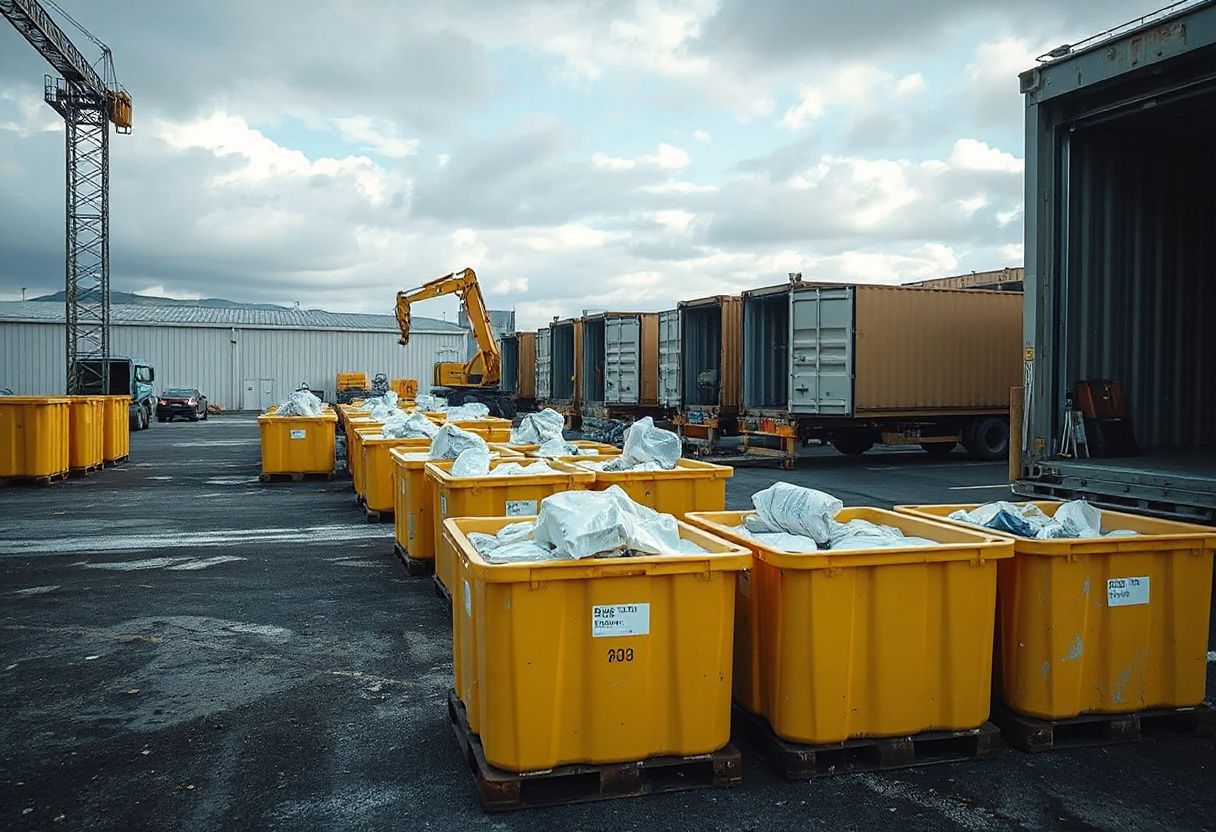
Pharmaceutical waste arrives at the temporary storage site in sealed yellow polymer containers. These tanks contain residues of toxic substances, rejected batches of medicines, and used filter elements. Due to their complex chemical composition, such mixtures require a special temperature regime during transport, as some active components easily evaporate at 25 °C. Uncontrolled decomposition of substances causes poisoning. Specialists of our company carefully check the integrity of each packaging bag to prevent sudden leakage of volatile compounds into the environment during unloading. For the safe movement of such cargoes, specialized vehicles are equipped with additional mounts and absorbing materials in case of accidental destruction of the packaging.
High-pressure reactors and temperature processing modes
During the synthesis of complex molecules in AISI 316L grade reactors, side reactions sometimes occur, leading to the formation of rejected batches of raw materials. The equipment is periodically washed with aggressive solvents. These wash waters contain high concentrations of active pharmaceutical ingredient residues, so they are forbidden to be discharged into the enterprise's regular sewage network without prior neutralization. Technological cycles of apparatus cleaning usually involve the use of hot steam at a pressure of 4 bar, which creates significant volumes of contaminated condensate.
Content of halogenated solvents and heavy metals in waste
In the composition of such mixtures, chemical analysis reveals residues of isopropyl alcohol, chloroform, and heavy metal salts. These substances have high toxicity and, with certain reservations, can cause corrosion of steel containers.
NPV codes 18 01 08* and 18 02 07* in waste classification
The state accounting system requires manufacturers to clearly define hazard categories, so all residues of medicinal products are subject to mandatory classification before being sent for recycling. According to the national list, cytotoxic and cytostatic drugs receive a strict code 18 01 08*, which indicates their high biological activity and carcinogenic properties. Do manufacturers always correctly identify toxic mixtures at the initial stages of sorting? For other types of medicines that do not contain dangerous halogens, ecologists usually apply labeling according to the code 18 02 07* to simplify subsequent technological operations. Violation of these labeling rules leads to significant fines from state regulatory authorities. Laboratory control confirms the compliance of each batch with accompanying documents immediately before loading into special transport.
Thermal destruction in incinerators at 1100 °C
In practice, the safe treatment of pharmaceutical residues requires the use of high-temperature installations. The company UtilVtorProm provides services for the safe collection and neutralization of such hazardous substances. For the complete destruction of persistent organic pollutants, we use industrial incinerators that maintain a stable temperature in the combustion chamber at the level of 1100 °C. Such conditions guarantee the complete splitting of complex molecules without the formation of secondary toxic gases. The exhaust gas purification system is equipped with special bag filters and absorbers that trap fine dust particles and chlorine compounds. Modern scrubbers neutralize acidic vapors with an alkaline solution, which makes it possible to achieve strict emission standards into the air basin.
Autoclaving medical waste as an alternative to incineration
Thermal treatment with steam under pressure is a reliable method for disinfecting biologically active medical waste, but this method is not always suitable for chemically stable pharmaceutical substances. To treat infected materials in hospitals, AS-series biosterilizer autoclaves are usually used, where steam under a pressure of 2 bar destroys all pathogenic microorganisms. The purified mass is subsequently crushed by a shredder. This approach significantly reduces the total volume of garbage sent to landfills, but toxic chemical residues still require high-temperature incineration. Each method has its own technological limitations depending on the morphological composition of the starting raw material.
Environmental control and documentary support of waste
Proper execution of accompanying documents guarantees the absence of claims from the environmental inspection. Specialists of our enterprise promptly prepare acceptance-transfer acts and environmental declarations for each customer. Official handling of hazardous substances is based on a state license that grants the right to collect, transport, and thermally treat toxic components. Reliable service from UtilVtorProm allows industrial enterprises to completely focus on their core production activities. Upon completion of all technological operations, the client receives a full package of certified documents confirming the safe disposal of the transferred materials in accordance with current legislation.