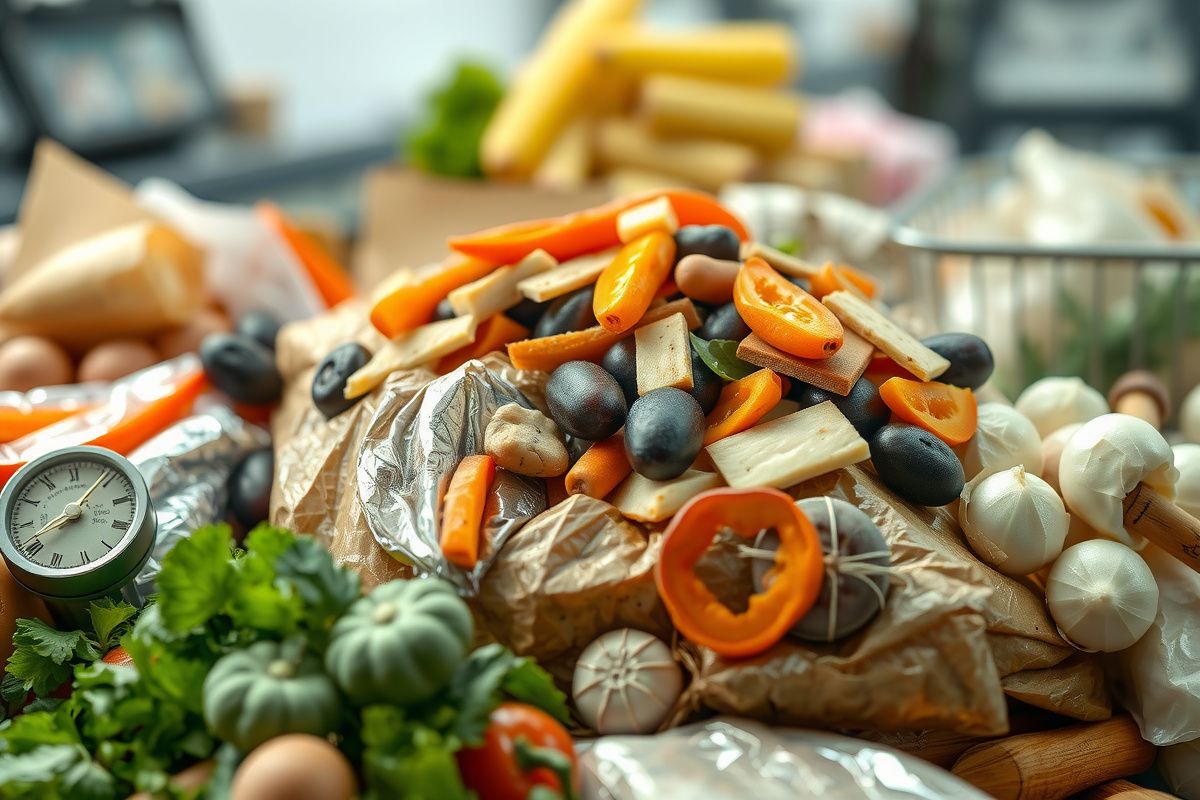
Food industry waste is one of the most pressing problems in the modern world, requiring immediate solutions. Annually, millions of tons of raw materials, semi-finished products, and finished goods become waste at various stages of production – from primary processing to packaging. This not only causes significant economic losses for enterprises but also creates a serious environmental burden. Improper handling of such waste leads to soil, water, and air pollution, greenhouse gas emissions, and the accumulation of organic matter, which is a source of unpleasant odors and pest proliferation. Therefore, the development and implementation of effective methods for processing and reusing food industry waste are critically important for ensuring sustainable development and preserving natural resources.
In conditions of growing population and limited resources, optimizing raw material use and minimizing waste become key factors in the competitiveness of food industry enterprises. Waste processing allows not only to reduce landfill volumes but also to obtain valuable secondary products that can be used as feed additives, fertilizers, biofuels, or raw materials for other industries. This contributes to the creation of closed production cycles, which is the basis of a circular economy. UtilVtorProm, recognizing the importance of these processes, offers comprehensive solutions for environmental services to enterprises, helping them effectively manage waste and comply with environmental standards.
Diversity and Chemical Composition of Food Industry Waste
Food industry waste is extremely diverse in its composition and physicochemical properties, which depends on the specific industry. For example, the meat industry generates bones, fat, blood, and offal, which contain large quantities of proteins and fats. The dairy industry leaves behind whey, skim milk, which are rich in lactose and milk proteins. The fruit and vegetable industry produces peels, seeds, pomace, which contain cellulose, pectins, sugars, and vitamins. Grain processing enterprises produce husks, bran, and flour waste, which are sources of carbohydrates and fiber. Each type of waste has its unique chemical profile, which determines potential ways for its processing and subsequent use. Understanding these characteristics is key to choosing the most effective and economically viable technologies.
The main components of food industry waste are organic substances: proteins, fats, carbohydrates, vitamins, and mineral salts. They can also contain water in significant quantities, which causes the high moisture content of most such waste. The presence of these components makes waste valuable raw material for obtaining biogas, compost, feed additives, and other products. However, the high biological activity of organic substances also causes rapid spoilage of waste, requiring prompt and proper processing. This emphasizes the need to implement modern storage and processing technologies to prevent their decomposition and preserve their value as secondary raw materials.
Modern Technologies for Reusing Food Industry Waste
The application of food industry waste is extremely wide and constantly expanding due to the development of innovative technologies. One of the most common areas is the production of feed additives for livestock. For example, waste from the meat and fish industries is processed into meat-and-bone meal and fishmeal, which are valuable sources of protein for feeding farm animals. Whey remaining after cheese production can be used to produce whey protein concentrates or lactose. Grain processing waste, such as bran and husks, finds application as fillers for feed. This allows not only to reduce waste volumes but also to provide livestock with high-quality and inexpensive feed components.
Another important area is the production of bioenergy. Organic food industry waste, such as manure, vegetable and fruit residues, brewing and alcohol industry waste, can be converted into biogas through anaerobic digestion. Biogas, in turn, is used to produce electricity and heat. This technology allows enterprises to partially or completely supply themselves with energy, reducing operating costs and reducing dependence on traditional fuel sources. In addition, waste can be converted into compost, which is a valuable organic fertilizer for agriculture, improving soil structure and increasing its fertility. There are also technologies for extracting valuable components, such as pectins from fruit waste, or obtaining bioplastics from starch-containing waste, which opens up new prospects for a circular economy.
Environmental Management of Food Industry Waste
Effective and environmentally safe management of food industry waste is a mandatory requirement for all enterprises in the industry. According to the National Waste List, food industry waste is classified by various codes that reflect its composition and potential hazard. For example, meat and fish waste unsuitable for consumption may have code 02 02 02*, and vegetable and fruit waste – 02 03 04*. Dairy industry waste, such as whey, is often classified under code 02 04 03*. It is important to understand that some waste, for example, that containing pathogenic microorganisms or residual veterinary drugs, can be classified as hazardous and requires special handling. UtilVtorProm provides a full range of services for environmental maintenance of enterprises, including collection, transportation, storage, and processing of food industry waste, ensuring compliance with all environmental norms and standards.
Improper handling of food industry waste can lead to significant fines and reputational losses for the enterprise. It is important to ensure proper sorting of waste at its point of origin, which significantly simplifies further processing and increases its effectiveness. It is also necessary to consider storage requirements to prevent the decomposition of organic substances and the formation of unpleasant odors. UtilVtorProm has all the necessary licenses and permits to work with various categories of waste, which guarantees their safe and legal handling. We help enterprises develop optimal waste management schemes, minimize their environmental impact, and increase resource use efficiency. This not only ensures compliance with legislation but also contributes to the formation of a positive image of the company as a socially responsible business.
Professional Partnership with UtilVtorProm in Waste Management
UtilVtorProm is a reliable partner for food industry enterprises striving for effective and environmentally responsible waste management. We offer comprehensive solutions, developed individually for each client, taking into account the specifics of their production and waste volumes. Our services include professional consulting, organization of waste collection and transportation by specialized transport, their temporary storage at licensed sites, and subsequent processing using modern technologies. We possess all the necessary licenses and permits, which guarantees full compliance of our services with the current environmental legislation of Ukraine. By contacting UtilVtorProm, you get not just a service, but a reliable partner who will help you optimize waste management processes, reduce environmental risks, and increase the efficiency of your business. Contact us today to discuss your needs and get an individual offer.