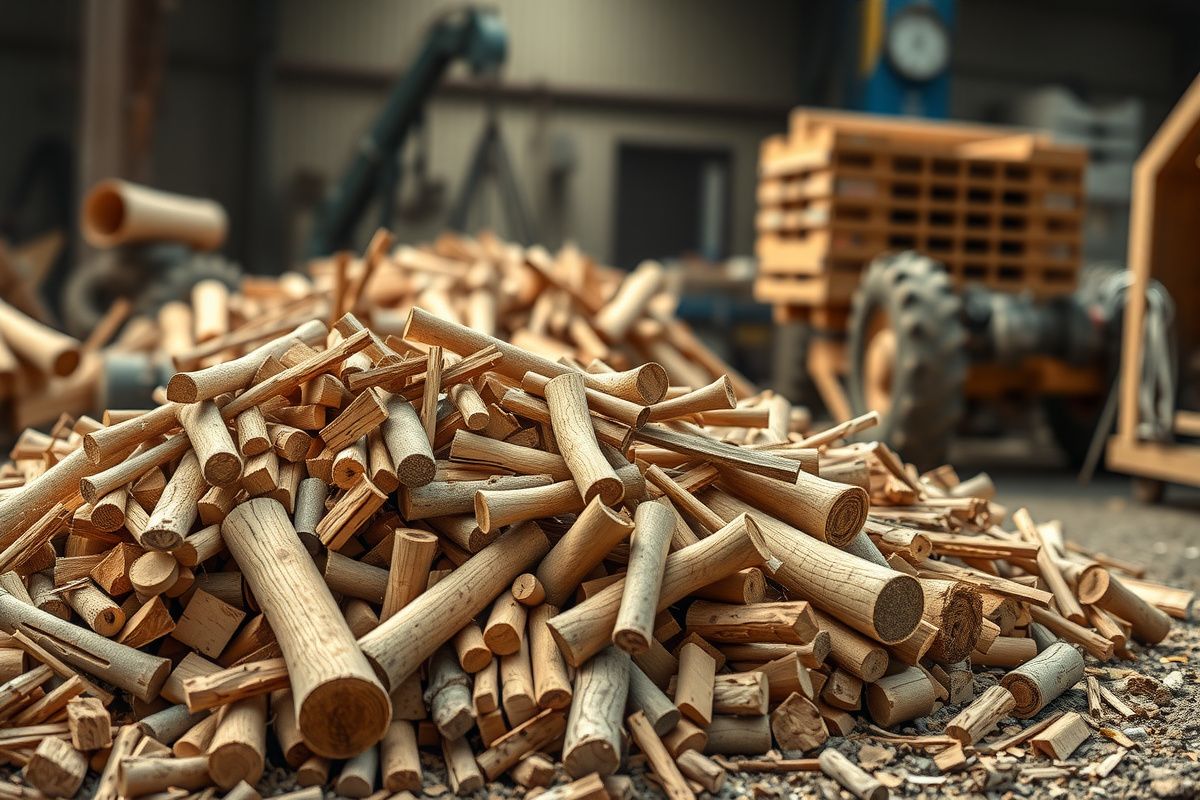
The woodworking industry is one of the oldest and most important sectors of the global economy, but its activities inevitably lead to the generation of significant volumes of waste. This waste, which includes sawdust, wood chips, wood trimmings, bark, and other residues, creates serious environmental and economic challenges. Improper handling of this waste leads to environmental pollution, landfill fires, and the loss of valuable resources that could be reused. The relevance of the topic of recycling and reusing woodworking waste is increasing every year, as it allows not only to reduce the negative impact on ecosystems but also to create new economic opportunities.
The implementation of effective woodworking waste management systems is a key element of sustainable development for enterprises and the entire industry. Instead of viewing these materials as garbage, modern approaches propose treating them as valuable raw materials for the production of new products or as a source of energy. This helps reduce the cost of purchasing primary materials, decrease the volume of waste sent to landfills, and improve the environmental image of companies. UtilVtorProm actively supports and implements such initiatives, helping enterprises optimize their production processes and meet the highest environmental standards.
Diversity of woodworking waste and its potential
Woodworking industry waste is characterized by significant diversity in physical and chemical properties, which determines the potential directions for its reuse. The main types include sawdust, wood chips, bark, trimmings, splinters, as well as veneer and dust. The chemical composition of this waste is mainly cellulose, hemicellulose, and lignin, which makes them a valuable source of organic raw materials. Moisture content and fractional composition vary depending on the wood species and technological process, which affects their processing methods. For example, sawdust and wood chips have a high specific surface area, making them ideal for granulation or use as absorbents.
The principle of operation of modern woodworking waste processing systems is based on the maximum extraction of useful components and the minimization of residual waste. This may include mechanical processing (shredding, pressing), thermal conversion (pyrolysis, gasification, incineration for energy), and biological processes (composting, biogas production). Each method has its advantages and is applied depending on the type of waste and the final product planned to be obtained. An important aspect is the sorting and preliminary cleaning of waste from foreign impurities, such as metal or plastic, which ensures high quality of secondary raw materials.
Innovative applications of woodworking industry waste
Woodworking industry waste finds wide application in various industries, which emphasizes its value as a secondary raw material. One of the most common applications is the production of fuel briquettes and pellets. These biofuel products are characterized by high calorific value and low ash content, making them an efficient and environmentally friendly alternative to traditional fuels. Pellet production equipment includes crushers, dryers, and granulators, which convert raw wood into standardized pellets. Another important direction is the manufacture of particleboard (chipboard), fiberboard (MDF), and oriented strand board (OSB), which are widely used in construction and the furniture industry.
In addition, woodworking waste can be used to produce mulch for agriculture, organic fertilizers through composting, and biochar, which improves soil quality. In the chemical industry, cellulose, lignin, ethanol, and other biochemical products are obtained from wood raw materials. Some innovative technologies allow converting wood waste into bioplastics or composite materials with unique properties. The use of waste in animal husbandry as bedding is also a common practice. Such a variety of applications highlights the potential of woodworking waste and the need for its effective processing.
Environmentally safe handling of woodworking waste
Effective and environmentally safe handling of woodworking industry waste is critically important for environmental protection and sustainable development. According to the National Waste List (NWL), woodworking waste is classified by different codes, depending on its type and potential hazard. For example, wood waste that does not contain hazardous substances can be designated as 03 01 05, while sawdust, wood chips, trimmings that do not contain hazardous substances are classified as 03 01 05. Contaminated wood waste containing hazardous substances, for example, after treatment with preservatives or paints, may have codes 03 01 04* or 17 02 04*. It is important to correctly identify and classify this waste to choose the optimal methods for its handling.
UtilVtorProm provides comprehensive services for the environmental maintenance of enterprises, including the collection, transportation, storage, and processing of woodworking industry waste. We ensure full compliance with all environmental norms and legal requirements, using modern technologies and equipment. Our approach allows not only to prevent environmental pollution but also to maximize the potential of secondary raw materials, transforming waste into valuable resources. We help enterprises reduce their environmental footprint and optimize waste management costs, offering individual solutions for each client.
Reliable partner in environmental management – UtilVtorProm
UtilVtorProm is a recognized leader in the industrial waste management services market, offering a professional and licensed approach to the processing and reuse of woodworking industry waste. We hold all the necessary permits and licenses to carry out our activities, which guarantees our clients full compliance with environmental standards and legal requirements. Our team of highly qualified specialists has significant experience in developing and implementing effective solutions for any volume and type of waste, ensuring an individual approach to each order. We strive for long-term cooperation, building trust and offering transparent terms of work.
By contacting UtilVtorProm, you get a reliable partner who not only provides high-quality service but also offers full consulting support on environmental management issues. We help enterprises optimize costs, reduce negative environmental impact, and increase their social responsibility. Our goal is to make the waste management process as efficient, safe, and economically beneficial as possible for our clients. Contact us today to learn more about our services and discuss individual solutions for your enterprise. We are ready to offer the best terms of cooperation and ensure the environmental safety of your business.