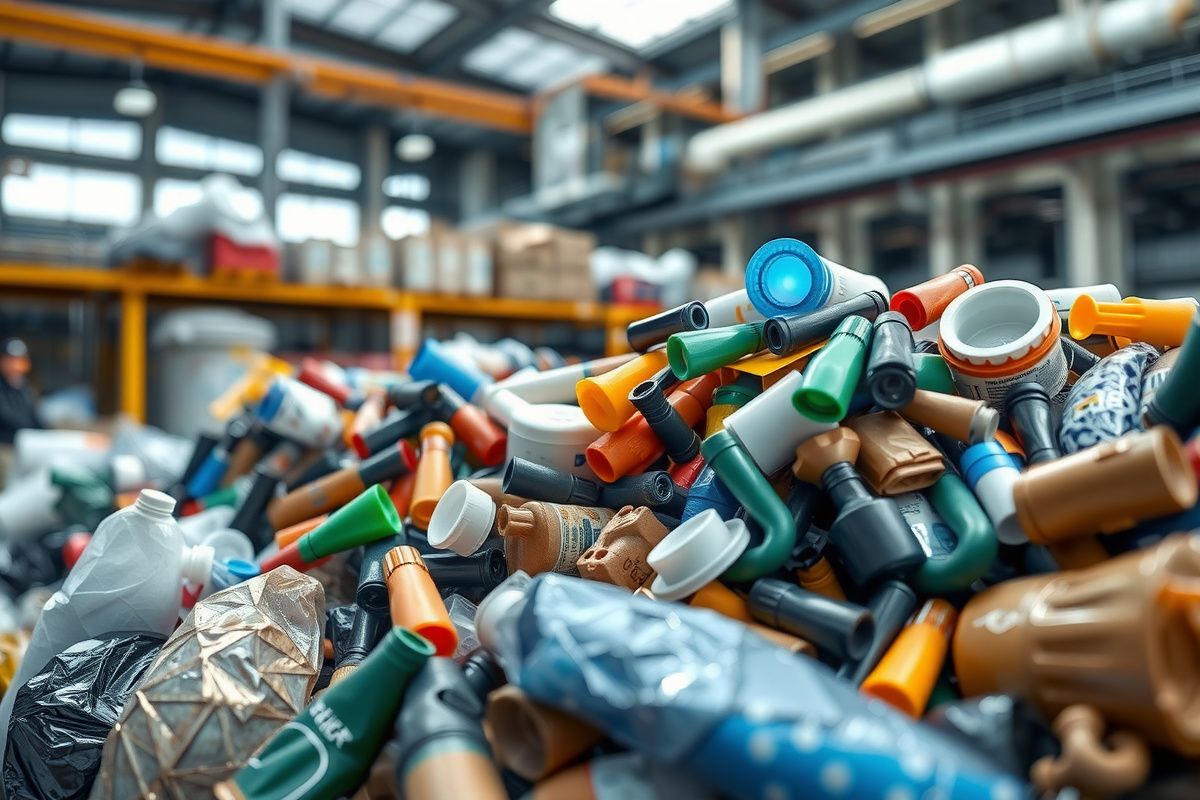
Modern industry faces unprecedented challenges in waste management, especially concerning polymeric materials. The increasing volume of polymer production and consumption leads to the accumulation of significant amounts of waste, which poses a serious threat to the environment and requires immediate solutions. Recycling and reuse of industrial polymer waste is not just an ecological necessity, but also an economically viable direction for enterprises aiming to optimize their production processes and reduce costs.
The urgency of this topic is amplified by growing public pressure, legislative restrictions, and businesses' commitment to sustainable development. Effective management of polymer waste not only reduces the burden on landfills but also preserves valuable natural resources, reduces greenhouse gas emissions, and creates new jobs. UtilVtorProm actively supports circular economy initiatives by providing comprehensive services for industrial waste management, including collection, transportation, storage, and processing.
Technologies for Processing and Recycling Industrial Polymers
The processing of industrial polymer waste encompasses a range of complex technological processes aimed at restoring the valuable properties of materials for their subsequent use. The main methods are mechanical, chemical, and energy recycling. Mechanical recycling includes sorting, shredding, washing, and granulation of polymers, which allows obtaining secondary raw materials for the production of new products. This method is the most common and cost-effective for many types of polymers, such as polyethylene, polypropylene, and polystyrene.
Chemical recycling involves the depolymerization of polymers into monomers or other chemical compounds that can be used as raw materials in the chemical industry. This method allows processing mixed or heavily contaminated polymer waste that cannot be mechanically recycled. Energy recycling, or incineration with energy recovery, is used for waste that cannot be processed by other methods, converting it into thermal or electrical energy. The choice of method depends on the type of polymer, its degree of contamination, and economic feasibility.
Application of Secondary Polymer Materials in Industry
Secondary polymer materials obtained from the processing of industrial waste are widely used in various industries. For example, recycled high and low-density polyethylene (HDPE and LDPE) is actively used for manufacturing pipes, films, containers, packaging materials, and building elements. Polypropylene (PP) after processing is used in the production of automotive parts, furniture, fibers, and various consumer goods.
Polyethylene terephthalate (PET), obtained from bottles and other packaging materials, is converted into fibers for the textile industry, fillers for furniture, and is also used for the production of new bottles and containers. Recycled polystyrene (PS) finds its place in the production of insulation materials, disposable tableware, and some building elements. The use of secondary polymers allows enterprises to reduce production costs, decrease reliance on primary raw materials, and improve their environmental image.
Environmental Management of Polymer Waste and Their Codes
Proper management of industrial polymer waste is key to minimizing negative environmental impact. This includes their collection, sorting, temporary storage, and subsequent processing or disposal in accordance with current environmental regulations. It is important to understand that polymer waste can be both hazardous and non-hazardous, depending on its composition and the presence of impurities.
According to the National Waste List (NWL), polymer waste is classified by various codes. For example, plastic waste may have the following codes: 07 02 XX* (waste from the manufacture, formulation, supply, use and processing of plastics, synthetic rubber and synthetic fibres), 15 01 02 (plastic packaging), 17 02 03 (plastic from construction and demolition waste). UtilVtorProm provides a full range of environmental services to enterprises, including identification, classification, collection, transportation, and processing of all types of polymer waste, ensuring their safe and responsible management.
Reliable Partner in Polymer Waste Management – UtilVtorProm
UtilVtorProm is a recognized leader in the industrial waste management market, offering comprehensive and customized solutions for enterprises in various industries. We hold all necessary licenses and permits for the collection, transportation, storage, processing, and disposal of polymer waste. Our specialists apply a professional approach to each client, developing optimal waste management schemes that meet the highest environmental standards and legal requirements. By contacting UtilVtorProm, you gain a reliable partner who will help your enterprise effectively manage polymer waste, reduce environmental risks, and promote sustainable development. Contact us today to discuss your needs and receive a personalized offer.