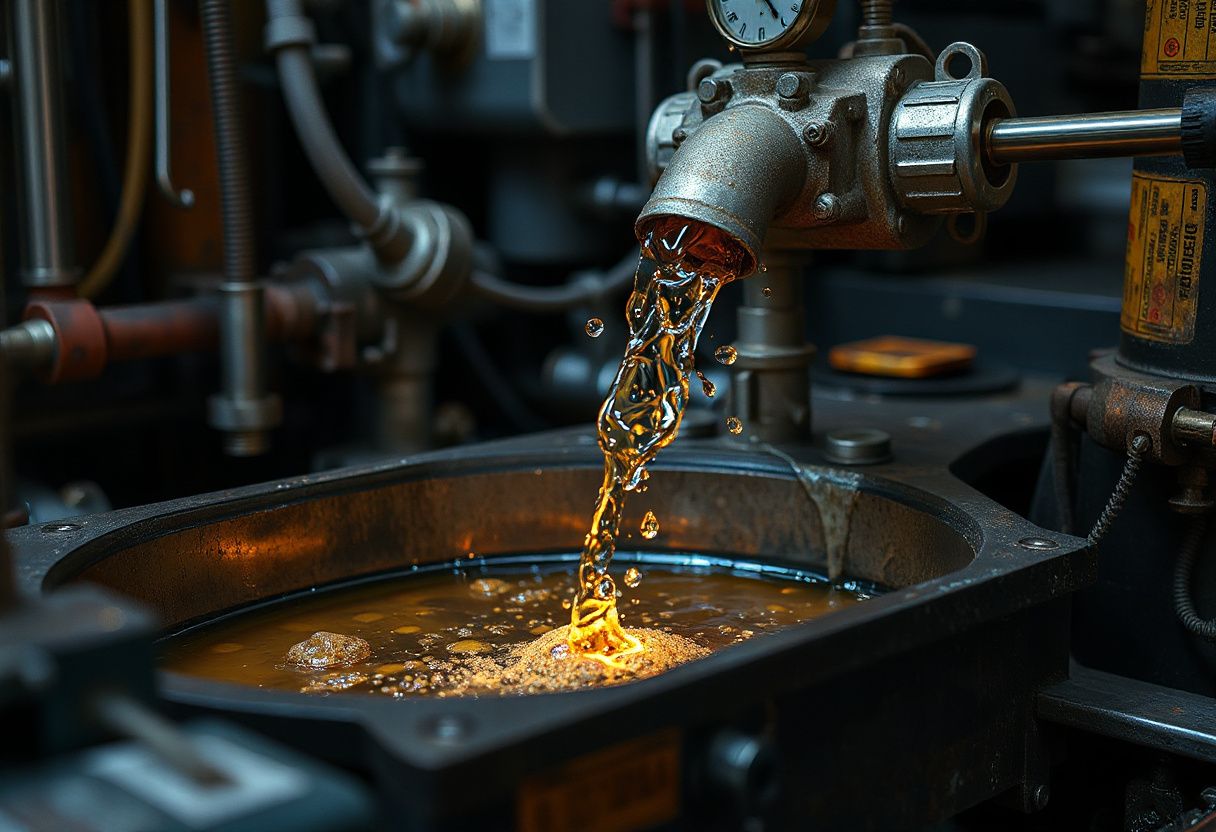
Many metalworking enterprises make a serious mistake when replacing process fluids by draining waste emulsions into a single general tank. Such mixing completely prevents the separation of components at treatment facilities and increases the company's costs for handling them. This usually happens due to a lack of special containers for waste accumulation. If machine tools operate continuously in multiple shifts, the volume of spent fluid accumulates quickly, creating a threat of overflowing workshop storage tanks. Attempts to dump chemicals into the sewage system end in the detection of the source of contamination. Therefore, enterprises are forced to search for safe ways to transport such substances. Proper organization of storage on the company's premises helps reduce logistics costs and prepare fluids for subsequent safe removal.
Causes of degradation of metalworking fluids in CNC machines
In the circulation systems of machine tools, working solutions gradually lose their useful properties. High temperatures in the cutting zone cause thermal cleavage of compounds. This accelerates the oxidation of the base oil. Additionally, the fluid is contaminated with fine metal chips and foreign oils. Due to the active reproduction of anaerobic bacteria, an unpleasant odor appears, and the emulsion itself separates into water and a fat phase.
Chemical composition of emulsions and waste codes according to NPB 12 01 07* and 12 01 09*
A typical spent solution contains 90% water, but the remaining volume consists of hazardous chemicals and heavy metals. These mixtures include synthetic active substances, chlorinated paraffins, anti-corrosion additives, and toxic heavy metal ions. Such components poison the environment. Does this composition pose a threat to personnel health during the constant evaporation of harmful volatile compounds into the working area? According to the waste list, halogen-free mineral oils are classified under code 12 01 07*. At the same time, aqueous emulsions for machining are marked with code 12 01 09*.
Methods of emulsion separation in ultrafiltration units
Modern technologies allow the separation of stable colloidal systems into water and concentrated sludge. For this purpose, chemical reagent coagulation using aluminum salts is used. With special ultrafiltration units, it is possible to separate up to 95% of water for its return to the production process.
Procedure for collection and transfer of liquid waste to UtilVtorProm company
The licensed company UtilVtorProm provides a full range of services for the transportation and subsequent environmentally safe treatment of accumulated liquid mixtures. All processes are strictly controlled. Before starting work, a laboratory analysis of selected samples is mandatory to accurately determine the concentration of petroleum products and harmful impurities. Specialized transport arrives at the customer's site with hermetic tanks, which completely eliminates the spilling of chemicals during transportation. The procedure for interaction with industrial enterprises includes several sequential and clearly regulated stages.
- Submission of an official application indicating the approximate volume of accumulated fluids.
- Conducting a laboratory express analysis of samples to confirm the chemical composition.
- Coordination of the removal schedule and provision of specialized vacuum transport.
- Transfer of waste with the execution of a full package of environmental documentation.
Initial contact and preparation of accompanying documents
The first contact with enterprise representatives begins with a discussion of the specifics of their production. UtilVtorProm engineers help determine the hazard class of the accumulated substances and calculate the cost of services. After that, the draft of the official agreement is sent to the customer, and a convenient time for the special transport to arrive at the industrial facility is agreed upon.