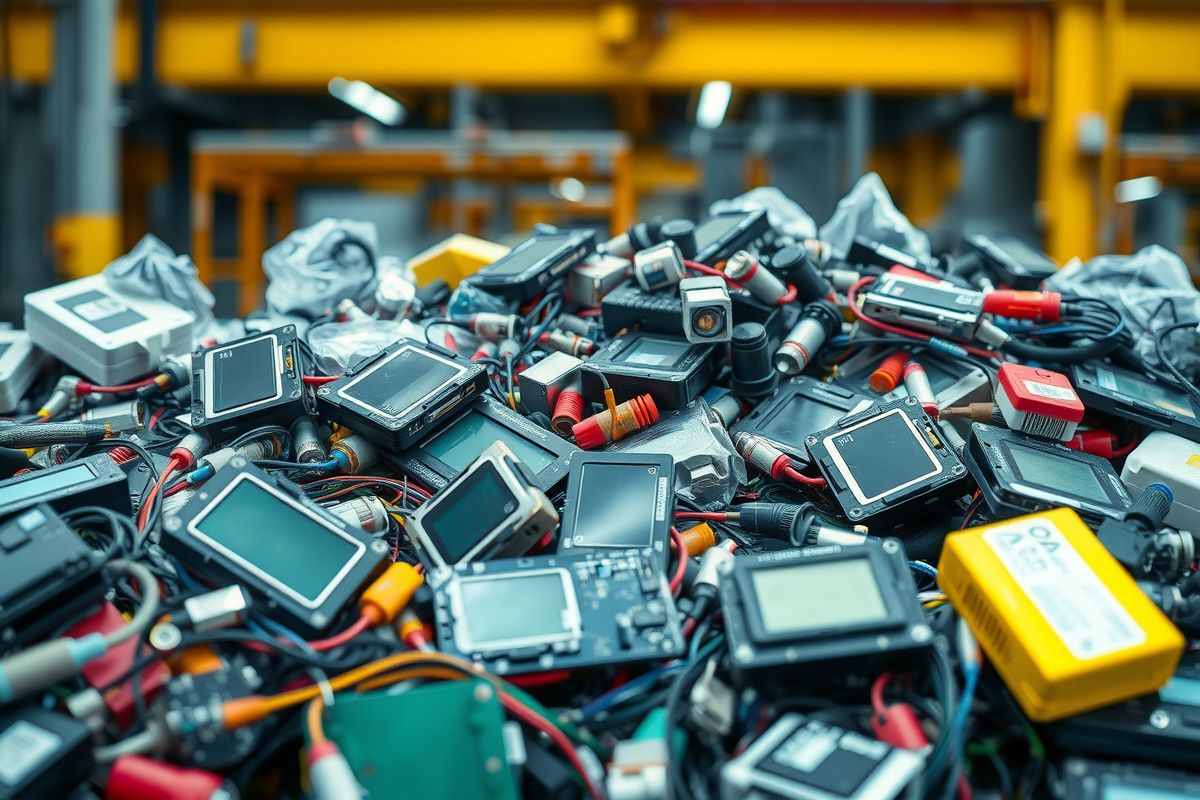
Modern industry constantly generates a large amount of electronic waste, which poses a serious threat to the environment and human health. With the development of technology, the volume of industrial electronic waste (IEW) is growing exponentially, making the issue of its recycling extremely urgent. This waste contains valuable metals such as gold, silver, copper, as well as hazardous substances, including lead, mercury, cadmium, which requires a special approach to their collection, transportation, and processing. Effective IEW management is key to sustainable development, as it not only reduces the negative impact on the environment but also allows for the recovery of valuable resources, contributing to a circular economy.
UtilVtorProm, as a leader in environmental services for enterprises, pays special attention to the development and implementation of innovative solutions for the recycling of industrial electronic waste. We understand that each type of electronic equipment has its unique characteristics and requires specific processing methods. From computers and servers to industrial controllers and medical equipment – all this waste requires a professional approach. Our services are aimed at ensuring maximum efficiency and safety at all stages of IEW management, minimizing risks to the environment and maximizing the extraction of valuable materials.
Composition and technical features of industrial electronic waste
Industrial electronic waste is characterized by an extremely diverse chemical composition, including both valuable metals and hazardous chemical elements. Its composition includes ferrous and non-ferrous metals, such as steel, aluminum, copper, nickel, as well as precious metals: gold, silver, platinum, palladium, which are used in microchips and contacts. In addition, IEW contains plastics, ceramics, glass, and various chemical compounds. The presence of brominated flame retardants, lead in solders, mercury in some sensors, cadmium in battery packs, and other toxic substances makes them particularly dangerous if mishandled. For example, as with the handling of batteries and accumulators as hazardous waste, electronic waste requires special attention due to its potential impact on the environment.
The technical characteristics of IEW also vary depending on the type of equipment. Modern electronics often contain complex multi-layer printed circuit boards, integrated circuits with high component density, liquid crystal displays, and other components that require specialized methods of dismantling and separation. Processing processes may include mechanical crushing, electrostatic separation, hydrometallurgical, and pyrometallurgical methods for metal extraction. Each stage must be carefully controlled to prevent the emission of hazardous substances and ensure maximum recovery of secondary raw materials.
Wide application of industrial electronic waste in recycling
Industrial electronic waste is generated in a wide range of industries that use electronic equipment. This includes information technology (servers, computers, network equipment), telecommunications (base stations, routers), manufacturing (automated lines, controllers, robots), medicine (diagnostic equipment, life support apparatus), energy (control systems, inverters), and many others. Examples of equipment that becomes IEW are outdated industrial computers, servers, telecommunication cabinets, CNC machine control boards, medical devices such as ultrasound machines, X-ray machines, as well as various sensors. Such waste, like lead-acid batteries, requires proper recycling to prevent contamination.
After appropriate processing, components and materials from IEW can be reused. For example, extracted precious metals are returned to the jewelry industry or the production of new electronics. Copper, aluminum, and iron are used in metallurgy. Plastics can be recycled into granules for the production of new products. Even glass and ceramics find application in the construction industry. Thus, IEW recycling not only reduces the burden on natural resources but also creates new economic opportunities, contributing to the development of a circular economy and reducing the need for primary raw material extraction.
Proper handling of industrial electronic waste
Handling industrial electronic waste is a complex process that requires strict adherence to environmental norms and rules. Improper storage or disposal of IEW can lead to soil, water, and air contamination with toxic substances. Therefore, it is extremely important to entrust the processing of such waste only to licensed companies. Waste codes according to the National Waste List (NWL) for industrial electronic waste may vary, but they often include the following categories: 16 02 13* (discarded equipment containing hazardous components, other than those specified in 16 02 09 to 16 02 12), 16 02 14 (discarded equipment, other than that specified in 16 02 09 to 16 02 13), 20 01 35* (discarded electrical and electronic equipment containing hazardous components, other than those specified in 20 01 21, 20 01 23, 20 01 33), 20 01 36 (discarded electrical and electronic equipment, other than that specified in 20 01 21, 20 01 23, 20 01 35). UtilVtorProm provides environmental services to enterprises, ensuring a full cycle of IEW management.
The IEW handling process begins with collection and transportation, carried out by specialized transport in compliance with all safety regulations. Next, the waste is sorted by type and composition, which allows for optimizing further processing stages. The next step is the dismantling of equipment, separating it into individual components and materials. After that, the actual processing takes place, which may include mechanical, chemical, or thermal treatment to extract valuable metals and neutralize hazardous substances. All these stages are performed using modern equipment and technologies, which guarantees maximum efficiency and minimal impact on the environment.
Professional partnership with UtilVtorProm in electronic waste recycling
UtilVtorProm is a reliable partner for enterprises that strive to ensure environmentally responsible and efficient management of industrial electronic waste. Our company holds all the necessary licenses and permits to carry out activities in the field of hazardous waste management, which guarantees full compliance with legal requirements. We offer a comprehensive approach that includes consultations, logistics, collection, transportation, sorting, and direct processing of IEW. Our specialists have many years of experience working with various types of industrial electronic waste, which allows us to provide services of the highest quality. By contacting UtilVtorProm, you receive not only a professional solution for your waste but also confidence that your enterprise acts responsibly and contributes to environmental preservation. We encourage you to contact us for detailed consultations and the development of an individual industrial electronic waste management plan that will meet the unique needs of your business.