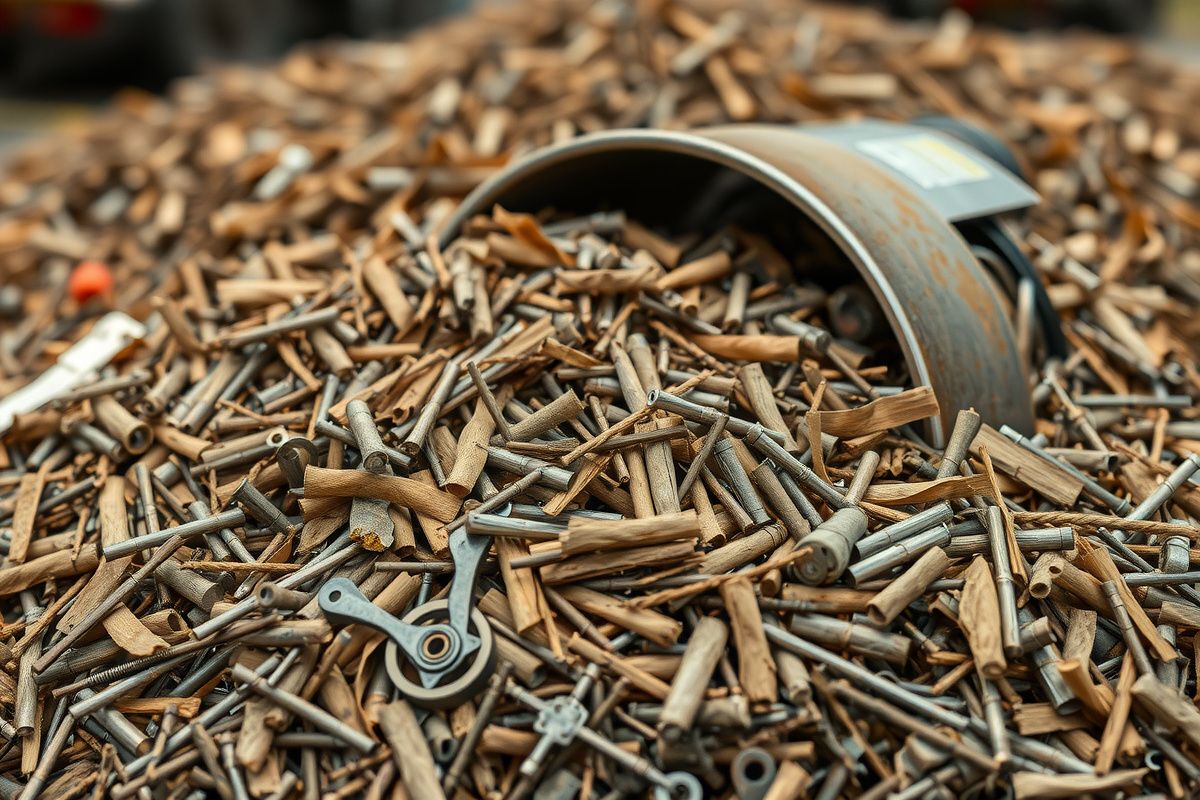
The processing of metal shavings and metalworking waste is one of the key tasks of modern industry, which strives for sustainable development and efficient use of resources. This problem becomes particularly relevant in the context of increasing production volumes and tightening environmental requirements. Metal waste generated during mechanical processing, such as turning, milling, drilling chips, trimmings, and other residues, contains valuable metals that can be reused. Irrational handling of such waste leads not only to raw material loss but also to environmental pollution, as it often contains residues of cutting fluids (coolants) and other chemical impurities. Effective processing allows for reduced pressure on natural resources, lower costs for primary raw materials, and minimized negative impact on the environment, which is a priority for many responsible enterprises.
UtilVtorProm understands the importance of a comprehensive approach to metalworking waste management. We provide professional services for their collection, transportation, storage, and processing, ensuring compliance with all environmental norms and standards. This allows enterprises to focus on their core activities, confident that their waste is handled in an environmentally responsible manner. The implementation of modern technologies for processing metal shavings and metalworking waste not only contributes to the conservation of natural resources but also increases the economic efficiency of production through the recycling of valuable materials. This approach is an integral part of a circular economy strategy, where waste is viewed as secondary resources rather than unnecessary material to be landfilled.
Physico-chemical properties of metal shavings and their impact on processing
Metal shavings and metalworking waste are characterized by a diverse chemical composition, which depends on the type of metal being processed. These can be steel, cast iron, aluminum, copper, brass shavings, as well as waste from alloy steels and other alloys. Each type of shaving has its unique physical properties, such as density, shape, size, and degree of contamination. For example, steel shavings are often long and spiral-shaped, which complicates their transportation and further processing without prior preparation. Aluminum shavings, conversely, are lighter and more brittle. In addition, a significant portion of shavings contains residues of cutting fluids (coolants), which can be water-soluble emulsions, oils, or synthetic fluids. These impurities not only increase the weight of the waste but also make them hazardous to the environment, requiring special cleaning methods before further processing. The presence of coolants also reduces the quality of secondary raw materials, as organic substances can negatively affect metallurgical processes.
The principle of metal shavings processing is based on several stages, including mechanical treatment, cleaning, and melting. The first step is separation by metal type, which ensures the purity of the secondary raw material. Next, the shavings can be crushed to reduce volume and improve characteristics for further processing. After this, the stage of coolant removal occurs, which can be carried out by centrifugation, thermal treatment, or chemical cleaning. Centrifugation allows for the separation of most of the liquid, which can then be regenerated or specially treated. Thermal treatment, such as calcination, effectively removes organic impurities but requires emission control. After cleaning, the shavings are briquetted or pressed to form compact blocks, which significantly facilitates their transportation, storage, and subsequent melting in metallurgical furnaces. Briquetting also reduces metal losses during melting and increases its yield, making the process more economically viable.
Application of processed metal waste in industry
Processed metal shavings and metalworking waste are widely used in various industries, significantly reducing the need for primary metals and contributing to energy savings. One of the main industries is metallurgy, where briquetted or pressed shavings are used as secondary raw materials for the production of new metal products. For example, steel shavings after processing and briquetting can be added to the charge in electric arc furnaces or converters for steel smelting. This not only reduces production costs but also significantly lowers greenhouse gas emissions compared to metal production from ore. Aluminum shavings are remelted to produce secondary aluminum, which is used in the production of automotive parts, building structures, packaging materials, and other products. Copper and brass shavings are also valuable raw materials for foundries, where new alloys and components are made from them.
In addition to metallurgy, processed metal waste is used in mechanical engineering for the production of cast iron, where shavings are added to metal scrap. There are also specialized enterprises engaged in the production of powdered metals from metal shavings. This process allows for obtaining high-purity metal powders, which are used in powder metallurgy for the manufacture of complex parts, filters, bearings, and other components with unique properties. Some types of shavings, especially from alloy steels, can be used to produce special alloys with high operational characteristics. The use of processed metal waste contributes not only to economic benefit but also to the implementation of circular economy principles, where every waste is considered a potential resource that has value for further use in the production cycle.
Environmental management of metal shavings and metalworking waste
Environmental management of metal shavings and metalworking waste is a critically important aspect for any industrial enterprise. These wastes can contain hazardous substances, such as residues of cutting fluids, heavy metals, and other chemical impurities, which pose a threat to the environment and human health. Improper storage or unauthorized disposal of such waste can lead to soil, water resource, and air pollution, as well as significant fines and reputational losses for the enterprise. Therefore, it is extremely important to comply with all regulatory requirements and use the services of licensed companies for their processing. Waste codes according to the National Waste List (NWL) help classify these materials and determine appropriate handling methods. For example, metal shavings waste can be classified under codes: 12 01 01* (ferrous and steel shavings), 12 01 03* (non-ferrous metal shavings), 12 01 04* (plastic shavings), 12 01 07* (halogenated emulsions and solutions for machine processing) and 12 01 09* (halogenated emulsions and solutions for machine processing). UtilVtorProm provides environmental services to enterprises, ensuring a full cycle of handling these wastes.
UtilVtorProm offers comprehensive solutions for environmentally safe handling of metal shavings and metalworking waste. This includes professional collection, transportation by specialized vehicles, temporary storage in equipped areas, and subsequent processing. We ensure full compliance with Ukrainian legislation in the field of waste management, holding all necessary licenses and permits. Our specialists develop individual waste management plans for each client, taking into account the specifics of their production and the type of waste. This allows for minimizing environmental risks, optimizing costs, and increasing the environmental responsibility of the enterprise. In addition, we provide documentary evidence of proper waste handling, which is important for passing environmental inspections and audits. Our goal is not just to rid clients of waste, but to ensure its transformation into valuable secondary resources, contributing to the sustainable development of industry and the preservation of the environment for future generations.
Professional partnership with UtilVtorProm for metal waste recycling
UtilVtorProm is a reliable partner for enterprises striving for responsible and efficient handling of metal shavings and metalworking waste. We offer a professional approach based on many years of experience and deep knowledge in the field of waste management. Our activities are fully licensed, which guarantees compliance with all environmental norms and standards. We understand that each client has unique needs, so we develop individual solutions that best meet the specifics of their production. Our services cover the entire cycle: from collection and transportation to processing and preparation of all necessary documentation. By contacting UtilVtorProm, you receive not just a service, but a comprehensive solution that allows your enterprise to effectively manage waste, reduce environmental risks, and improve its corporate social responsibility. We strive for long-term cooperation, building trusting relationships with our clients. Contact us today to learn more about our services and discuss how we can help your enterprise solve metal waste recycling tasks. Our specialists are ready to provide comprehensive consultation and prepare an individual proposal that will meet your requirements.