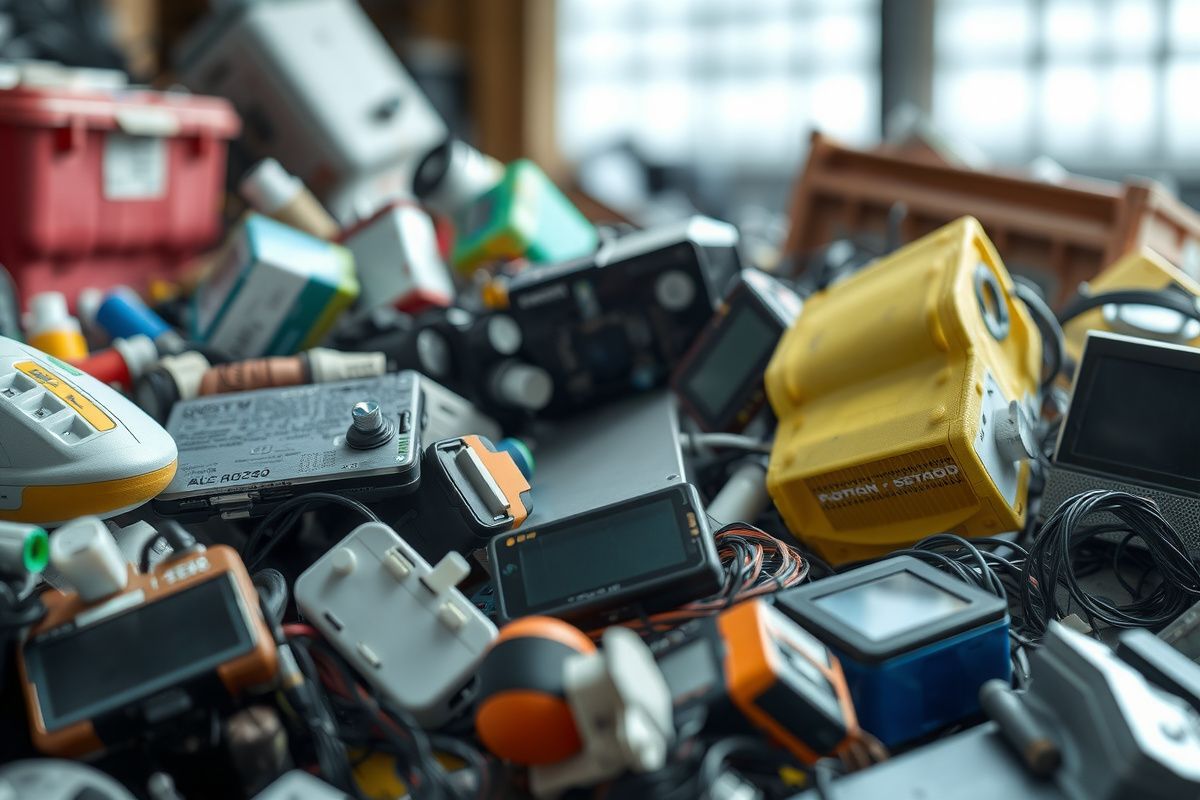
The growth in the volume of electronic waste, or E-waste, represents one of the most serious environmental and economic challenges of our time, requiring immediate and systematic solutions from industry. Annually, tens of millions of tons of discarded electronics, from mobile phones to large household appliances, are generated worldwide, and these volumes are constantly increasing. Uncontrolled accumulation and improper handling of such waste leads to significant environmental pollution with hazardous substances, as well as the loss of valuable resources that could be reused in the economy. A responsible attitude to this problem is key for sustainable development and the preservation of natural resources for future generations.
For industry, the recycling of electronic waste opens up not only challenges related to the need for implementing complex technologies and adhering to strict environmental standards, but also significant opportunities. This includes the creation of new jobs, the development of innovative methods for extracting secondary raw materials, and reducing dependence on primary resources. Companies that invest in modern solutions for E-waste management gain competitive advantages, improve their reputation, and contribute to the circular economy. Effective recycling allows not only to minimize harm to the environment but also to transform a potential threat into a valuable economic asset, ensuring a stable flow of secondary raw materials for production.
Composition and hazardous components of electronic waste
Electronic waste is an extremely complex conglomerate of materials containing both valuable metals and toxic substances that require special handling. Its composition includes precious metals such as gold, silver, platinum, and palladium, as well as significant volumes of copper, aluminum, and iron, making E-waste a rich source of secondary raw materials. However, alongside these valuable elements, discarded electronics also contain hazardous components, including lead in solders, mercury in fluorescent lamps and some switches, cadmium in rechargeable batteries, and brominated flame retardants in plastic casings. These substances pose a serious threat to human health and the environment if handled improperly, making their extraction a critically important stage of recycling.
The technical characteristics of electronic devices determine their composition and potential danger. For example, printed circuit boards, which are the heart of any electronic device, contain complex compositions of metals and non-metallic materials. The operating principle of these components in the finished product ensures its functionality, but after their service life ends, they turn into a source of potential pollution. For example, as in the case of "Batteries and accumulators as hazardous waste: effective management for environmental protection", electronic waste requires a comprehensive approach to its dismantling and separation to separate hazardous elements from valuable ones, ensuring the safety and economic efficiency of the recycling process.
Innovative methods for recycling electronic equipment
Modern technologies for electronic waste recycling are constantly being improved to ensure the most effective extraction of valuable materials and safe disposal of hazardous components. The main stages are mechanical shredding, which allows reducing the size of waste and preparing it for further separation. After this, various sorting methods are used, including magnetic, electrostatic, and optical separation, to separate metals, plastics, and glass. These processes form the basis for further resource recovery. Examples of equipment used at these stages include powerful shredders, granulators, eddy current separators, and specialized lines for automatic sorting, which allow processing large volumes of waste with high precision.
After the initial separation of materials, more complex methods are applied to extract pure metals. Hydrometallurgical processes use chemical solutions to dissolve metals from shredded raw materials, after which the metals are separated by precipitation or electrolysis. Pyrometallurgy involves melting waste in special furnaces, which allows separating metals from non-metallic components, similar to how "Aluminum waste" is processed at metallurgical enterprises. These technologies allow obtaining high-quality secondary raw materials, which can then be used in various industries, including the production of new electronics, metallurgy, and construction, contributing to a significant reduction in the need for primary resources and a decrease in energy consumption.
Systematic approach to handling discarded electronics
Effective handling of discarded electronics requires a systematic approach, including proper classification, collection, transportation, and recycling in accordance with current environmental norms and standards. Discarded electronic and electrical equipment is classified according to the National Waste List (NWL) and may have different codes depending on its composition and the presence of hazardous components. Typical waste codes for electronic equipment include 16 02 13* (discarded equipment containing hazardous components) and 16 02 14 (discarded equipment, other than that mentioned in 16 02 13*). Correct code identification is the first step to organizing safe and legal handling of this waste. UtilVtorProm company provides environmental services to enterprises, ensuring compliance with all regulatory requirements.
No less important is a responsible attitude to all stages of the life cycle of electronic devices, from their production to final recycling. As in the case of "Batteries and accumulators NWL Code 16 06", electronic waste cannot simply be disposed of in landfills, as this will lead to soil and water pollution by heavy metals and other toxic substances. Professional waste management services include not only collection and transportation but also ensuring qualified recycling, which allows extracting valuable materials and safely neutralizing hazardous ones. This contributes to reducing the environmental burden, preserving natural resources, and forming an environmentally conscious society.
Reliable partnership with UtilVtorProm in eco-service
UtilVtorProm company is a reliable partner for enterprises that strive to responsibly and effectively resolve issues of electronic waste management. We offer a full range of services covering the collection, transportation, storage, and recycling of discarded electronics in accordance with the highest environmental standards and legal requirements. Our activities are licensed, which guarantees a professional approach and adherence to all necessary safety norms. By contacting UtilVtorProm, you receive not only quality services but also contribute to sustainable development, reducing the negative impact on the environment and optimizing resource use. We invite you to cooperate to build an environmentally responsible future.