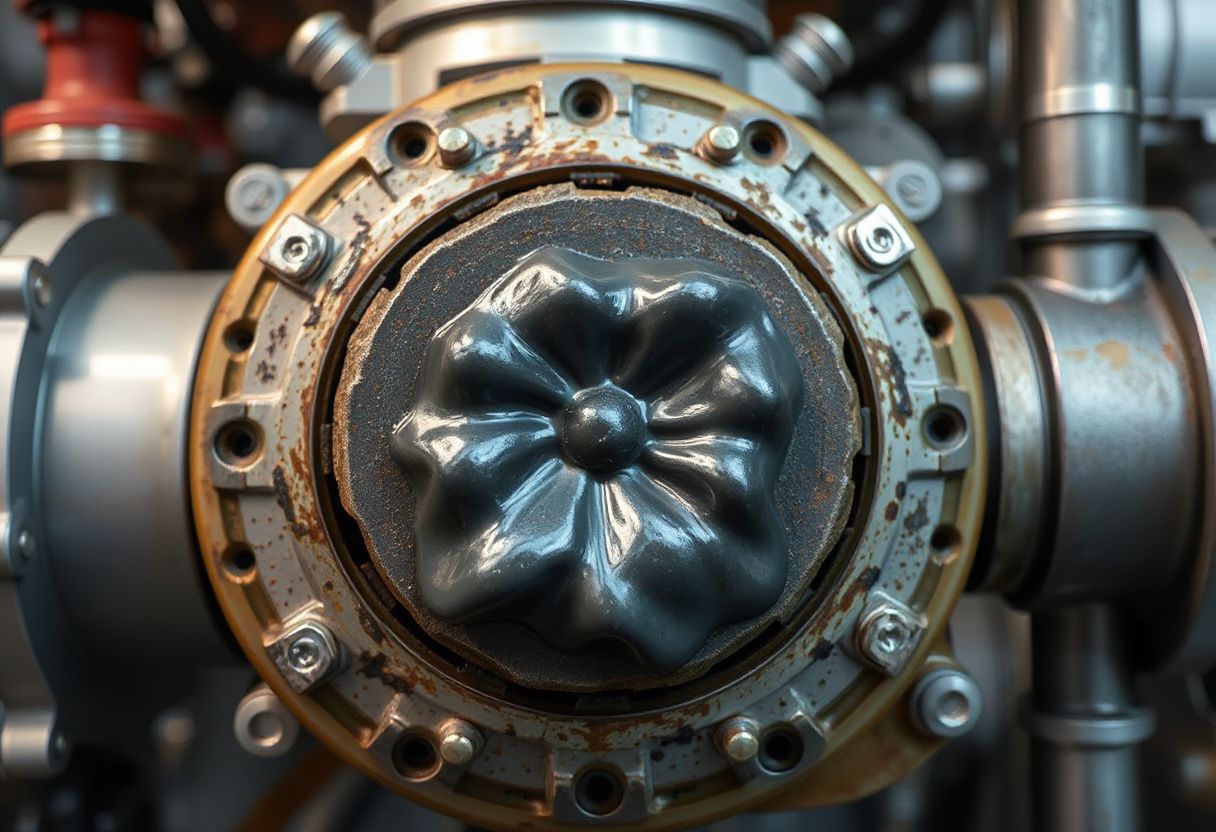
During the scheduled repair of a chemical reactor at a machine-building plant, hardened silicone sealant sediment was discovered. The enterprise's technical service attempted to dissolve the polymer residues with hot toluene without prior analysis. This caused toluene to be released into the workshop air and formed a toxic, viscous mass that completely blocked the emergency drainage pipes. Operators stopped the processing line for 48 hours to clean the internal surfaces.
Errors during the flushing of reactors with chlorosilanes
Most emergency situations at machine-building enterprises occur due to the mixing of liquids with different degrees of chlorination in common storage tanks. Water accelerates the polymerization process of the compounds. The interaction of trichlorosilane with humid air leads to the formation of an explosive gas environment and aggressive hydrogen chloride in the closed vessels of jammed pumps. Improper storage of PMS-200 residues stimulates the formation of hard crusts on the tank walls, which complicates the subsequent unloading of the collected raw materials.
Composition of PMS-200 sediments and their chemical properties
The sediment of organosilicon liquids contains linear and cyclic oligomethylsiloxanes with varying chain lengths. These materials maintain stability when heated up to 200 °C without access to oxygen. The viscosity of the product exceeds 1000 centistokes. Upon contact with alkalis, the polymer chains split to form gaseous hydrogen. The presence of residual Si-Cl bonds creates high corrosive activity, which is why 12Kh18N10T steel vessels are used for working with the waste.
Pyrolysis at 1100 °C and neutralization of hydrogen chloride
High-temperature incineration of liquid organosilicon residues is carried out in chamber furnaces at a temperature of at least 1200 °C for the complete destruction of molybdenum and silicone bonds. As a result of thermal decomposition, dispersed silicon dioxide is formed, which is captured by dry bag filters for subsequent use in the production of construction mixtures. Gas emissions undergo two-stage wet cleaning in scrubbers with milk of lime. An alternative technological method involves pyrolysis in a reducing environment at 1100 °C with the subsequent regeneration of the initial hydrochloric acid solution for industrial needs.
NPV codes 07 02 14* and 07 02 08* in certification
Spent silicone oils and sealants are classified under code 07 02 14*. Still bottoms from chlorosilane rectification have the official code 07 02 08*. The enterprise UtilVtorProm provides a full range of operations with these materials, including their collection, safe transportation by special transport, and preparation for reprocessing.
Procedure for transferring residues to specialized sites
The transfer of hazardous chemical substances for specialized processing requires compliance with strict regulations for the preparation of accompanying documentation and packaging containers. Liquid fractions are poured into sealed steel drums with an anti-corrosion coating, and solid deposits are packed into special containers. Laboratory analysis of each batch is a mandatory stage prior to loading.
- Conducting a laboratory analysis of the composition of organosilicon residues.
- Packaging substances into sealed 12Kh18N10T steel drums.
- Execution of accompanying data sheets and transfer certificates.
- Transportation by special transport to a licensed site.
Transportation is carried out by specialized freight motor transport with valid ADR permits, equipped with primary neutralization means for potential spills of aggressive substances. At the technological sites, the waste is subjected to neutralization or high-temperature processing. Upon completion of the work, the customer receives a complete set of acceptance certificates.
Organization of chemical waste removal
Before starting the cleaning of chemical reactors, an inventory of all accumulated vessels should be carried out. This will make it possible to correctly select reagents for the primary neutralization of residues. Involving a licensed operator guarantees the safe removal of aggressive toxic substances from the factory territory without the risk of forced shutdowns of production facilities. Specialists will determine the exact composition of chemical compounds and select the processing method. The company UtilVtorProm accepts applications for the removal, transportation, temporary storage, and processing of hazardous waste from chemical engineering under an official contract. Placing a service order on the website will allow you to promptly coordinate the schedule for the removal of toxic materials and obtain a full calculation of the work cost.