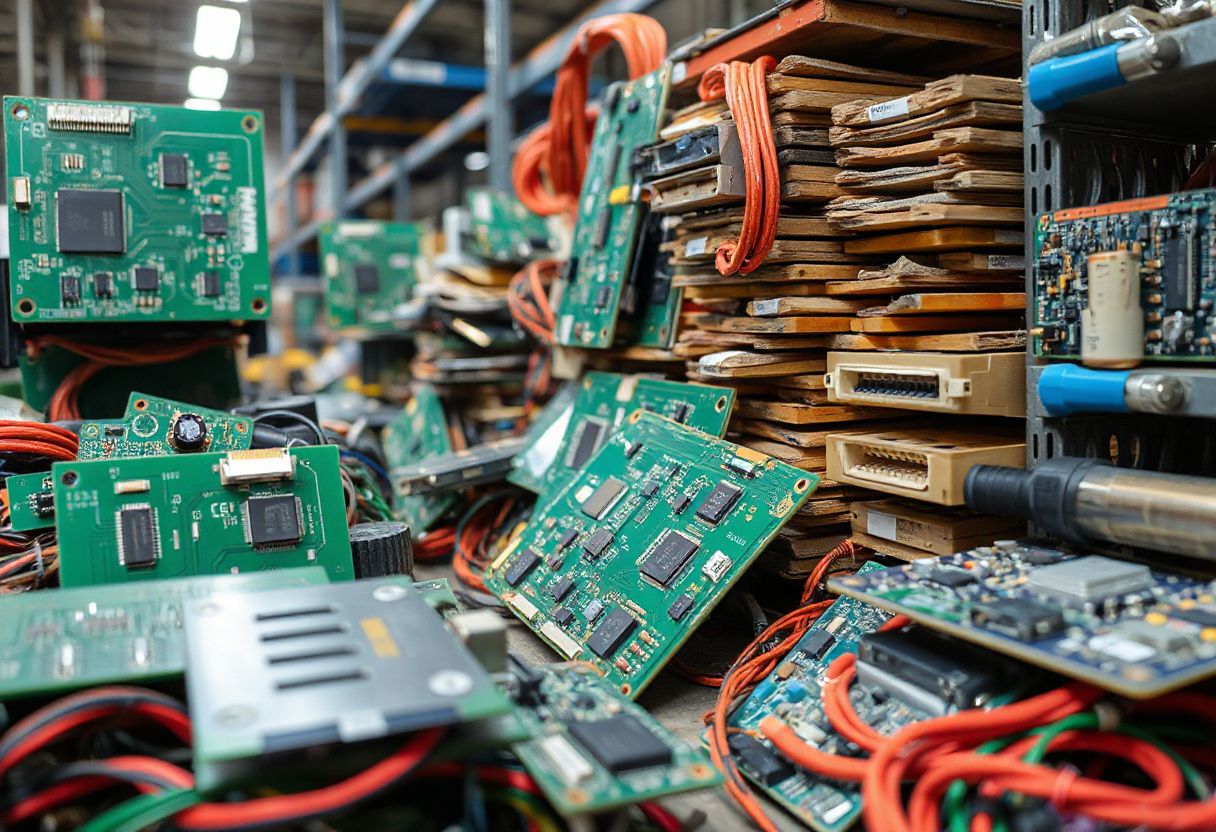
The accumulation of substandard printed circuit boards in the warehouses of instrument-making enterprises leads to the blocking of production areas and increases fire hazard risks. Chaotic storage of dismantled electronic units causes oxidation of open contacts and heavy metal compounds entering the company's production ventilation system. Toxic fumes threaten staff health. Ignoring the regulations for collecting such components entails fines from the environmental inspection and the shutdown of technological lines.
Thermal degradation of components during mounting on FR-4 boards
Defects in instrument-making occur due to violations of the soldering temperature regime for leads. Automated surface-mount technology lines require strict adherence to the technological heating profile. When exceeding the 260-degree mark, delamination of the FR-4 glass-textolite base occurs, along with the appearance of microcracks in the internal copper conductors. Test trials of measuring instruments reveal hidden defects at the incoming quality control stage. Prolonged operation of industrial controllers in an overcurrent mode also accelerates the degradation of semiconductor crystals and puts the equipment out of order. The number of defective assemblies directly depends on the calibration accuracy of the solder paste dispensers and the quality of prior drying of the microcircuit packages.
Microcircuit composition and content of halogenated compounds
Heavy metals in planar packages
A printed circuit board contains a combination of non-ferrous metals, polymer compounds, fiberglass, and inert ceramic substrates for mounting semiconductor parts. Of particular danger are residual bromine-based flame retardants, which are added to the textolite to ensure fire resistance when heated above 130 degrees. Lead solders and cadmium compounds are concentrated in the contact groups of old measuring sensors. The efficiency of extracting precious metals such as gold and tantalum depends on the degree of fraction grinding before chemical leaching.
Classification of electronic scrap according to the National Waste List
The state accounting register requires clear coding of all electronic production residues. Instrument-making enterprises are required to maintain primary records of electronic component remnants. Hazardous assemblies containing mercury switches or polychlorinated biphenyls receive a special code 16 02 15* in accordance with the list. Rejected boards without toxic impurities are registered under a different individual digital designation. For peripheral modules and removed electronic device units, the official code 16 02 16 is applied when transferring the mass for processing. The correctness of determining a specific waste category depends on the results of a laboratory analysis of the material's chemical composition and the presence of harmful coatings.
Mechanical separation and chemical treatment of components
Primary processing of dismantled electronic boards involves two-stage shredding in rotary crushers down to a fraction size of less than 5 millimeters. Air separation on the technological line separates the light polymer-textolite dust mass from the heavy metal concentrate for subsequent hydrometallurgical remelting of the material. UtiltyVtorProm company carries out the collection and transportation of such waste by specialized transport.
Transferring scrap to a specialized operator allows the enterprise to remove itself from the environmental risk zone. The plant receives a complete set of acceptance certificates and confirmation of the transfer of substances for processing. Timely execution of permitting documentation in accordance with current environmental standards completely eliminates the imposition of fines during scheduled inspections by regulatory authorities. The processing process concludes with the extraction of raw materials. The obtained secondary copper and aluminum alloys are returned to industrial circulation for smelting new structural parts and metal housings. Properly organized storage and safe processing of electronic scrap ensure the stable operation of instrument-making workshops without stopping the main production facilities. UtiltyVtorProm's services help enterprises strictly comply with all environmental legislation requirements.