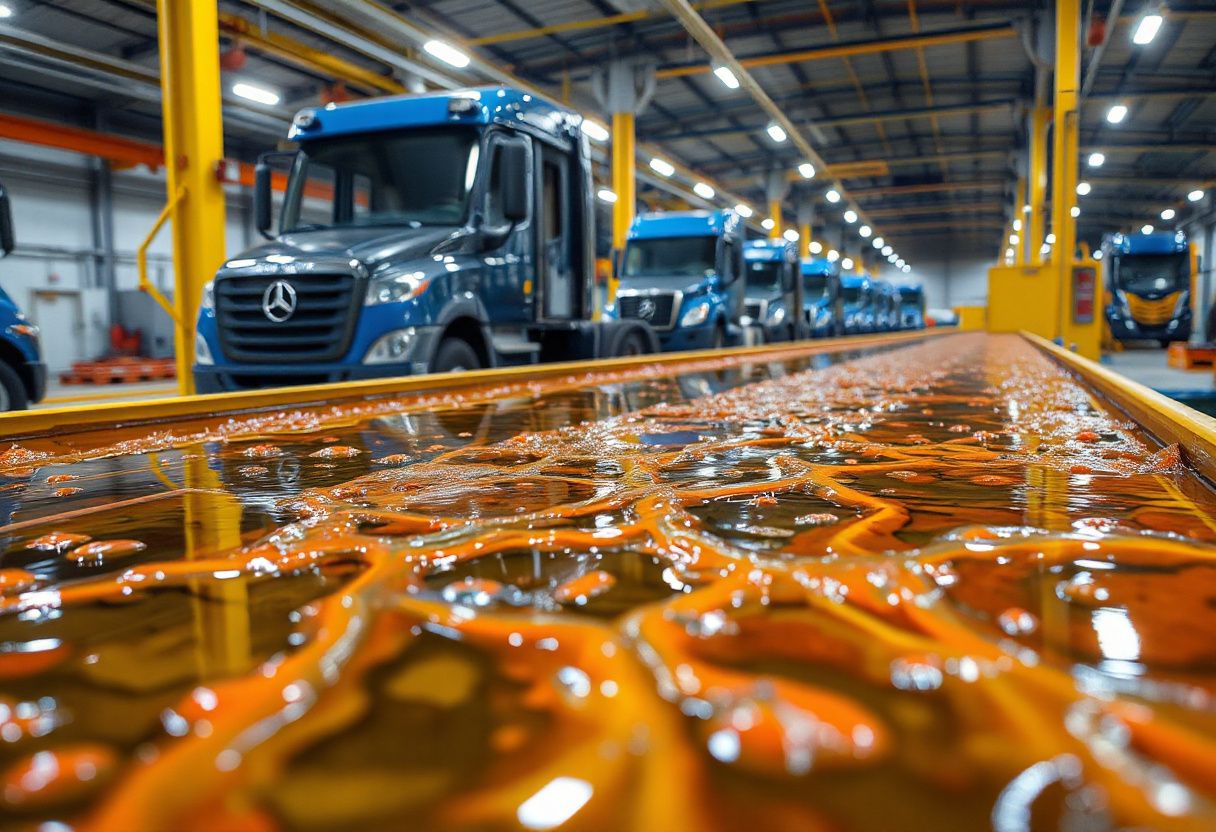
During conveyor painting of truck cabs at large machine-building plants, significant volumes of liquid sludge containing residues of enamels and solvents regularly accumulate. These liquid components are formed after washing spray systems and cleaning the walls of paint booths, where fine aerosol of GF-021 brand primers settles. Contaminated mixtures cannot simply be discharged into the general factory sewage network. Unlike safe domestic wastewater, such materials pose a high threat due to the rapid evaporation of toxic hydrocarbons into the air of the working area. The technological regulations require the immediate collection of these volatile liquid residues into hermetic metal tanks.
Physico-chemical properties of mixtures and heating up to 150 °C
The accumulated paint and varnish waste has a complex multi-component structure with high viscosity. The basis of these toxic mixtures consists of synthetic resins, organic pigments, and volatile solvents. Due to the presence of toluene, xylene, and butyl acetate, such liquid residues ignite at low temperatures, which requires special temperature control during storage.
Identification of hazardous substances by codes 08 01 11* and 14 06 03*
The state classification classifies these toxic liquid residues as hazardous substances subject to strict accounting at every stage of the industrial cycle. For the proper handling of such materials, technologists use special codes of the national waste list, which determine the further methods of their neutralization. In particular, code 08 01 11* is applied. This numerical marker designates paint and varnish residues containing harmful organic solvents or other hazardous chemical compounds. Another important code, 14 06 03*, is used for spent liquid mixtures. Such substances are formed during the degreasing of metal parts before applying anti-corrosion coating. Precise labeling by codes helps to avoid mixing different chemical fractions, which simplifies their further safe transportation to the treatment site.
Technological risks and wear of 12Kh18N10T steel
Long-term storage of aggressive solvents in unsuitable containers causes rapid corrosion of the tank metal walls. Where this cannot be prevented by ordinary painting, designers use 12Kh18N10T alloy steel.
Neutralization of liquid residues at a temperature of 1200 °C
Effective management of hazardous engineering waste involves the use of special closed thermal destruction units operating at controlled pressure. Liquid toxic sludge is fed through nozzles directly into the combustion chamber, where a stable operating temperature of 1200 °C is maintained. Under such a thermal regime, all complex organic molecules decompose into safe components. Clients from the engineering sector receive a reliable solution to these environmental problems thanks to the activities of the licensed company UtilVtorProm, which carries out the collection and transportation of residues. The company's special transport ensures complete tightness during the movement of hazardous goods to the recycling site.
Adsorption gas purification with BAU-A carbon
Gas emissions after the thermal treatment of paints and varnishes pass through a multi-stage filtration system. BAU-A activated carbon is used there. This highly efficient porous material reliably traps residues of volatile harmful compounds and fine solid particles. Automatic sensors continuously measure the concentration of substances at the output of the unit's purification system.
Organization of safe collection and disposal of waste
Systematic control over the generation of liquid paint and varnish residues helps machine-building plants avoid significant fines for violating environmental legislation. To optimize these internal processes, enterprises involve specialized organizations that have an appropriate technical fleet and official state licenses. The UtilVtorProm company offers a full range of works on the safe management of hazardous liquid waste. Representatives of industrial enterprises can send a request to receive a detailed consultation on the conditions of transportation and further processing of toxic chemical compounds.