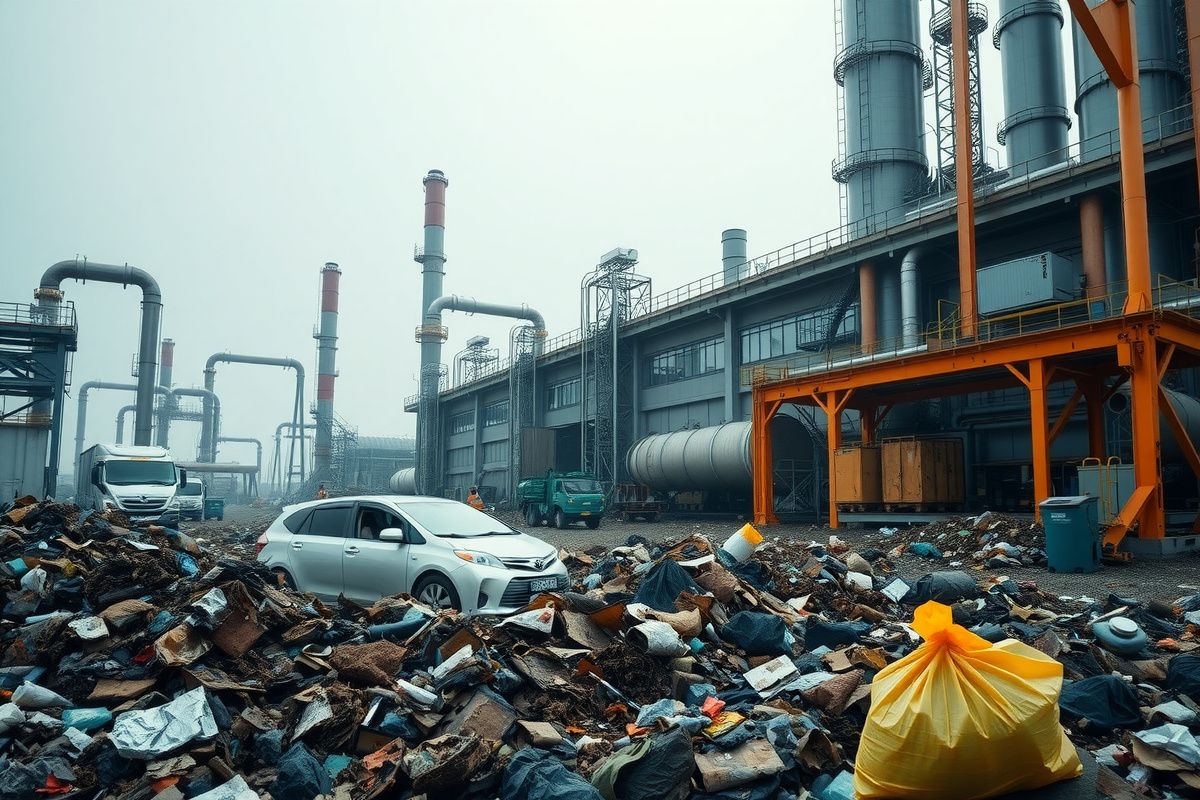
Modern industry faces a dual challenge: the growing volume of industrial waste and the need to reduce energy consumption. Optimizing energy consumption in industrial waste processing is not just a trend, but a vital strategy for sustainable development and increasing the competitiveness of enterprises. This approach allows not only to reduce the negative impact on the environment but also to significantly cut operating costs, improve the company's environmental image, and comply with strict regulatory requirements. Energy efficiency in waste management becomes a key factor for success, opening new opportunities for innovation and the implementation of advanced technologies.
The relevance of this topic is reinforced by global trends towards a circular economy, where waste is viewed as valuable secondary resources, not just garbage. Companies that invest in optimizing energy consumption at all stages of processing, from collection and sorting to direct conversion, gain significant advantages. This includes not only direct savings on energy carriers but also improved overall efficiency of production processes, minimization of greenhouse gas emissions, and increased resilience to fluctuations in energy prices. Thus, the integration of energy-efficient solutions into the industrial waste management strategy is an inevitable step for any responsible enterprise.
Innovative methods for reducing energy costs in industrial waste processing
Optimizing energy consumption in industrial waste processing is based on the implementation of advanced technologies and management systems that minimize energy losses at all stages of the process. One of the key aspects is the use of high-performance equipment with low energy consumption, such as energy-efficient crushers, presses, separators, and drying plants. Heat recovery systems also play an important role, allowing a significant portion of the thermal energy generated during thermal waste processing to be returned to the production cycle. This can be heat from incinerators, pyrolysis units, or dryers, which is then used for space heating, water heating, or electricity generation.
In addition, significant potential for reducing energy costs lies in the automation and optimization of technological processes. The implementation of smart control systems that analyze current data and automatically adjust equipment parameters allows for maximum efficiency and minimizes downtime. This includes optimizing motor speeds, regulating pressure and temperature, and intelligent waste sorting to improve the efficiency of subsequent processing. The use of renewable energy sources, such as solar panels or wind turbines, to power waste processing facilities is also a promising direction that can significantly reduce dependence on traditional energy sources and reduce the carbon footprint.
Application of energy-efficient solutions in processing various wastes
Energy-efficient solutions are widely used in various industries for processing a wide range of wastes. For example, in the metallurgical industry, where large volumes of metal scrap and slag are generated, the introduction of modern induction furnaces with high efficiency and heat recovery systems can significantly reduce energy consumption in metal processing. In the chemical industry, when processing spent solvents, oils, and other chemical substances, distillation and thermal decomposition units equipped with energy-saving heat exchangers and heat recovery systems are used. This allows not only safe processing of hazardous waste but also obtaining valuable secondary products with minimal energy consumption.
In the agricultural and food industries, where organic waste such as biomass, livestock waste, and crop waste is generated, anaerobic plants for biogas production are actively used. This biogas can be used as an energy source for the enterprise's own needs or sold to the grid, turning the waste problem into a source of income and energy. Disposal of construction waste, such as concrete, bricks, and asphalt, also becomes more energy-efficient through the use of mobile crushing and sorting complexes that allow processing materials directly at their place of origin, reducing transport costs and associated energy consumption.
Environmental waste management and NWL codes
Effective industrial waste management, including energy consumption optimization, is a key aspect of corporate environmental responsibility. An important component of this process is the correct classification of waste according to the National Waste List (NWL). For example, spent absorbents and filter materials containing hazardous substances may have codes 15 02 02*, while hazardous waste containing lead, such as battery accumulators, is classified as 16 06 01*. Waste containing solvents may fall under codes 07 01 04* or 08 01 11* depending on their origin and composition. Slags from metallurgical processes containing hazardous substances may have code 10 02 07*.
Improper handling of such waste, as well as the lack of proper processing and disposal, can lead to significant environmental and financial risks. UtilVtorProm company provides a full range of environmental services for enterprises, including collection, transportation, storage, sorting, and processing of industrial waste of all hazard classes. We ensure compliance with all legal norms and apply modern, energy-efficient technologies to minimize environmental impact, guaranteeing safe and responsible waste management. Our specialists will help identify and classify your waste, develop an optimal processing plan taking into account energy efficiency and environmental standards.
Reliable partner in environmental services: UtilVtorProm
Cooperation with UtilVtorProm guarantees a professional approach to solving the most complex tasks in industrial waste management, including the implementation of energy-efficient solutions. Our company has all the necessary licenses and permits to carry out activities related to the collection, transportation, storage, and processing of hazardous and non-hazardous waste. We offer comprehensive services that allow enterprises not only to comply with environmental standards but also to optimize their own processes, reducing operating costs and increasing environmental responsibility. Our experts develop individual solutions for each client, taking into account the specifics of production and the type of waste, ensuring maximum efficiency and compliance with the highest quality and safety standards. Contact us to learn more about how we can help your enterprise achieve sustainable development and improve energy efficiency in waste management.