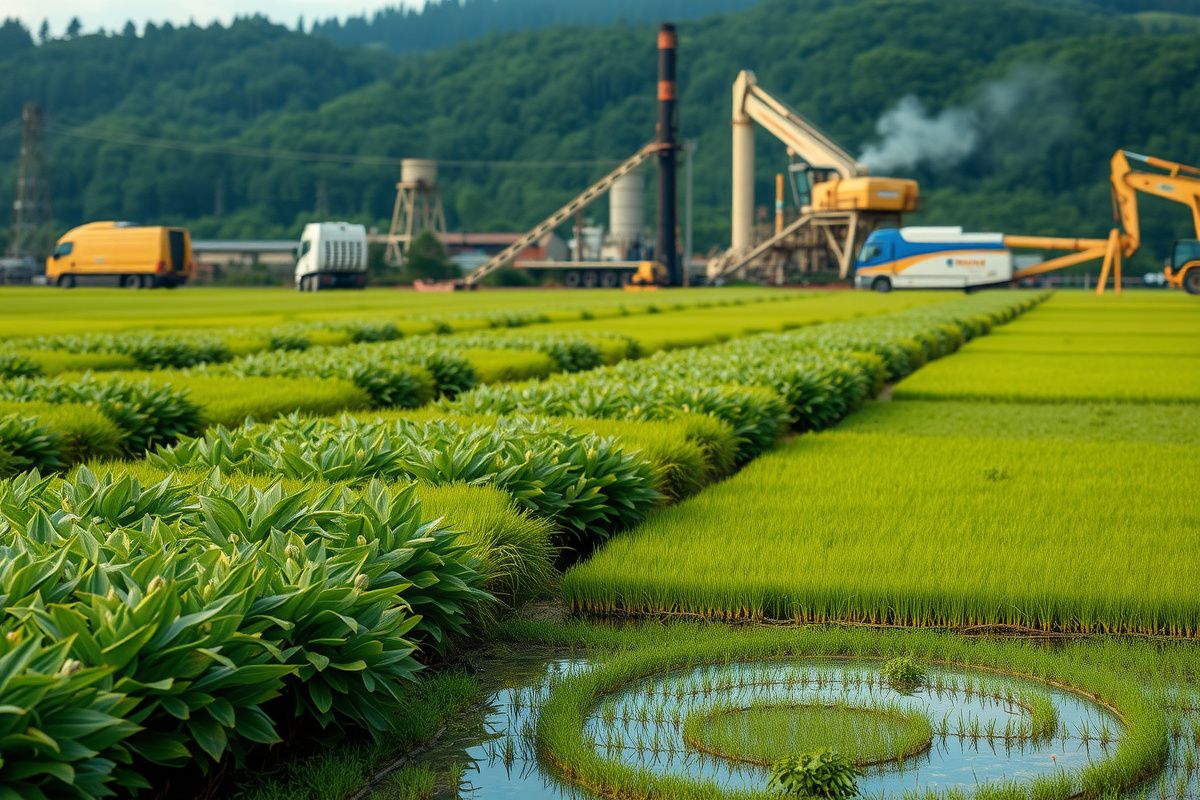
Restoring territories after the cessation of industrial activity is one of the most pressing challenges of our time, facing society and the environmental community. Industrial sites such as factories, mines, quarries, and landfills leave behind not only ruined buildings but also significantly degraded soils, polluted water resources, and disrupted ecosystems. Effective methods of reclamation and remediation are key to returning these lands to productive use, whether as agricultural lands, recreational areas, or new industrial sites that meet modern environmental standards. This issue becomes particularly acute in the context of global trends towards sustainable development and biodiversity conservation.
A comprehensive approach to territory restoration is not just an environmental legal requirement but also an economic necessity, as degraded lands lose their value and create long-term risks to public health and the environment. Modern technologies allow not only for the cleanup of contaminated areas but also for the restoration of their natural functionality, integrating them into the landscape. Thanks to innovative solutions offered by UtilVtorProm, enterprises can effectively manage restoration processes, minimizing negative environmental impact and ensuring compliance with all regulatory requirements. This allows former industrial wastelands to be transformed into valuable assets that contribute to regional development.
Engineering-Biological Approaches to Contaminated Land Reclamation
Methods for restoring territories after industrial activity encompass a wide range of engineering, physical, chemical, and biological technologies, applied both individually and in combination. Physical methods include the removal of contaminated soil, its mechanical cleaning, or isolation using geomembranes, which is effective for localizing hazardous substances. Chemical methods involve the use of reagents to neutralize or immobilize pollutants directly in the soil, reducing their mobility and toxicity. These approaches require precise calculation and control to avoid secondary contamination and ensure the stability of results.
Biological methods, such as phytoremediation and biodegradation, use natural processes to clean soil and water. Phytoremediation involves planting vegetation capable of absorbing, accumulating, or breaking down pollutants. Biodegradation uses microorganisms that metabolize toxic compounds, converting them into less harmful substances. These "green" technologies are environmentally friendly and often economically viable for large areas with moderate levels of contamination, for example, in the case of cleaning filtered materials and used absorbents, which are often found at industrial sites. The choice of a specific method depends on the type of contamination, the scale of the problem, and the characteristics of the site.
Practical Application of Industrial Zone Restoration Technologies
The practical application of territory restoration methods demonstrates their effectiveness in various industries. For example, after mineral extraction, technical reclamation is actively applied, which includes forming a new relief, creating drainage systems, and applying a fertile soil layer. After this, biological reclamation is carried out, which involves planting vegetation to restore biodiversity and prevent erosion. This allows former quarries and mines to be transformed into forests, agricultural lands, or even recreational areas, ensuring their sustainable use.
In cases of oil product or chemical contamination, as is often the case on the territory of old oil depots or chemical enterprises, more complex technologies are used, including in-situ or ex-situ bioremediation, soil washing, or thermal desorption. Equipment for such work may include specialized excavators for excavating contaminated soils, mobile units for their cleaning, or bioreactors for accelerating microbial degradation. It is important to consider that such sites often contain various hazardous wastes, for example, asbestos-containing building materials, which require separate, safe handling and disposal.
Environmentally Safe Management of Hazardous Reclamation Waste
During territory restoration work, waste is inevitably generated, which can be both relatively safe and very dangerous. Such wastes include contaminated soils, construction debris from facility demolition, sludge from water treatment, spent solutions, and reagents. An important component of a successful restoration project is the proper identification, classification, and safe handling of these wastes. For example, soils and stones containing hazardous substances are classified under waste code 17 05 03*, and chemical process wastes containing hazardous substances are classified under code 07 01 01*. Sludge from wastewater treatment containing hazardous substances, which has code 19 08 13*, may also be generated.
UtilVtorProm provides a full range of environmental services for enterprises, including the collection, transportation, storage, and processing of various types of waste generated during reclamation. Such wastes may also include alternative hazardous wastes that lack clear classification but pose a potential threat to the environment. Our professional approach ensures that all waste operations are performed in compliance with the highest environmental standards and legal requirements. We ensure that hazardous materials, such as, for example, spent batteries and accumulators, which are hazardous wastes, are properly processed, minimizing risks to human health and natural ecosystems.
Partnership with UtilVtorProm: Guarantee of Effective Environmental Restoration
By choosing UtilVtorProm as a partner for territory restoration after industrial activity, you gain access to a professional approach and many years of experience in the field of environmental services. Our activities are licensed, confirming our competence and compliance with the strictest standards. We offer comprehensive solutions, from environmental auditing and development of reclamation projects, to the direct execution of work for the collection, transportation, and processing of all types of waste. Our team of experts uses advanced technologies and equipment, ensuring maximum efficiency and safety at every stage of the project. Contact us to receive a consultation and develop an individual plan for the restoration of your territory, ensuring its ecological future.