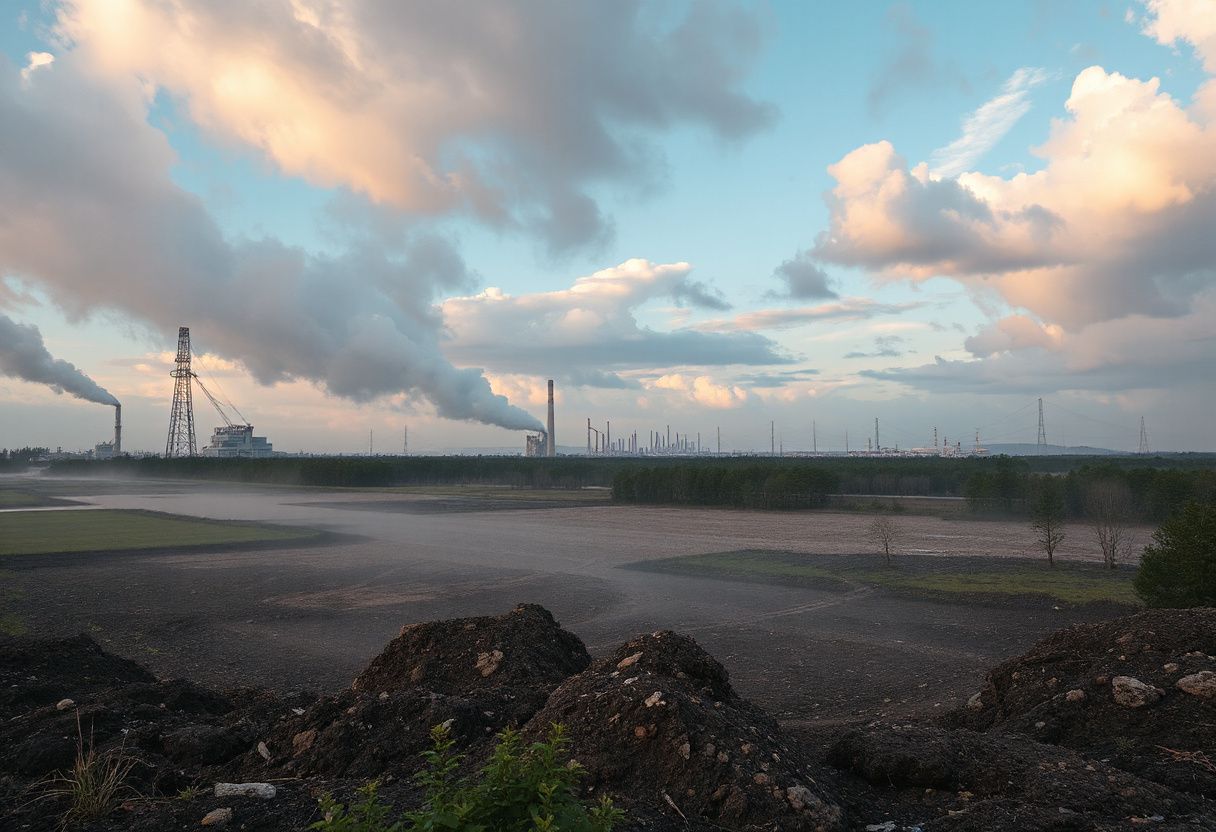
Uncontrolled emissions of persistent organic pollutants into the air lead to the accumulation of toxic substances in the soil and chronic poisoning of local ecosystems. State ecological inspectors fine enterprises and shut down production lines for failing to comply with established maximum allowable emission limits for harmful gases. These sanctions destroy businesses. Ukraine's new environmental legislation requires chemical plants to immediately implement modern technologies for the destruction of hazardous compounds directly within gas streams. Therefore, enterprises must ensure the complete splitting of chlorinated hydrocarbons before releasing mixtures into the atmosphere. Compliance with these strict environmental standards guarantees the preservation of industrial activity licenses.
Environmental requirements for thermal treatment reactors
Every chemical plant today faces the problem of accumulating highly toxic volatile compounds. Local treatment facilities often cannot cope with the purification of complex multicomponent mixtures. Production managers are forced to look for reliable methods of thermal destruction to prevent dioxins and furans from entering the environment. Are factories ready to invest in the safe treatment of industrial gases right now? UtilVtorProm provides services for the treatment of such exhaust gases, providing documentary support for the collection and thermal neutralization processes of hazardous components.
Classification of exhaust gases under codes 07 01 03* and 07 02 08*
The generation of waste gases at chemical production facilities is accompanied by the release of hazardous substances, which are classified in accordance with the National Waste List. State regulatory authorities pay special attention to fractions containing organic halogenated solvents and other hazardous volatile compounds. These gases are assigned the code 07 01 03*. These compounds are formed during the synthesis of organic substances, although at low reaction temperatures their yield is significantly reduced. Another important category is distillation bottoms and reaction masses under the code 07 02 08*. Such liquid and gaseous mixtures require high-temperature incineration in special chambers.
Transportation of gases in sealed reservoirs
The collection and temporary accumulation of waste gases require absolute tightness of all equipment. Any vapor leak can cause acute poisoning of the industrial site personnel. For the safe intermediate storage of gas mixtures, process engineers use special reservoirs made of high-alloy steel grade 12Kh18N10T. These containers undergo regular pressure tests at 2 bar. The transportation of such concentrated substances to treatment sites is carried out exclusively by specialized transport in compliance with the rules for the carriage of dangerous goods.
Temperature parameters of incineration at 1200 °C
Key thesis: Effective destruction of persistent organic pollutants occurs only under the condition of maintaining a stable temperature above 1200 °C in the afterburning chamber. At such a high temperature, the molecular bonds of chlorinated hydrocarbons completely disintegrate, forming simple non-toxic oxides and ordinary water vapor. The oxidation process requires the supply of an excess volume of oxygen into the incinerator reactor.
Catalytic purification and limitations of the method
Due to catalytic gas treatment, the operating temperature of the process can be reduced to 400 °C. However, this method is unsuitable if the waste gases contain sulfur and phosphorus compounds.
Adsorption using BAU-A activated carbon
Using the deep adsorption method, engineers achieve final purification of exhaust gases from residues of persistent organic substances before the mixture is released. The most common and proven absorbent for trapping solvent vapors is special BAU-A grade activated carbon with a high specific surface area. This material effectively retains toxicant molecules in its micropores. However, adsorption proves to be ineffective if the humidity of the gas stream exceeds 80%, as water blocks the active centers of the absorbent. Saturated adsorbent is subject to mandatory thermal regeneration or safe incineration. This guarantees environmental safety. Used carbon is sent to specialized plants for further thermal treatment.
Environmentally safe management of industrial gas emissions requires the mandatory involvement of specialized enterprises. Independent treatment of such mixtures often leads to emergency situations. UtilVtorProm operates on the basis of a state license and provides services for the safe collection and processing of toxic waste gases. The official acts received confirm full compliance with environmental requirements before regulatory authorities. Timely transfer of hazardous substances to a licensed enterprise completely eliminates the risks of fines from state environmental control authorities.