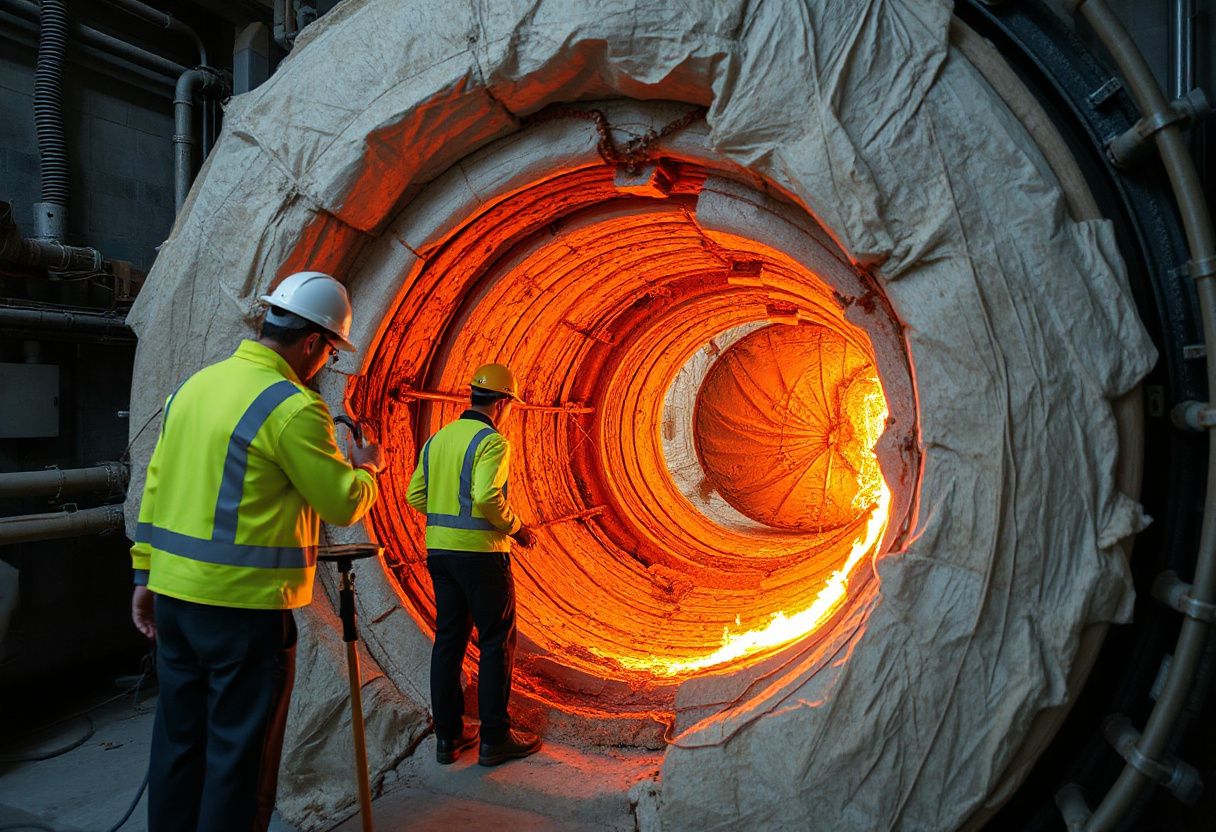
Operators often ignore checking the lining of tunnel kilns before starting a new shift. This leads to localized shell overheating and significant heat energy losses through the insulation layers. The temperature of exhaust gases at the chamber outlet often reaches 950 °C due to the lack of proper draft regulation. Heat escapes outward. Power is lost.
Metal structures of kilns deform under the influence of uncontrolled thermal gradients during a prolonged firing cycle. Heat recovery becomes technically difficult due to the high concentration of aggressive gases and abrasive dust in the exhaust tract. Heat exchangers clog with soot too quickly. Deposits thicken. Efficiency drops. Enterprises are forced to stop equipment for mechanical cleaning of tube bundles, which disrupts production schedules.
Hot gas recovery using plate heat exchangers
To utilize flue gas heat, engineers typically choose Finned surfaces made of heat-resistant AISI 310S steel. The structure withstands prolonged operation in environments with temperatures up to 1100 °C without metal destruction. External dust settles slower. Tie rods are strong.
Design features of ceramic regenerators
High temperatures require the use of high-alumina ceramic packing blocks of the MKR grade based on aluminum oxide. The material withstands thermal shocks during cyclical switching of air and smoke flows. Blocks operate.
Remnants of fireclay bricks and spent filter elements obtained as a result of dismantling outdated equipment require strict compliance with industrial waste management rules. Dust generation is accompanied by the release of fine metal oxides.
Regulatory framework and NPV code 10 01 17
According to the national waste classifier, spent ceramic materials from aggregate linings are marked as 10 01 17 if hazardous components are present. Metal filters contaminated with soot and oils are collected under the code 15 02 02* for subsequent safe processing at specialized sites. Transportation is regulated.
The licensed company UtilVtorProm carries out a full cycle of works on the safe collection, transportation, and recycling of waste generated at heavy industry enterprises. Clients receive standard-compliant acceptance certificates and full document support without unnecessary delays. Ecology is protected.