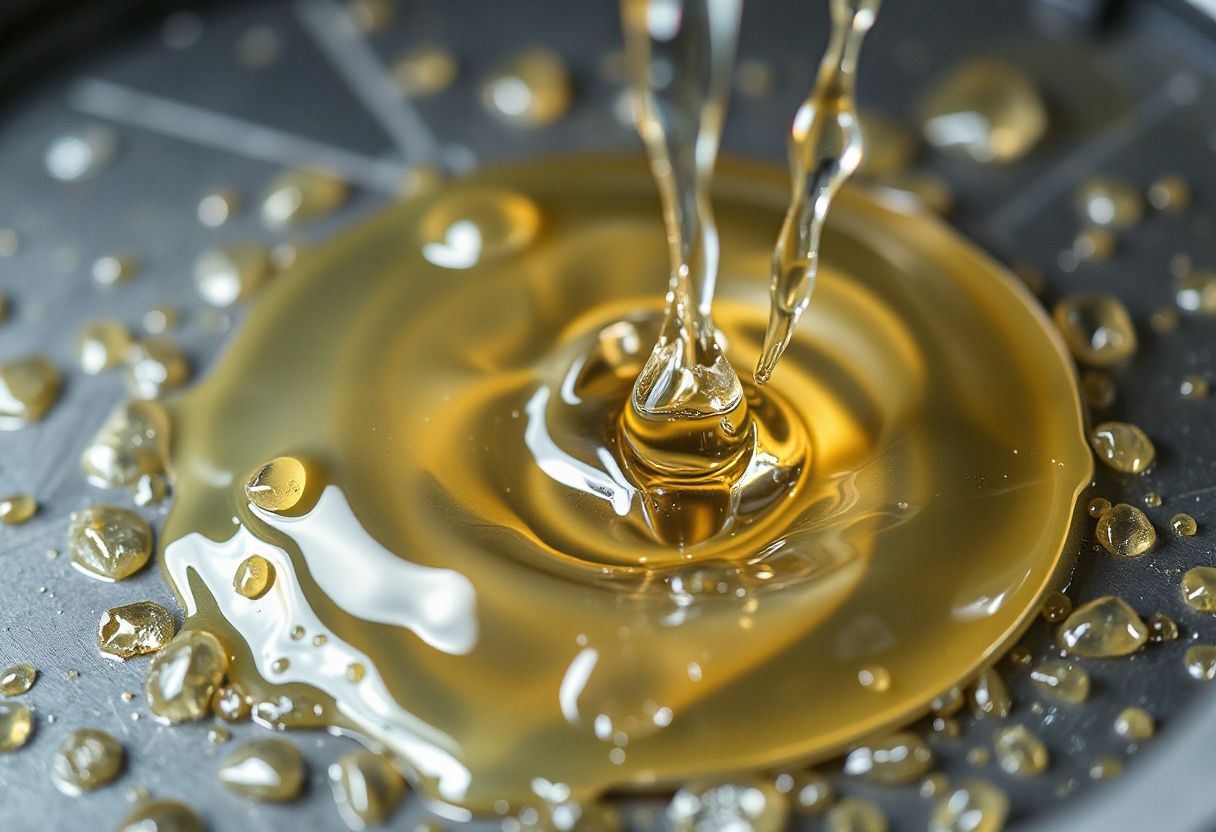
Spent coolant is a multi-component oil or water emulsion that loses its initial technological properties during metal turning or milling processing. Under the action of extreme temperatures in the cutting zone, the part undergoes intensive friction, which causes thermal decomposition of organic additives and the accumulation of fine metal chips. Fresh emulsion cools the tool and lubricates the contact surface of the workpiece during cutting. However, prolonged circulation of the lubricating solution in the closed loop of machine equipment inevitably leads to tank stratification and the accumulation of fine sludge. Such fluid requires immediate replacement. Further use of completely worn material stops the production line and ruins expensive parts.
Causes of Thermo-Oxidative Degradation in CNC Machines
Heavy cutting conditions of hardened steels cause local heating of the contact zone up to 600 °C. Systemic overheating breaks the chemical bonds of surface-active substances and accelerates the oxidation of the base oil. The situation is complicated by the constant ingress of waylube oils, hydraulic fluids, and fine iron-containing dust from the working areas of milling equipment into the reservoir. The accumulation of foreign petroleum products turns the working emulsion into a favorable environment for anaerobic bacteria.
Content of Halogenated Compounds and Heavy Metals
The composition of spent lubricating material includes petroleum distillates, synthetic emulsifiers, anti-wear additives based on chlorine or sulfur, and corrosion inhibitors. Unlike pure initial components, the liquid mass from the spent tank contains high concentrations of copper, nickel, chromium ions, and polycyclic aromatic hydrocarbons. The presence of halogenated chemical compounds increases the potential fire and environmental hazard of the material. When stored for a long time in open containers, such mixtures release volatile organic compounds that have a pronounced toxic effect on the personnel's body. Free hydrogen sulfide and ammonia create a harsh unpleasant odor in the workshop premises.
The aqueous phase of the solution after biological decomposition loses its stability and releases a thick precipitate. The dense insoluble mass settles at the bottom of technological reservoirs and clogs filter channels. Mechanical cleaning using mesh catchers or centrifugation only temporarily removes large chips without changing the toxic chemical composition of the liquid fraction. Direct discharge of such emulsions into the municipal sewage system is strictly prohibited by law. The ingress of soluble petroleum products into open water bodies rapidly disrupts the operation of biological treatment facilities and causes mass mortality of aquatic bioresources.
Waste Codes 12 01 07* and 12 01 09* in Metalworking
According to the National Waste List, liquid technological residues from turning and grinding operations belong to the category of hazardous substances with mandatory accounting. Synthetic and semi-synthetic machining solutions without halogen content are identified under the official code 12 01 09* for accounting at the manufacturing enterprise. For mineral lubricating materials without halogenated additives, the code 12 01 07* is used. Where this cannot be avoided, the accumulated volumes are collected in sealed steel reservoirs or IBC totes with an anti-corrosion internal coating. Business entities are obliged to maintain a primary accounting log for each generated batch. Storage of liquid residues without a special license is limited by clear time norms. Violation of environmental safety rules entails the imposition of significant fines and the stoppage of production workshops by decision of regulatory authorities.
Reagent Coagulation and Ultrafiltration of Emulsions
The separation of stable water emulsions requires the use of a complex of chemical and physical methods. Reagent coagulation with aluminum salts destroys the protective shells of oil droplets in a few minutes. The licensed enterprise UtilVtorProm carries out high-quality collection, transportation, and professional treatment of hazardous coolants at specialized technological facilities.
Fine purification of the liquid phase on barometric membrane modules ensures the separation of pure water and concentrated organic mass for incineration. Thermal neutralization takes place at 1100 °C. Processing of liquid technological residues prevents environmental pollution and guarantees full compliance with legislative requirements for industrial facilities of any scale. UtilVtorProm provides services for the transportation and treatment of hazardous industrial waste, offering to contact available service channels for consultation.