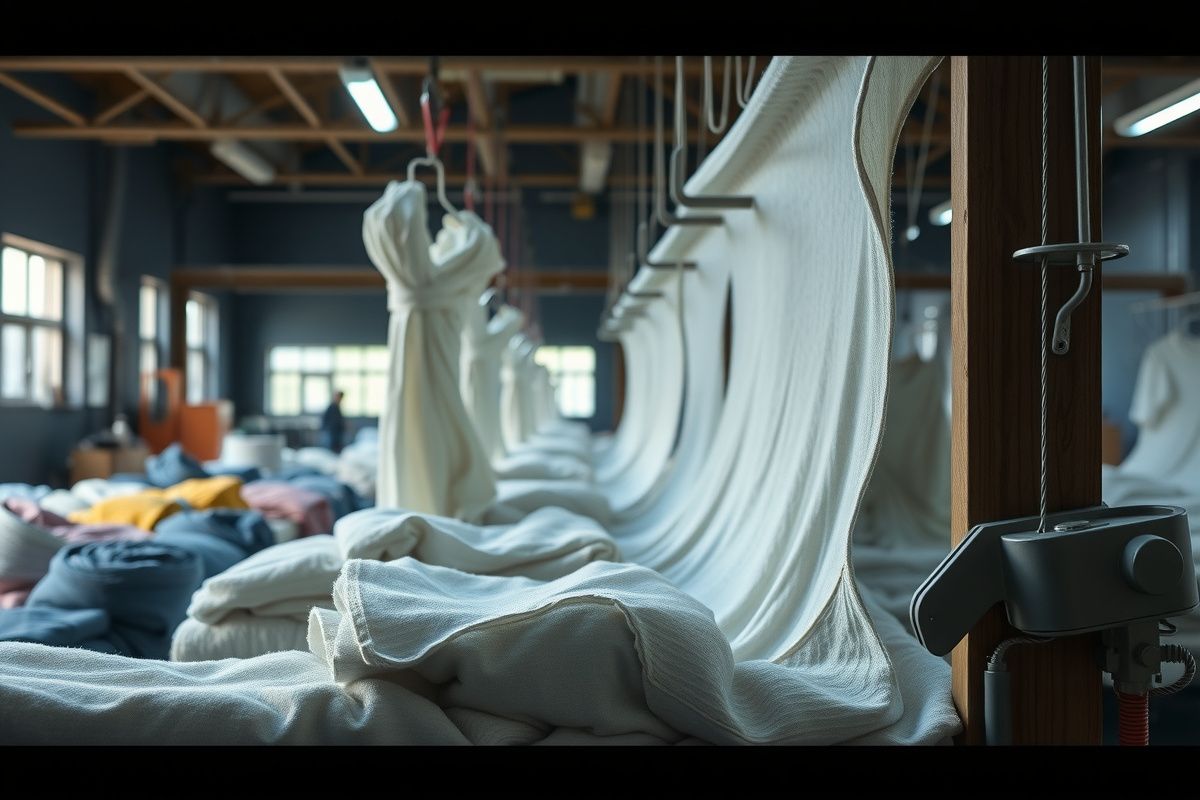
The textile industry is one of the oldest and largest sectors of the global economy, yet it is also a significant source of environmental pollution. Every year, millions of tons of textile waste, including production scraps, defective products, and discarded clothing, end up in landfills, where they decompose for centuries, releasing harmful substances and greenhouse gases. This creates an enormous burden on ecosystems and demands immediate solutions. The relevance of innovative approaches to textile waste recycling is growing every year, as traditional methods can no longer effectively cope with such volumes.
Modern technologies offer new opportunities to transform this waste into valuable resources. From chemical fiber regeneration to mechanical processing and pyrolysis, the range of innovative solutions is constantly expanding. These methods not only reduce the volume of waste going to landfills but also contribute to saving natural resources, reducing energy consumption, and cutting greenhouse gas emissions. UtilVtorProm, recognizing the importance of sustainable development, actively implements and supports environmentally responsible approaches to industrial waste management, particularly textile waste.
Advanced Technologies for Textile Fiber Recovery
Innovative solutions for textile industry waste processing are based on complex technical characteristics and operating principles that allow for the most efficient separation and regeneration of valuable components. The main directions are mechanical, chemical, and thermal processing. Mechanical processing involves shredding textiles into fine fibers, which can then be used to produce new threads, fillers, or insulating materials. Specialized shredders, fiberizers, and carding machines are used for this purpose, ensuring high quality of the resulting fibers.
Chemical processing is more complex but allows for obtaining fibers that are comparable in quality to virgin fibers. This process involves dissolving textile waste in special solvents, followed by the separation of pure polymers. For example, cellulose-based solvents are used for cotton, while solvents that break down polymers into monomers, which can then be repolymerized, are used for synthetic fibers. Thermal processing, such as pyrolysis or gasification, is used to convert textile waste into energy or chemical raw materials when other methods are ineffective or economically unfeasible. Modern equipment for these processes is highly automated and requires minimal human intervention.
Practical Application of Innovative Solutions in the Textile Industry
Innovative solutions for textile industry waste processing are widely used in various sectors, demonstrating their effectiveness and economic viability. One striking example is the use of recycled fibers to produce new textile products. Regenerated yarn made from shredded cotton waste is used to sew jeans, T-shirts, and home textiles. Synthetic fibers, such as polyester, after chemical processing, can be converted into new granules, from which fibers for sportswear, fleece products, or fillers for furniture and toys are then formed.
In addition to direct return to textile production, recycled waste finds application in related industries. For example, shredded textiles are used as sound and thermal insulation material in construction, as well as fillers for car seats and other components. Some types of recycled fibers are used to produce composite materials that have high strength and light weight. This reduces the need for primary materials, lowers production costs, and improves the environmental footprint of production. Companies actively invest in the development and implementation of such technologies, understanding their strategic importance.
Environmental Management of Textile Waste and Its Classification
Effective management of textile industry waste requires strict adherence to environmental standards and proper classification. Textile production waste can be quite diverse in its composition and degree of hazard. These include fabric scraps, threads, fibers, defective products, as well as spent dyes and chemicals used in the production process. It is important to understand that some of this waste may contain hazardous substances, which requires a special approach to their collection, transportation, and processing. UtilVtorProm provides environmental services to enterprises, ensuring a full cycle of waste management, including their identification and classification.
According to the National Waste List (NWL), textile waste can have different codes. For example, textile fiber and fabric waste that does not contain hazardous substances can be classified as 04 02 22 (textile fiber waste) or 04 02 09 (composite material waste). Waste containing hazardous substances, such as dyes or chemicals, may have codes 04 02 16* (dyes and pigments containing hazardous substances) or 04 02 14* (finishing waste containing hazardous substances). Proper identification and labeling of waste are key to its safe and effective management, which helps avoid negative impacts on the environment and human health.
Professional Partnership with UtilVtorProm in Waste Recycling
UtilVtorProm is a reliable partner for textile industry enterprises, offering comprehensive and professional waste management services. We have all the necessary licenses and permits to carry out activities for the collection, transportation, storage, and processing of various types of industrial waste, including textiles. Our specialists have many years of experience and deep knowledge in environmental management, which allows us to develop and implement individual solutions for each client, taking into account the specifics of their production and legal requirements. We guarantee compliance with all environmental standards and norms, ensuring transparency and responsibility at every stage of cooperation. By contacting UtilVtorProm, you receive not just services, but a comprehensive solution that helps your business become more environmentally responsible and efficient. Contact us today to learn more about our services and discuss cooperation opportunities.