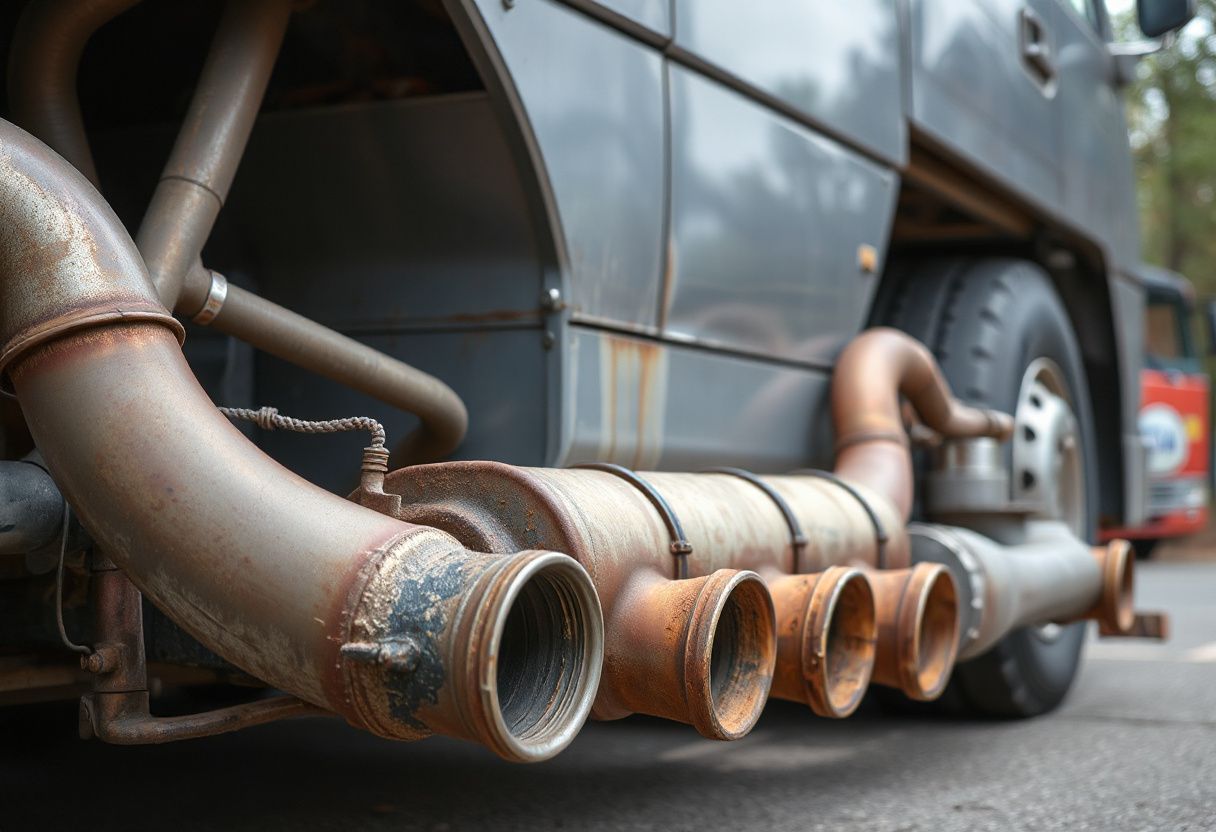
Motor transport enterprises and large service centers constantly face the problem of the accumulation of worn-out exhaust system elements that require proper ecological management. The specifics of these components lie in the high concentration of precious metals, so uncontrolled dumping or uncoordinated storage of such scrap causes serious financial and environmental losses. In practice, the extraction of valuable raw materials requires the use of technologically complex and controlled methods. For the safe solution of this task, the company UtilVtorProm offers a range of services including collection, transportation, and subsequent deep processing of hazardous industrial waste.
Content of platinoids and the structure of cordierite-type carriers
The basis of automotive neutralizers is a honeycomb ceramic block made of heat-resistant magnesium and aluminum silicate. A thin catalytic layer of platinum, palladium, and rhodium is applied to the porous surface of this matrix. Under the influence of extremely high temperatures and aggressive exhaust gases, the active coating gradually destroys under normal conditions, and the ceramics themselves often sinter.
Hydrometallurgical processes and grinding in RM-120 type mills
Specialized raw material processing workshops use industrial ball mills to grind the ceramic carrier to a state of finely dispersed dust. The resulting homogeneous mass is sent for spectral analysis, which determines the mass fraction of precious components in each batch with high accuracy. Next, chemical reagents are applied.
- Primary sorting by carrier type (ceramic or metal)
- Grinding in high-speed mills to a fraction of less than 100 microns
- X-ray fluorescence analysis to determine the content of Pt, Pd, Rh
- Metal extraction by selective dissolution
Acid leaching makes it possible to isolate soluble metal compounds, although the technology requires strict control over the formation of toxic vapors and liquid acidic residues. Mostly, such operations are carried out in sealed reactors using modern gas neutralization systems. Separate metal housings of spent devices are pressed with hydraulic baling presses for subsequent remelting.
Waste codes 16 08 01* and 16 08 02* according to the National List of Wastes
According to the National List of Wastes, spent catalysts are subject to mandatory accounting and classification. Materials containing platinum or palladium are marked with the code 16 08 01*. Other mixtures are singled out separately. For components containing hazardous transition metals, the code 16 08 02* is used.
Temperature regime over 1200 °C in pyrolysis
During the thermal processing of the crushed ceramic mass in special plasma-arc furnaces at temperatures above 1200 °C, the melting of the carrier takes place. This approach ensures the separation of the liquid phase into a light silicate slag and a heavy alloy of precious metals with a collector. After cooling, the obtained slag fraction is used as a safe raw material for the construction industry.
Requirements of Resolution No. 1221 regarding the handling of industrial waste
Due to the transfer of spent neutralizers to unlicensed intermediaries, significant legal risks arise for the management of any enterprise. Legislation requires the mandatory execution of accompanying documentation and waste acceptance-transfer acts. Only certified enterprises have the right to carry out the collection, accumulation, and subsequent separation of such components, at least in the practice of safe management.
To avoid fines and ensure environmental safety, enterprises should conclude direct agreements with verified market operators. Professional hazardous waste management services provided by UtilVtorProm guarantee full compliance with all state standards and sanitary norms. Thanks to the experience of experts, the prompt removal of materials by specialized transport directly from the customer's territory is ensured. At the same time, each batch of scrap is weighed on high-precision scales and is subject to mandatory documentation with the provision of a full package of reporting acts. The execution of all technological stages is based on the current state license with compliance with safety rules. As a result, customers receive official environmental reports that fully satisfy the requirements of state supervision bodies. Proper handling of worn-out parts helps preserve valuable resources and prevents environmental pollution with heavy metals, as a rule, for years to come.