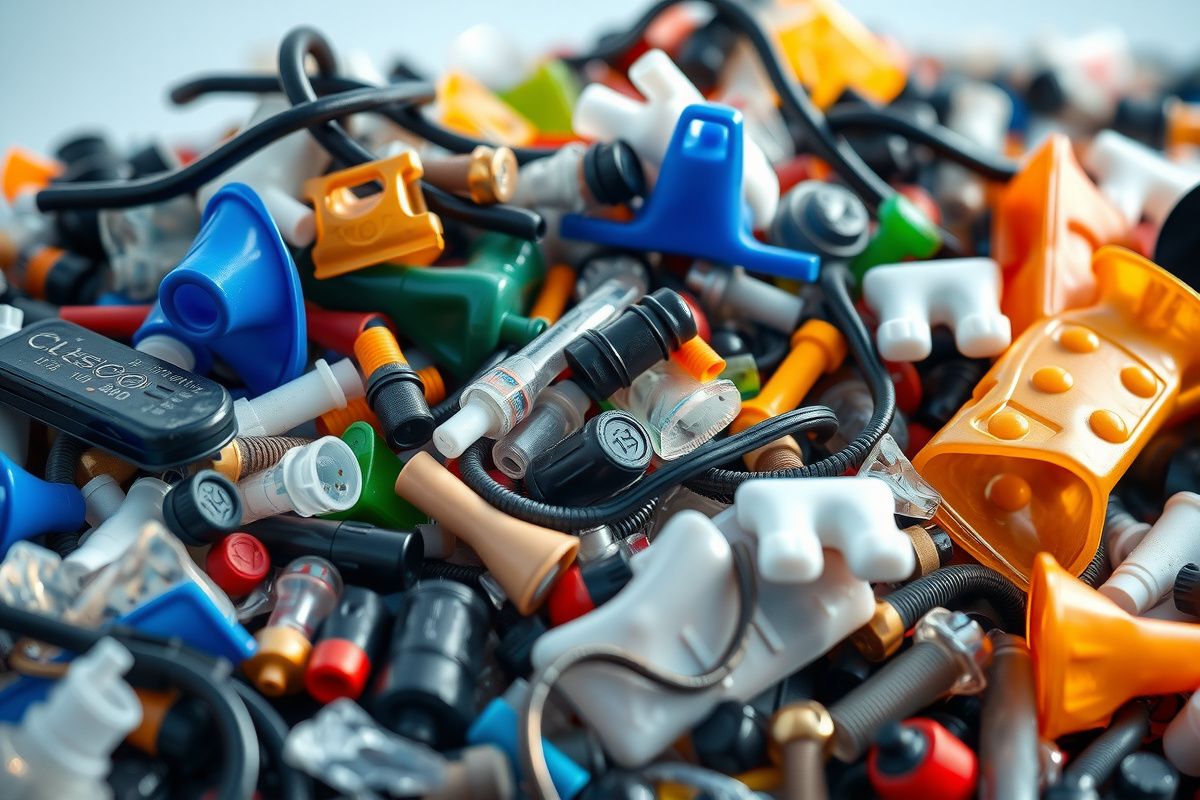
The problem of increasing volumes of polymer waste is one of the most acute environmental challenges of our time, demanding immediate and innovative solutions. Plastics, thanks to their versatility and durability, have become an integral part of everyday life and industry, but their accumulation in landfills and the natural environment leads to catastrophic consequences. Pollution of oceans, soils, and air with microplastics threatens human health and the planet's biodiversity. That is why the transition to a circular economy, where waste is considered a valuable resource, is critically important for sustainable development. Innovative methods of polymer waste processing open new opportunities for their secondary use, reducing the burden on the environment and creating new economic advantages for industrial enterprises.
The relevance of this topic for the industry of Ukraine and the world cannot be overestimated, as it directly affects environmental safety, resource efficiency, and competitiveness. The development and implementation of effective processing technologies not only reduce the amount of waste but also produce high-quality secondary raw materials that can replace primary materials. This contributes to lower production costs, reduced need for new resource extraction, and minimized carbon footprint. UtilVtorProm company, being a leader in industrial waste management, actively supports and implements such approaches, offering comprehensive services for enterprises striving to treat the environment responsibly and optimize their production processes.
Modern technologies for depolymerization and modification of plastic waste
Innovative methods of polymer waste processing are based on a deep understanding of the chemical structure and physical properties of various types of plastics, allowing for the selection of the most effective approaches for their transformation. Key technical characteristics determining the choice of method include the type of polymer (PET, PVC, PE, PP, etc.), degree of contamination, presence of additives, and color. Mechanical processing, which includes sorting, shredding, washing, and granulation, is the most common and least expensive, but requires clean and homogeneous raw materials. It allows for the production of secondary granules, which are then used to manufacture new products. However, for complex, mixed, or heavily contaminated polymers, more advanced chemical and physicochemical methods are necessary, which allow for the breakdown of polymer chains into monomers or oligomers.
The principle of chemical methods, such as pyrolysis, gasification, hydrolysis, and solvolysis, involves thermal or chemical decomposition of polymers in the absence of oxygen or using special solvents. Pyrolysis, for example, converts polymers into liquid fuel or gases, which can be used as energy carriers or chemical raw materials. Solvolysis allows for dissolving polymers and then separating pure polymer materials through precipitation, ensuring high quality of secondary raw materials. These methods are particularly promising for processing mixed plastics that are difficult to separate mechanically, just as the issue of "Alternative filter materials and used absorbents" requires complex technological solutions for their safe and efficient processing. The choice of a specific method depends on the type of waste, the desired end product, and economic feasibility.
Recycled polymers: applications and innovative equipment
The application of innovative methods for polymer waste processing opens new horizons for a wide range of industries, allowing for the creation of high value-added products. Recycled polymers find use in construction, where they are used to manufacture insulation materials, pipes, road coverings, and landscape design elements. In the packaging industry, secondary plastic is used for the production of new bottles, containers, and films, significantly reducing the need for primary raw materials. The automotive industry integrates recycled polymers into interior trim, bumpers, and other components, reducing vehicle weight and their carbon footprint. The textile industry produces fibers for clothing, carpets, and furniture fabrics from recycled PET bottles, demonstrating impressive examples of the circular economy.
Effective implementation of these processes requires modern equipment, including high-performance sorting lines with optical scanners, powerful shredders and granulators, extruders for forming secondary granules, and chemical reactors for depolymerization. For example, special washing and drying complexes are used for processing film waste, allowing the material to be cleaned of contaminants before granulation. The development and implementation of such equipment are key to achieving high quality of secondary raw materials and expanding their application areas. This also applies to the overall approach to industrial waste management, because, as in the case of "Batteries and accumulators as hazardous waste," effective management of polymer waste requires investment in technology and infrastructure to ensure environmental safety and economic efficiency.
Environmental regulations and safe handling of polymer waste
Responsible handling of polymer waste is an integral part of innovative processing methods, requiring adherence to strict environmental norms and standards. Plastic waste is classified according to the National Waste List (NWL) and has corresponding codes that define the procedure for its collection, transportation, storage, and processing. For example, plastic packaging can be classified under code 15 01 02*, while mixed plastics and rubber resulting from mechanical treatment of waste may belong to code 19 12 04*. These codes form the basis for developing individual waste management programs at enterprises. Improper handling of this waste can lead to significant fines, environmental sanctions, and reputational losses.
UtilVtorProm company provides a full range of environmental services to enterprises, ensuring professional and licensed handling of various types of polymer waste. We understand the importance of each stage – from sorting and temporary storage to transportation and direct processing. Our specialists help enterprises develop optimal waste management schemes, minimize their generation, and maximize the effective use of secondary resources. By contacting UtilVtorProm, you can be confident in complying with all environmental requirements and standards, which is a guarantee of sustainable and responsible operation of your business.
UtilVtorProm's professional solutions for sustainable polymer waste management
UtilVtorProm company is a reliable partner in the field of polymer waste management, offering a professional approach and comprehensive solutions for enterprises of any scale. Our activities are licensed and comply with all current legislative norms, which guarantees the high quality and safety of the services provided. We do not produce goods or sell products; our mission is to provide high-quality services for the collection, transportation, storage, and processing of industrial waste, including complex and multi-component polymer materials. We strive for the most effective use of secondary resources, contributing to the development of a circular economy in Ukraine. To receive a detailed consultation and develop an individual plan for managing your enterprise's polymer waste, contact our specialists today. Together, we will make your business more environmentally friendly and responsible.