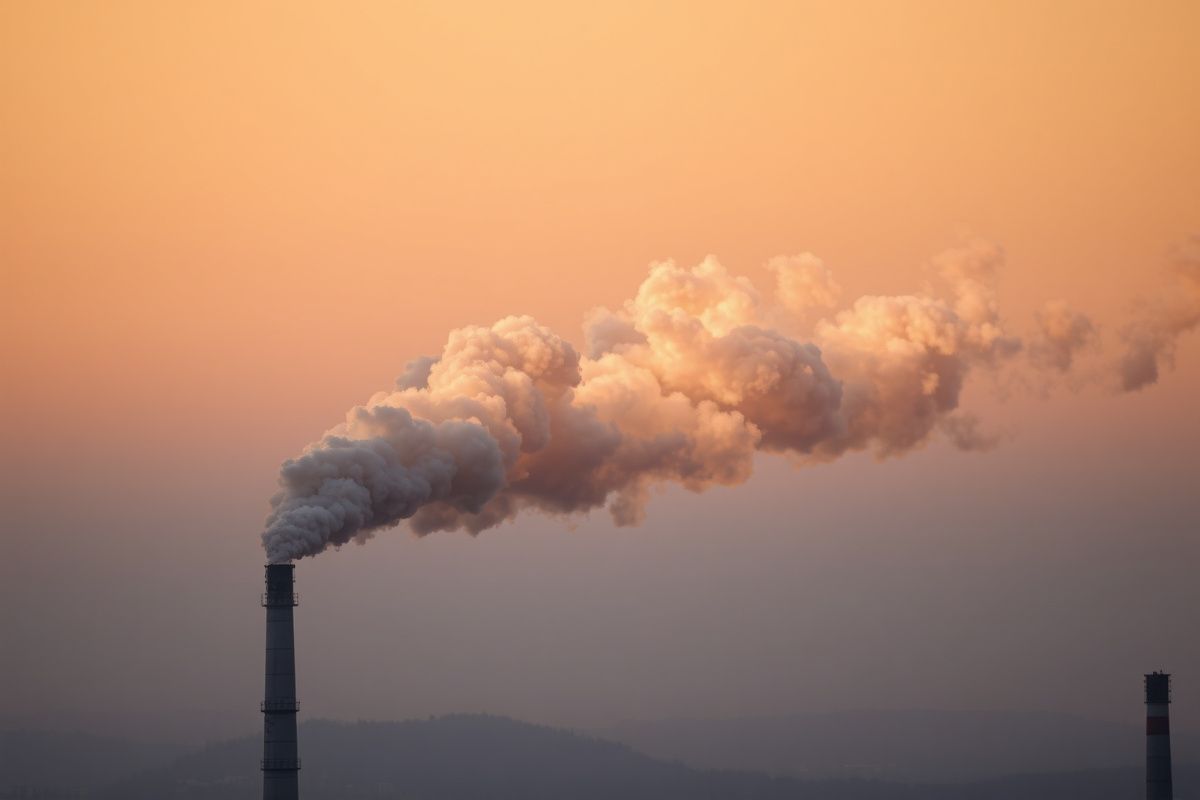
Atmospheric air pollution by industrial gas emissions remains one of the most acute environmental problems of our time, significantly impacting human health and the state of the environment. Global climate change, acid rain, and deteriorating air quality in large industrial regions compel enterprises and governments to seek effective and innovative methods for purifying these emissions. The relevance of this topic for industry lies not only in adhering to stringent environmental norms but also in striving for sustainable development, increasing energy efficiency, and implementing circular economy principles. Modern technologies allow not only to reduce harmful emissions but also to convert them into valuable resources, opening new prospects for industrial companies.
Today, industry faces the challenge not only of reducing the concentration of traditional pollutants such as sulfur oxides (SOx), nitrogen oxides (NOx), and particulate matter, but also the need to combat new types of hazardous impurities, including volatile organic compounds and heavy metals. Innovative methods for purifying gas emissions from harmful impurities are becoming a key element of the environmental safety strategy for any responsible enterprise. They involve the use of advanced physico-chemical processes, biotechnologies, and integrated systems that ensure high purification efficiency with minimal operating costs and maximum environmental safety. The implementation of such solutions is an integral part of production modernization and the improvement of its environmental profile.
Principles of operation and technical aspects of advanced gas purification complexes
Innovative methods for purifying industrial gas emissions are based on a combination of physical, chemical, and biological processes for the most effective removal of harmful impurities. These methods include advanced absorption systems, adsorption, catalytic oxidation, membrane technologies, and plasmachemical reactors. For example, absorption systems use new generations of solvents with high selectivity for specific pollutants, allowing for high purification rates with less energy and reagent consumption. The principle of operation of these complexes lies in the sequential passage of the gas flow through various purification stages, where each stage is aimed at removing a specific group of harmful substances, from large particles to molecular contaminants. This ensures a comprehensive approach to environmental safety.
Technical characteristics of modern gas purification units include high productivity, adaptability to changes in the composition and volume of gas flows, and the possibility of integration with existing production processes. For example, catalytic purification systems effectively convert toxic nitrogen oxides and organic compounds into safe substances using special catalysts that operate at relatively low temperatures. The composition of such systems often includes multi-layer filters, reminiscent of "Activated carbon: a product of chlorine production" or "Alternative filter materials and used absorbents," which are capable of absorbing a wide range of pollutants, ensuring deep purification. Membrane technologies, in turn, allow for the separation of gas mixtures at the molecular level, removing even the smallest particles and aerosols, which is critically important for industries with high air purity requirements.
Application of innovative solutions in large industrial productions
Innovative methods for purifying gas emissions are widely used in various industries where environmental safety is a priority. In metallurgy, for example, they are used to purify flue gases from dust, heavy metals, and sulfur oxides generated during metal smelting. The chemical industry implements these technologies to neutralize emissions of toxic organic compounds, chlorine, and other aggressive gases. The energy sector, including thermal power plants, actively uses advanced filtration and absorption systems to reduce emissions of sulfur and nitrogen oxides, which are the main culprits of acid rain and smog. Such widespread implementation highlights the versatility and effectiveness of these solutions in combating air pollution.
Examples of equipment include new generation electrostatic precipitators, wet scrubbers with improved nozzles for better "gas-liquid" interaction, biofilters that use microorganisms to decompose organic pollutants, and plasmachemical units for the destruction of persistent toxic substances. In the oil and gas refining industry, innovative purification systems help reduce hydrogen sulfide and mercaptan emissions, ensuring compliance with strict international standards. These technologies not only reduce the environmental burden but also often allow for the capture of valuable components from gas streams, which can then be reused in production, contributing to resource conservation and the economic benefit of the enterprise. This is analogous to the approach to "Analysis of fly ash from the combustion of emulsified hydrocarbons," where control over waste composition is also important.
Environmentally safe management of secondary gas purification products
The implementation of innovative methods for purifying gas emissions is inextricably linked with the need for effective and environmentally safe management of secondary products generated in the process. Such wastes include spent absorbents, filter materials, sludges with heavy metals, catalyst wastes, and other hazardous substances that have been removed from the gas stream. Improper handling of these wastes can negate all efforts to purify the air, creating new threats to soil and water resources. Therefore, in addition to implementing advanced purification technologies, it is critically important to develop and apply comprehensive waste management strategies, including their collection, transportation, storage, and processing in accordance with current environmental regulations.
To identify and classify such wastes, special codes from the National Waste List (NWL) are used. For example, spent filter materials and absorbents containing hazardous substances can be classified under codes 15 02 02*, and sludges from gas purification containing hazardous substances under code 10 01 05*. Other gas purification wastes not classified under codes 10 01 05, 10 01 07, and 10 01 18 also require a special approach. UtilVtorProm company provides a full range of environmental services to enterprises, including the collection, transportation, storage, and processing of such wastes, ensuring their safe and responsible handling. We understand that each type of waste requires an individual approach, and we are ready to offer optimal solutions.
UtilVtorProm's comprehensive services for sustainable enterprise development
UtilVtorProm company is a reliable partner for enterprises striving to implement innovative methods for purifying industrial gas emissions and ensure sustainable development. Our professional approach is based on many years of experience and deep knowledge in the field of environmental management and hazardous waste handling. We have all the necessary licenses and permits to carry out activities related to the collection, transportation, storage, and processing of a wide range of industrial wastes generated as a result of applying advanced gas purification technologies. By contacting UtilVtorProm, you receive a guarantee of compliance with all environmental requirements and legislative norms, as well as confidence that your waste will be handled with maximum responsibility and care for the environment. Contact us to discuss individual solutions for your enterprise and take a step towards cleaner production.