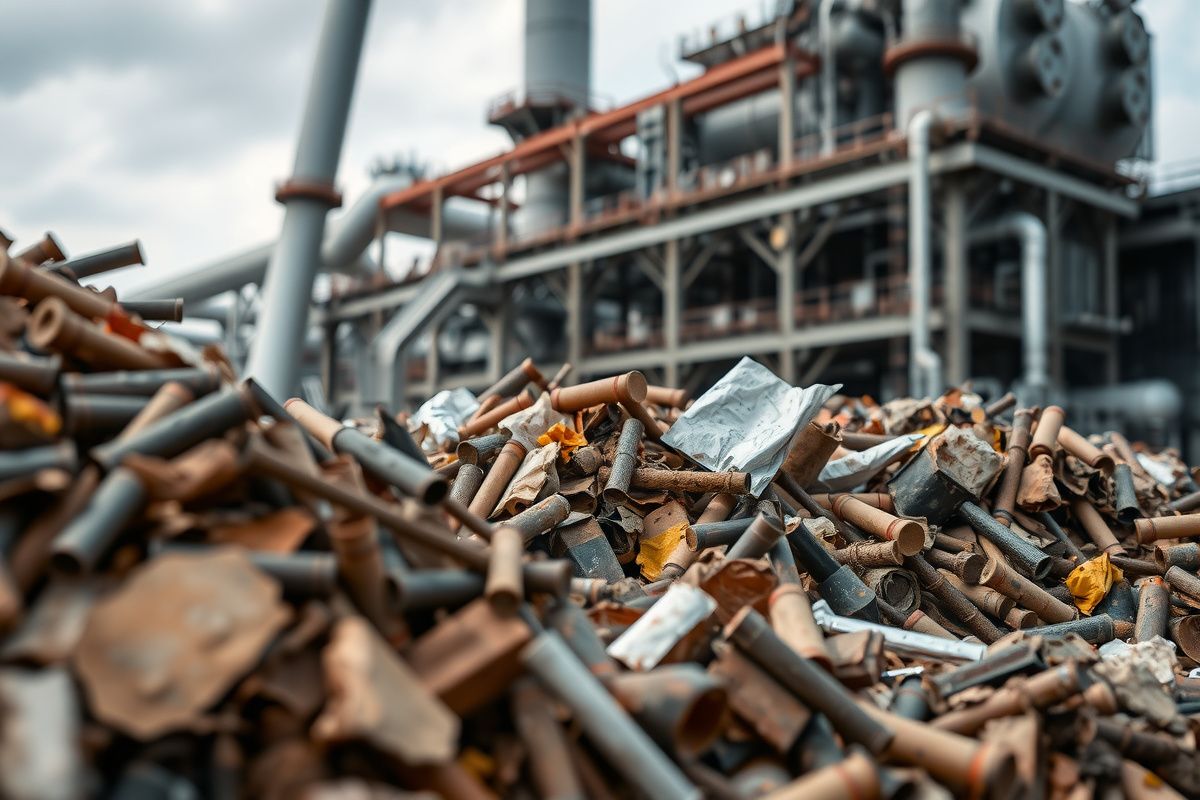
Energy recovery from industrial waste is one of the most pressing and promising directions in modern industry, aimed at reducing negative environmental impact and optimizing resource utilization. The growing volumes of industrial waste, which often contain significant energy potential, require the development and implementation of innovative solutions. If not properly processed, these wastes lead to soil, water, and air pollution, as well as significant disposal costs. Modern approaches to energy recovery allow transforming the waste problem into a valuable resource, contributing to the sustainable development of economy and ecology.
This strategy not only solves the problem of waste accumulation but also provides additional energy sources, which is especially important given the rising prices of traditional energy carriers and the need for energy independence. The implementation of advanced technologies allows for the efficient use of thermal energy released during waste processing to produce electricity, heat, or even alternative fuels. UtilVtorProm actively promotes the development of these areas, providing comprehensive services for industrial waste management, ensuring their safe and environmentally responsible processing. Our solutions help enterprises not only comply with environmental standards but also gain economic benefits from rational resource use.
Thermochemical processes for waste-to-energy conversion
Energy recovery from industrial waste is based on a series of thermochemical processes that allow releasing the energy contained in organic components. The main methods include incineration, pyrolysis, gasification, and plasma gasification. Each of these methods has its technical characteristics and is applied depending on the composition and properties of the waste. For example, incineration is the most common method, where waste is burned in special furnaces with controlled oxygen access, and the released heat is used to generate steam, which drives turbines to produce electricity. Modern incineration plants are equipped with flue gas cleaning systems that minimize the emission of harmful substances into the atmosphere.
Pyrolysis is the thermal decomposition of organic materials in the absence of oxygen, leading to the formation of liquid fuel (pyrolysis oil), gaseous fuel, and solid residue (coke). This process allows obtaining valuable products with high calorific value. Gasification, in turn, involves converting waste into synthesis gas (a mixture of CO, H2, CH4) through partial oxidation at high temperatures. Synthesis gas can be used as fuel for electricity generation or as raw material for the chemical industry. Plasma gasification is the most advanced technology, using a plasma arc to decompose waste at ultra-high temperatures (up to 10,000 °C), ensuring complete decomposition of organic substances and minimal emissions, transforming even the most complex waste into synthesis gas and inert slag.
Application of energy recovery in industrial sectors
Energy recovery from industrial waste is widely used in various industries where significant volumes of waste with high energy potential are generated. For example, in the pulp and paper industry, wood waste and bark can be used to produce heat and electricity, significantly reducing enterprises' dependence on external energy sources. In the food industry, agricultural waste such as husks, pulp, and livestock waste are also successfully processed into biogas or solid fuel. In metallurgical plants, waste containing organic impurities can be processed to obtain energy, contributing to the reduction of slag volumes and other by-products.
In addition to traditional industries, energy recovery is actively being implemented in the field of municipal solid waste (MSW) management, where modern waste-to-energy plants with energy recovery are installed. Examples of equipment used include rotary kilns, moving grate furnaces, and pyrolysis and gasification plants. In the chemical industry, where complex and often hazardous waste is generated, plasma gasification allows not only safely processing these materials but also obtaining valuable energy products. UtilVtorProm offers comprehensive solutions for implementing such technologies, helping enterprises in various industries optimize their waste management processes and transition to more sustainable production models.
Waste management from energy recovery
Waste management generated during energy recovery is an integral part of the overall cycle. Although energy recovery significantly reduces the volume of waste, some residues are still formed and must be properly classified and processed. Such waste includes ash and slag from incineration, solid residue (coke) from pyrolysis, as well as purified gases and effluents. For example, ash and slag from incineration may contain heavy metals and other hazardous substances, requiring their special treatment or stabilization before disposal or further use in construction. Waste codes according to the National Waste Classifier for such materials can be 10 01 01* (slags, ash and bottom ash from incineration), 10 01 02* (fly ash from incineration), 10 01 04* (slags, ash and bottom ash from incineration of petroleum products). UtilVtorProm provides environmental services to enterprises, including the collection, transportation, storage, and processing of these specific wastes, ensuring full compliance with all environmental norms and standards.
Special attention should be paid to the purification of flue gases generated during incineration, as they may contain dioxins, furans, nitrogen, and sulfur oxides. Modern purification systems include filters, scrubbers, and catalytic converters, which significantly reduce the emission of harmful substances. Residues from these processes, such as spent filter materials, also require special handling. Their waste codes according to the National Waste Classifier can be 15 02 02* (absorbents, filter materials, wiping cloths and protective clothing contaminated with hazardous substances). UtilVtorProm has all the necessary licenses and permits for handling such wastes, guaranteeing their safe and environmentally responsible processing. Our company strives to minimize the impact of industrial activities on the environment, offering effective and economically viable solutions for our clients.
Professional partnership with UtilVtorProm in environmental services
UtilVtorProm is a reliable partner in the field of environmental services for enterprises, providing a full range of services for industrial waste management, including their collection, transportation, storage, and processing. We possess the necessary licenses and certificates confirming our compliance with the highest standards of quality and environmental safety. Our team consists of highly qualified specialists with significant experience in developing and implementing individual solutions for each client, taking into account the specifics of their production and waste type. We use modern technologies and equipment, allowing us to effectively process even the most complex and hazardous waste, transforming it into secondary resources or safe materials.
By contacting UtilVtorProm, you receive not just services, but a comprehensive approach to solving your enterprise's environmental challenges. We help optimize waste management processes, reduce environmental risks, and improve your company's image as a socially responsible producer. Our goal is to promote sustainable industrial development, ensuring efficient and safe waste management at all stages. Contact us today to discuss your needs and receive a personalized offer that will help your enterprise achieve new heights in environmental efficiency.