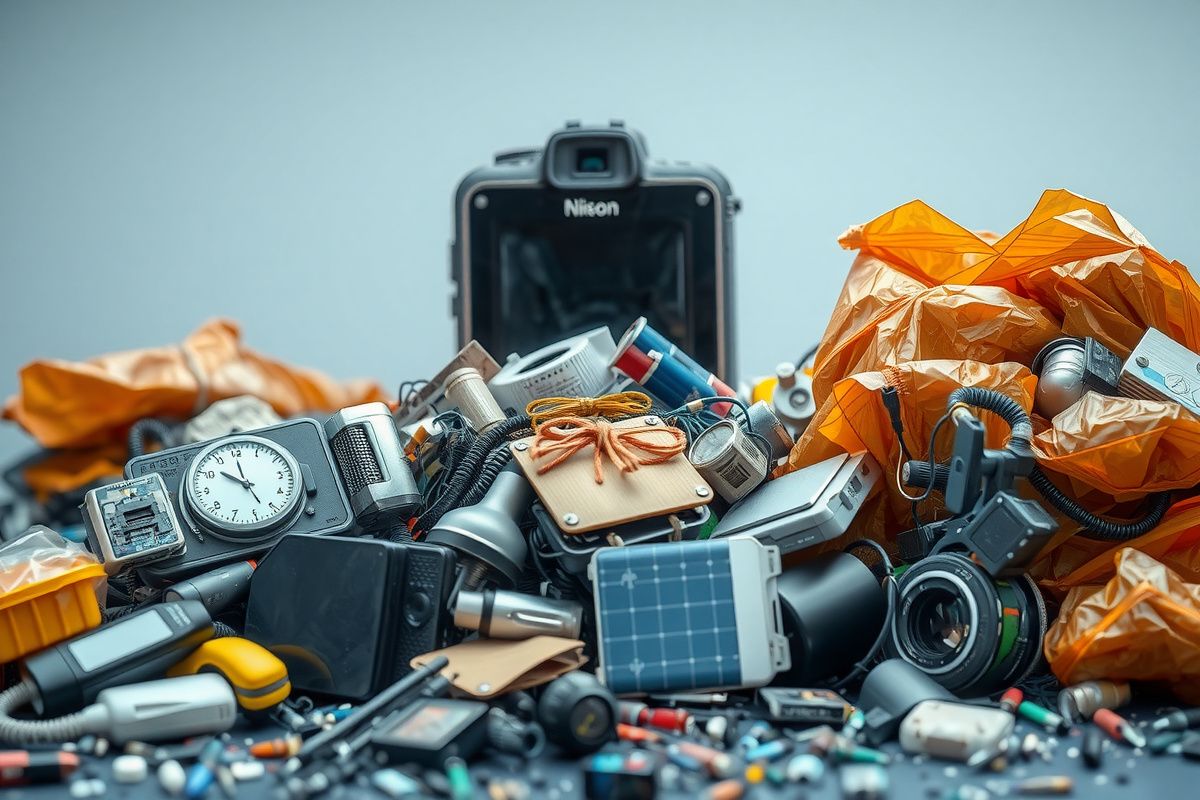
With the rapid development of technology and the industrialization of the world, the problem of industrial electronic waste (IEW) management is becoming increasingly relevant. Millions of tons of discarded electronic equipment are generated annually, containing both valuable metals and hazardous substances that pose a serious threat to the environment and human health. Uncontrolled accumulation and improper processing of IEW lead to soil, water resources, and air pollution, as well as the loss of valuable secondary resources that could be reused in the economy.
These environmental challenges require a comprehensive and systemic approach, including the implementation of modern recycling technologies and strict adherence to environmental standards. For industrial enterprises, this is not only a matter of environmental responsibility but also an opportunity to optimize waste management costs and contribute to the formation of a circular economy. UtilVtorProm company offers professional solutions for effective and safe management of industrial electronic waste, helping businesses meet the highest environmental requirements.
Complexity and Toxicity of Industrial Electronic Waste
Industrial electronic waste is characterized by an extremely diverse chemical composition, which makes its processing a complex technological task. It includes metals (copper, aluminum, iron, gold, silver, palladium), plastics, ceramics, fiberglass, as well as hazardous components such as lead, mercury, cadmium, chromium, and brominated flame retardants. These toxic substances, similar to those found in `batteries and accumulators as hazardous waste`, can penetrate the environment with improper storage or incineration, causing long-term environmental consequences.
The technical characteristics of IEW are determined by the type of equipment, its purpose, and the year of manufacture. These can be large server cabinets, specialized industrial controllers, or small electronic components. The principle of recycling involves the maximum possible extraction of valuable materials and the safe neutralization or disposal of harmful components. This process requires deep knowledge in the fields of materials science, chemistry, and engineering, as well as the use of high-tech equipment for the effective separation of complex mixtures.
Sources of Industrial Electronic Waste Generation
Industrial electronic waste is generated in a wide range of industries where digital and electronic technologies are actively used. These include discarded computers, servers, network equipment, telecommunication systems, medical equipment, industrial controllers, automation systems, and other equipment that has failed or become obsolete. For example, large data centers regularly update their equipment, generating significant volumes of IEW, which requires professional handling.
The main industries generating such waste are information technology, telecommunications, the banking sector, the medical industry, energy, and mechanical engineering. The growth in the volume of electronic waste in these sectors is a direct consequence of accelerated technological progress and a shorter life cycle of electronic devices. This creates a constant need for reliable partners who can ensure environmentally responsible collection, transportation, and processing of these specific wastes.
Environmentally Safe Management of Electronic Waste
Effective management of industrial electronic waste involves a multi-stage process, starting with collection and sorting. After this, the equipment undergoes dismantling, during which individual components are manually or mechanically removed. This is followed by shredding and separation of materials using various methods – mechanical, chemical (hydrometallurgy), and thermal (pyrometallurgy). These processes allow for the extraction of valuable metals and other materials for further use, minimizing the volume of waste subject to landfilling.
According to the National Waste List, industrial electronic waste is classified by codes reflecting its hazardous composition. Among them, categories such as 16 02 11* – discarded equipment containing hazardous components, and 20 01 35* – discarded electrical and electronic equipment containing hazardous components, are distinguished. UtilVtorProm company provides a full range of environmental services for enterprises, including professional handling of these `hazardous waste`, ensuring their safe collection, transportation, storage, and processing, which is critically important for environmental preservation.
Expert Services of UtilVtorProm in Electronic Waste Processing
UtilVtorProm company is a reliable partner for enterprises striving to ensure environmentally responsible management of industrial electronic waste. Our activities are licensed and comply with all national and international environmental standards. We offer a comprehensive approach covering all stages of IEW management: from consultations and audits to collection, transportation, and high-tech processing. By contacting UtilVtorProm, you receive a guarantee of professionalism, safety, and compliance with all regulatory requirements. Contact us to discuss individual solutions for your enterprise and contribute to a sustainable future.