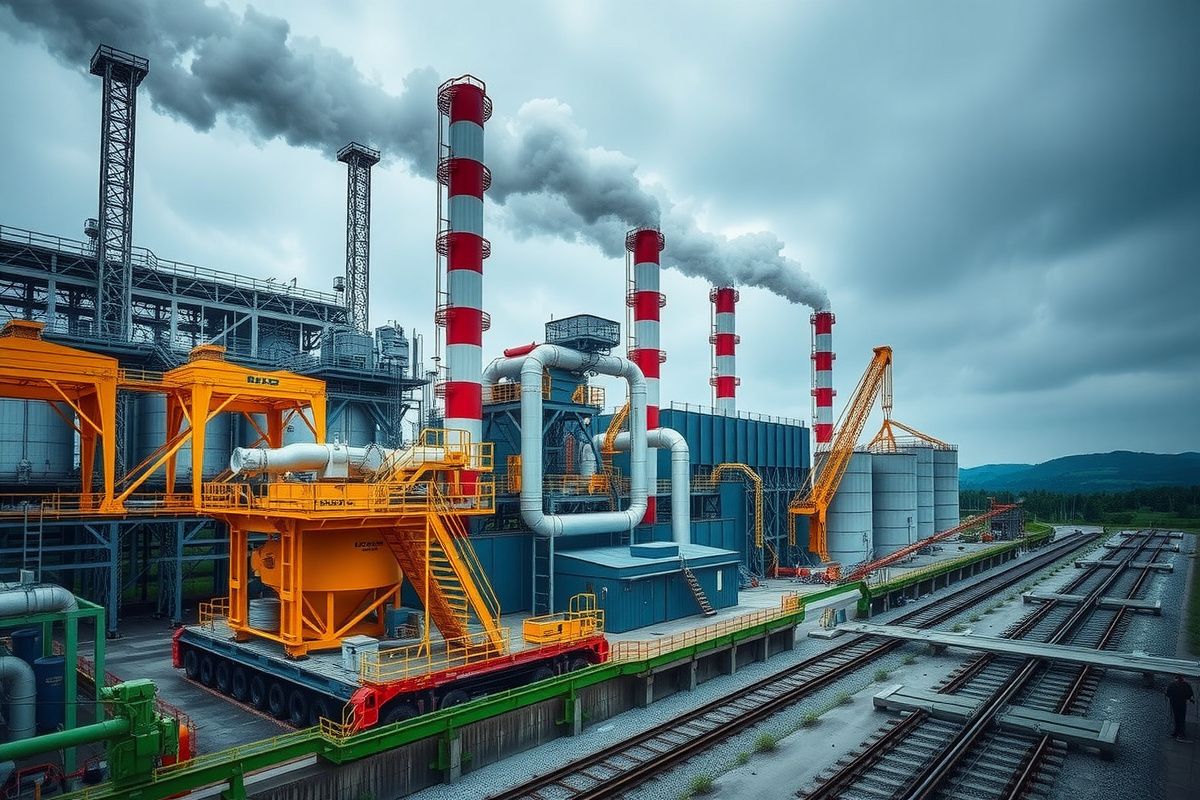
Modern industry faces the challenge of effective resource management and minimizing negative environmental impact. The use of secondary raw materials in metalworking is one of the key directions for achieving these goals, as it allows not only to conserve natural resources but also to significantly reduce energy consumption and greenhouse gas emissions. This issue becomes particularly relevant in the context of global environmental changes and strengthening demands for corporate environmental responsibility. The transition to a circular economy, where the waste of one production becomes valuable raw material for another, is not just a trend but an urgent need for sustainable development. UtilVtorProm actively supports these principles by providing comprehensive solutions for the environmental servicing of enterprises, helping them integrate secondary materials into the production cycle.
The environmental aspects of using secondary raw materials in metalworking cover a wide range of benefits, from reducing the volume of ore extraction to lowering the burden on municipal solid waste landfills. The use of recycled metals significantly reduces the amount of energy required for the production of finished products, as the remelting process requires less energy compared to primary production from ore. This approach also contributes to reducing industrial waste, which may contain hazardous components requiring special handling. Given the growing demands for environmental safety, as, for example, in the case of handling charge containing various impurities, the use of secondary raw materials is a strategically important step for any responsible manufacturer.
Technological Advantages of Integrating Secondary Metals into Production Cycles
The integration of secondary metals into metalworking production cycles requires careful preparation of raw materials, including sorting, cleaning, crushing, and, if necessary, briquetting. These processes ensure the production of high-quality material that is not inferior to primary metals in its properties, and sometimes even surpasses them due to special alloys. For example, aluminum waste, after appropriate processing, can be used for smelting new alloys with improved strength and lightness characteristics. Technologies for melting and casting secondary metals are constantly being improved, allowing for high-precision control of the chemical composition of alloys, which is critically important for the production of critical parts and components. The energy efficiency of these processes is significantly higher, as the melting point of recycled metal is often lower, and its production does not require complex recovery processes from ore.
Modern metalworking enterprises use high-tech equipment for processing secondary metals, including induction and arc furnaces, specialized lines for sorting by metal type, and purification from impurities. This allows not only to ensure the high quality of the final product but also to minimize the formation of undesirable waste during processing. For example, halogen-free emulsions are often used in metal processing, which helps reduce negative environmental impact and improve workplace safety. Thanks to such technologies, secondary metals become not just a substitute, but a full-fledged alternative to primary raw materials, playing a key role in creating sustainable and resource-efficient production. This is an example of how innovations contribute to environmental progress in industry.
Areas of Active Application of Recycled Metals in Modern Industry
Recycled metals are widely used in various industries, demonstrating their economic and environmental feasibility. In the automotive industry, for example, a significant part of body elements, wheels, and other components are made from recycled aluminum and steel, which helps reduce vehicle weight and increase their fuel efficiency. The construction industry actively uses recycled steel for rebar, metal structures, and roofing materials, reducing the need for iron ore mining and lowering the overall carbon footprint of projects. The electronics industry also relies on secondary metals, particularly copper, aluminum, and other non-ferrous metals, for the production of cables, circuit boards, and device casings, which is especially important given the limited reserves of these valuable resources.
In addition, secondary metals are actively used in the production of household appliances, furniture, packaging materials, and other consumer goods. This contributes to the creation of closed production and consumption cycles, where products, after their service life, do not become waste but return to circulation as valuable raw materials. In metalworking, various alloys are used to achieve desired mechanical properties, and secondary metals allow for the creation of such alloys with high precision, while providing significant environmental benefits. Equipment for working with secondary raw materials includes presses for briquetting chips, melting furnaces with gas purification systems, and casting machines, which are optimized for processing various metal wastes, making the process maximally efficient and environmentally safe.
Ensuring Environmental Safety in Handling Metalworking Waste
Proper handling of waste generated during metalworking and processing of secondary raw materials is critically important for ensuring environmental safety. This waste may include metal chips, slag, scale, dust, as well as spent lubricants and coolants, and filter materials, which may contain hazardous components. Waste codes according to the National Waste List (NWL) help classify these materials and determine the necessary handling methods. For example, ferrous metal waste can be classified as 17 04 05*, non-ferrous metal waste as 17 04 07*, and ferrous metal chips as 12 01 01*. The need for professional handling of such waste is undeniable, as improper storage or disposal can lead to soil, water, and air pollution.
UtilVtorProm provides a full range of services for the environmental servicing of enterprises, including the collection, transportation, storage, and processing of various industrial wastes, including those generated in the metalworking industry. We ensure compliance with all environmental norms and standards, using modern technologies and equipment for safe and efficient waste management. This helps enterprises not only comply with legislation but also demonstrate their commitment to the principles of sustainable development. For example, we also work with specific wastes such as batteries and accumulators, ensuring their effective management to protect the environment. Our approach guarantees that all waste will be processed in a way that minimizes its impact on the ecosystem and maximizes opportunities for the reuse of valuable resources.
Partnership with UtilVtorProm: A Comprehensive Approach to Environmental Responsibility
Cooperation with UtilVtorProm is a guarantee of a professional approach and licensed activity in the field of industrial waste management, including metalworking and secondary raw materials. We offer individual solutions that take into account the specifics of each enterprise and ensure full compliance with all environmental norms and legislative requirements. Our team of experts is ready to provide consultations, develop optimal waste collection and processing schemes, and take on all stages of logistics and documentation support. By choosing UtilVtorProm as a partner, you get a reliable assistant who will help your business become more environmentally responsible and efficient. We invite you to contact us to discuss your needs and receive detailed information about our services, to build a sustainable future for Ukrainian industry together.