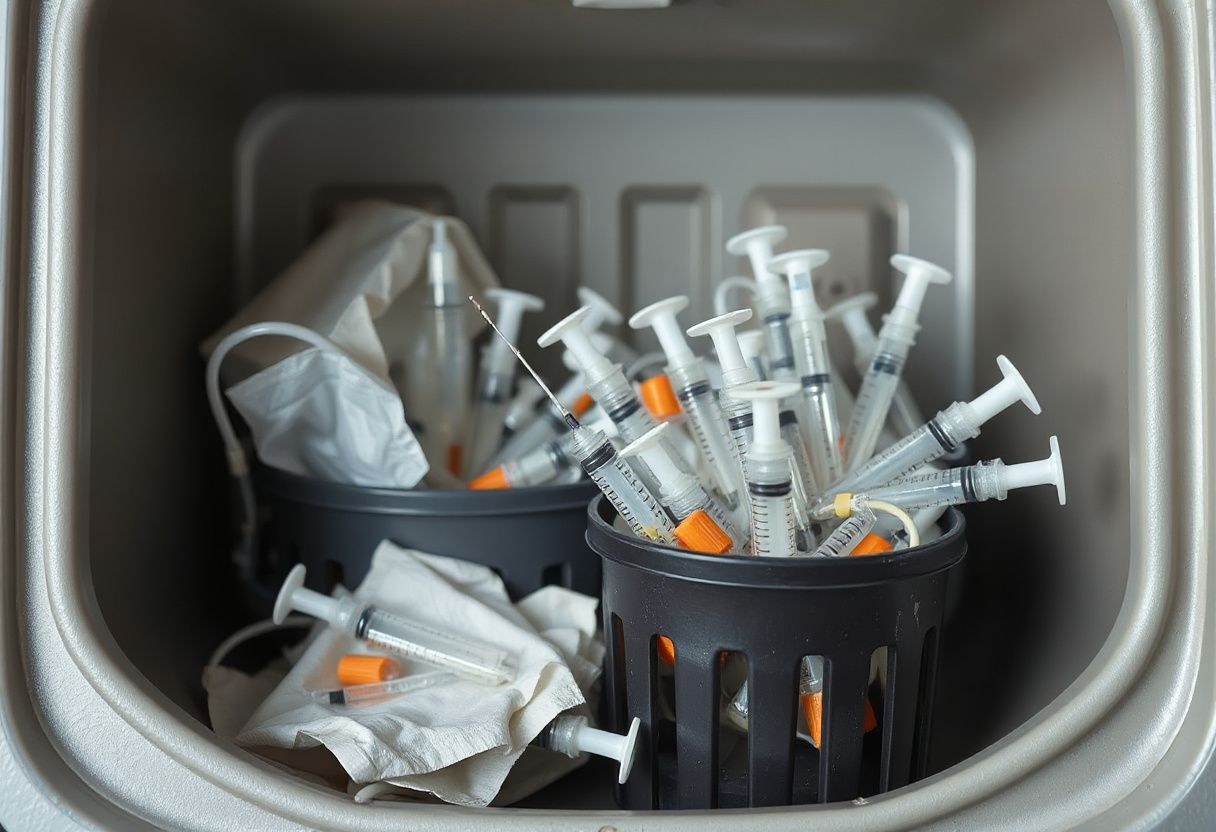
During scheduled inspections, many medical institutions face critical fines due to the storage of used syringes and infusion systems in ordinary household waste containers. Such negligence leads to inspection sanctions by the State Prodspivzhiv служба and threatens the epidemiological safety of the staff. In practice, clinic administrations often try to save money on special bags and hermetic containers, ignoring the basic requirements of Ukraine's sanitary legislation. Eliminating the consequences of such a violation costs institutions much more than timely engaging licensed contractors.
Situation Analysis
An audit of medical institutions demonstrates systemic failures in the primary sorting of hazardous materials directly in procedural rooms. The main mistake remains mixing sharp instruments with organic residues or packaging materials, which completely rules out subsequent safe handling. Responsible persons on the ground often fail to instruct junior medical staff regarding container marking and the deadlines for temporary storage of biologically hazardous substances. According to current sanitary regulations, the storage period for epidemiologically hazardous residues without cooling in hospital premises cannot exceed forty-eight hours. Violation of this standard is recorded in every third audited private dentistry or multidisciplinary outpatient clinic. Staff also do not always know how to properly seal soft packages after filling them to three-quarters of their volume. An improperly tightened edge of the bag leads to the spilling of infected contents during transportation through the internal corridors of the facility to utility rooms. The absence of special record-keeping logs for the movement of hazardous fractions makes it impossible to control the volumes of generated materials. A clear distribution of responsibilities and strict internal control over compliance with approved safety protocols helps reduce risks.
Composition and Structure
Medical residues, in terms of their physical and chemical structure, are heterogeneous mixtures of organic and synthetic compounds of a high risk degree. Plastic elements of intravenous infusion systems are made of polyvinyl chloride and high-pressure polyethylene with the addition of plasticizers. Single-use syringes contain polypropylene cylinders, rubber plungers with a silicone coating, and stainless steel needles of 12Kh18N10T grades or analogues. Surgical dressing material consists of cotton or viscose fibers impregnated with patients' biological fluids, including blood and lymph. Expired pharmaceutical preparations contain active chemical components in the form of ampoules with solutions, tablets in blisters, or capsules with gelatin shells. The presence of drug residues in the total mass requires increased attention to temperature regimes during thermal treatment. Organic tissues and anatomical body parts are characterized by a high percentage of moisture, exceeding eighty percent, and require special disinfection conditions before destruction. Metal components of surgical instruments subject to write-off consist of alloy steels with high corrosion resistance. All these materials together create a complex conglomerate that cannot be placed in ordinary municipal solid waste landfills due to the risk of spreading infections and toxic substances into groundwater.
Technologies
The processing and neutralization of hazardous medical materials require the use of specialized high-temperature equipment at subsidiary or partner enterprises. The most effective method for destroying infectious agents is thermal destruction in rotary kilns or incinerators with a gas afterburning chamber at temperatures from 850 to 1200 degrees Celsius. This technology guarantees the complete destruction of pathogenic microorganisms, viruses, and toxic pharmacological compounds without releasing hazardous dioxins into the atmosphere. To disinfect epidemiologically hazardous materials before mechanical shredding, industrial autoclaves with a steam sterilization cycle under a pressure of two bars and a temperature of 134 degrees are actively used. After such autoclaving, the disinfected plastic mass loses its original shape and can be transferred for recycling to obtain secondary granules. Mercury-containing medical devices, such as thermometers and sphygmomanometers, undergo demercurization at special metal thermal distillation units. Pharmaceutical preparations in large volumes undergo preliminary chemical neutralization using reagents to bind active components before loading into furnaces. The level of emission purification at such facilities is controlled by automatic gas analyzers in a continuous mode to comply with environmental standards.
Any actions involving medical residues in Ukraine are strictly regulated at the state level by relevant regulatory acts and classifiers. For proper documentary processing of operations, specialized enterprises use the National Waste List approved by the relevant resolutions of the Cabinet of Ministers. Hazardous infectious residues from hospitals and laboratories are classified under code 18 01 03*, which requires special safety measures during transportation by specialized vehicles. Expired medicines and cytotoxic drugs are accounted for separately under code 18 01 09* due to their high toxicity to the environment. Medical institutions are required to keep primary records in special logs according to the forms established by the Ministry of Health. The service agreement must be concluded exclusively with a company that has a valid license from the Ministry of Environmental Protection and Natural Resources to work with hazardous fractions. When transferring a batch, an acceptance-transfer act must be drawn up, indicating the exact mass and code of the material. Violation of the procedure for maintaining such reporting entails administrative liability for the heads of medical institutions in accordance with the Code of Ukraine on Administrative Offenses.
Start bringing order to your medical documentation by conducting a full internal audit of the existing volumes of accumulated materials. Order professional waste management from the company UtilVtorProm to guaranteed protect your institution from environmental fines.