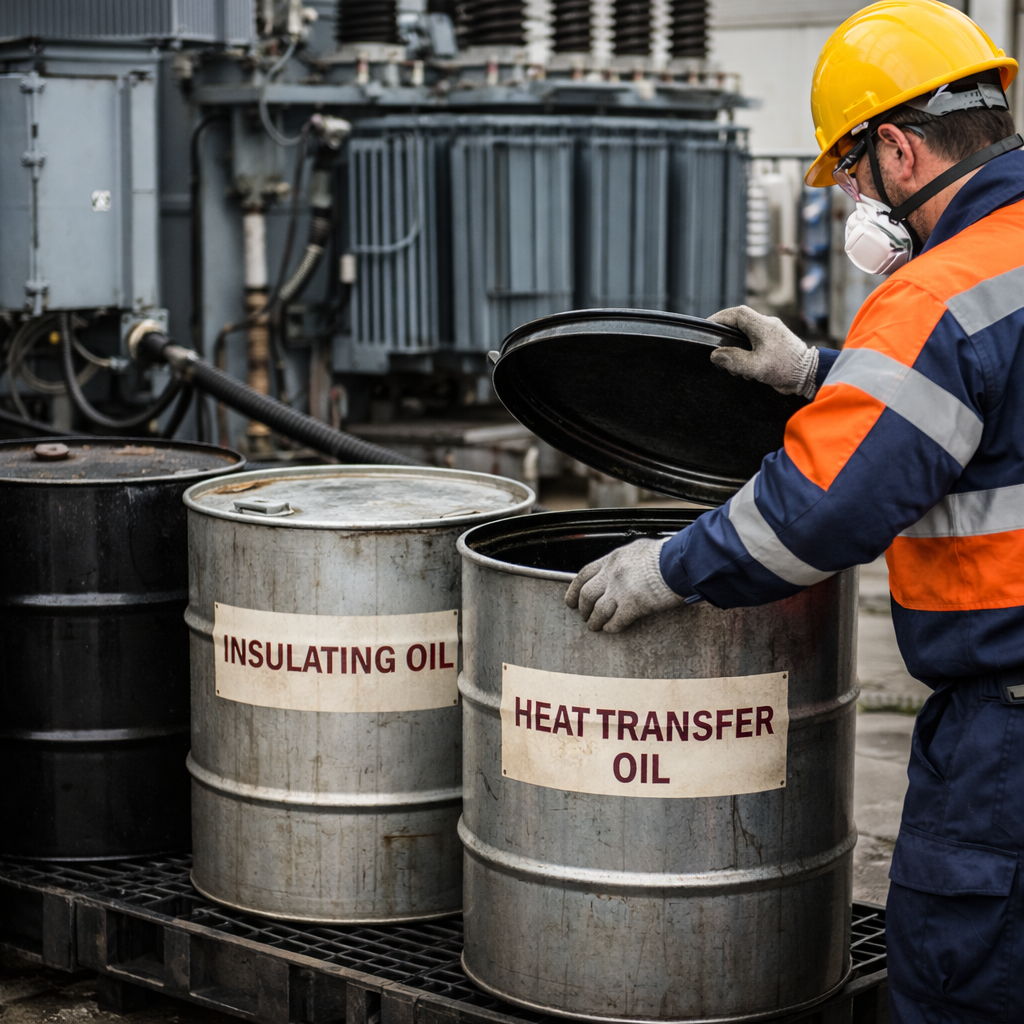
Mineral chlorinated insulating and heat transfer oils other than those specified under code 13 03 01 (code 13 03 06*) are used in industrial electrical insulation and heat transfer systems. After prolonged use, such substances may lose their technical properties and become hazardous waste.
Insulating oils are used in transformers, electrical equipment, heat exchangers, and industrial installations. Their main function is to ensure stable equipment operation through cooling, reducing friction, and providing electrical insulation.
During operation, these lubricating materials may accumulate thermal degradation products, metal particles, and chemical impurities. This increases their potential environmental hazard.
Therefore, hazardous waste management in the energy and industrial sectors is essential to prevent environmental pollution and ensure compliance with environmental regulations.
Effective hazardous waste handling involves organizing a system for monitoring the generation, collection, and storage of used oils.
Main sources of such waste include:
- maintenance of transformer equipment: replacement of insulating oils
- operation of heat exchange systems: use of heat transfer fluids
- repair of electrical installations: cleaning of tanks and oil circulation systems
Hazardous waste storage must be carried out in specially prepared containers that prevent leaks and contact with the environment. This helps avoid contamination of soil and water resources.
Hazardous waste storage must meet the following requirements:
- use of sealed metal tanks: prevention of oil leakage
- container labeling: clear identification of waste types
- placement on designated sites: protection of soil surfaces from contamination
An important stage of environmental control is the transportation of hazardous waste to facilities that carry out further processing.
Hazardous waste transportation must be performed by specialized vehicles in compliance with safety requirements and accompanied by appropriate documentation.
Processing of hazardous waste in this category may include purification, filtration, or regeneration of lubricating materials for further industrial use.
Environmental services for enterprises include environmental audits, waste flow analysis, and implementation of monitoring systems for waste generation.
A comprehensive waste management system includes:
- control of waste generation: optimization of equipment operation
- organization of safe collection: prevention of spills and leaks
- transfer to specialized processing: compliance with environmental standards
Enterprises that implement modern hazardous waste management practices significantly reduce environmental pollution risks.
Proper handling of insulating and heat transfer oils contributes to improved environmental safety in industrial processes.