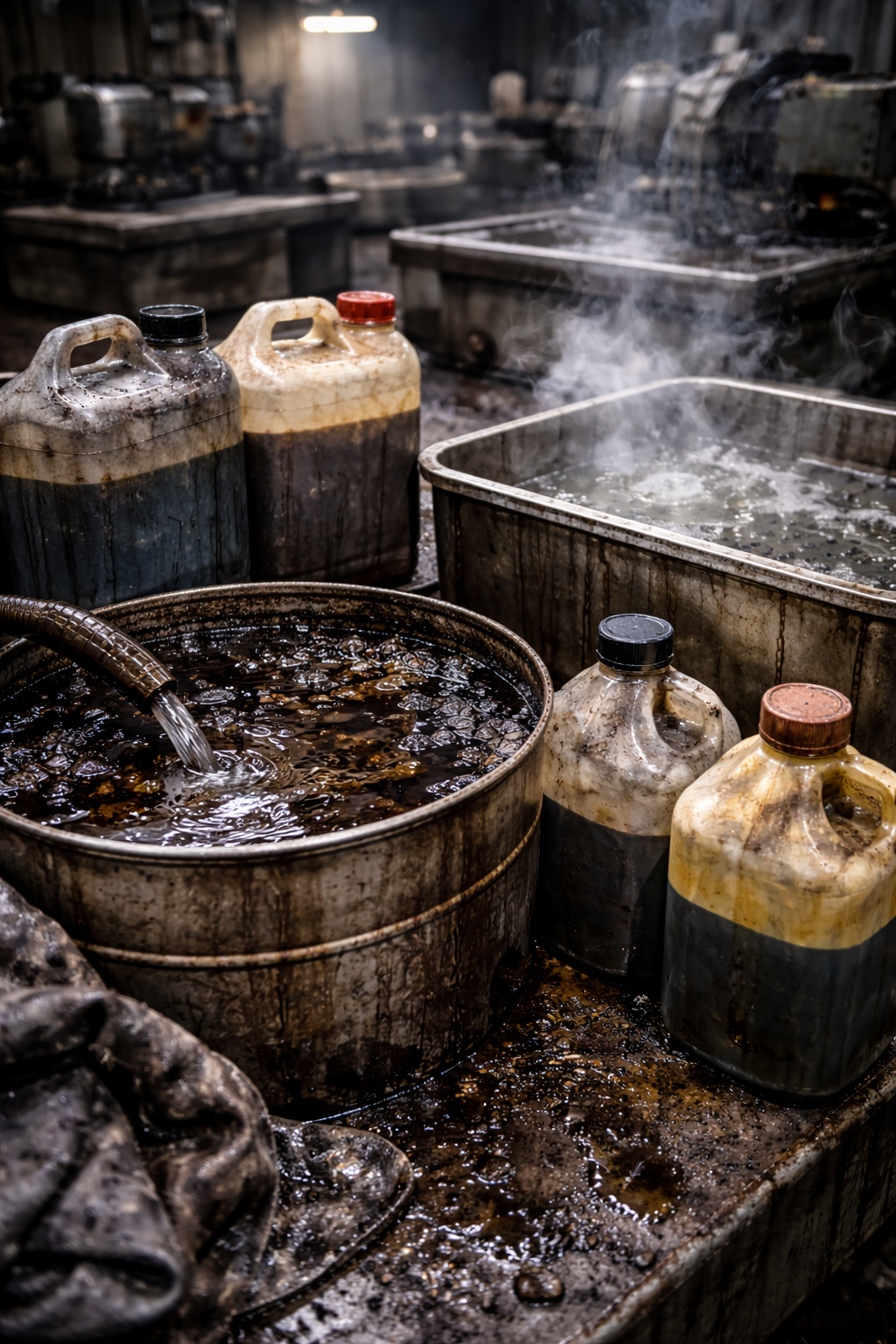
Steam degreasing wastes (code 12 03 02*) are generated during the cleaning of metal parts in vaporized solvent environments.
These processes are used to remove lubricants, process oils, and organic contaminants from metal surfaces.
During operation, degreasing media become saturated with dissolved fats and thermal degradation products.
Changes in chemical composition result in wastes with increased toxicity and volatility.
Hazardous waste management for this category is based on controlling composition and contaminant concentrations.
Regulated handling of hazardous waste requires clear separation from other liquid waste streams.
Special attention is required for storage of hazardous waste due to the volatility of components.
Key storage requirements include:
- sealed containers;
- minimized air contact;
- temperature control.
Transportation of hazardous waste is carried out considering physicochemical properties.
During transportation, the following measures are ensured:
- container tightness;
- prevention of vapor losses;
- compliance with handling procedures.
Recycling of hazardous waste from steam degreasing focuses on reducing organic contaminants.
Technological methods help stabilize waste composition.
Environmental services for enterprises include monitoring degreasing operations.
Systematic monitoring reduces industrial and environmental risks.
A comprehensive approach supports process stability.