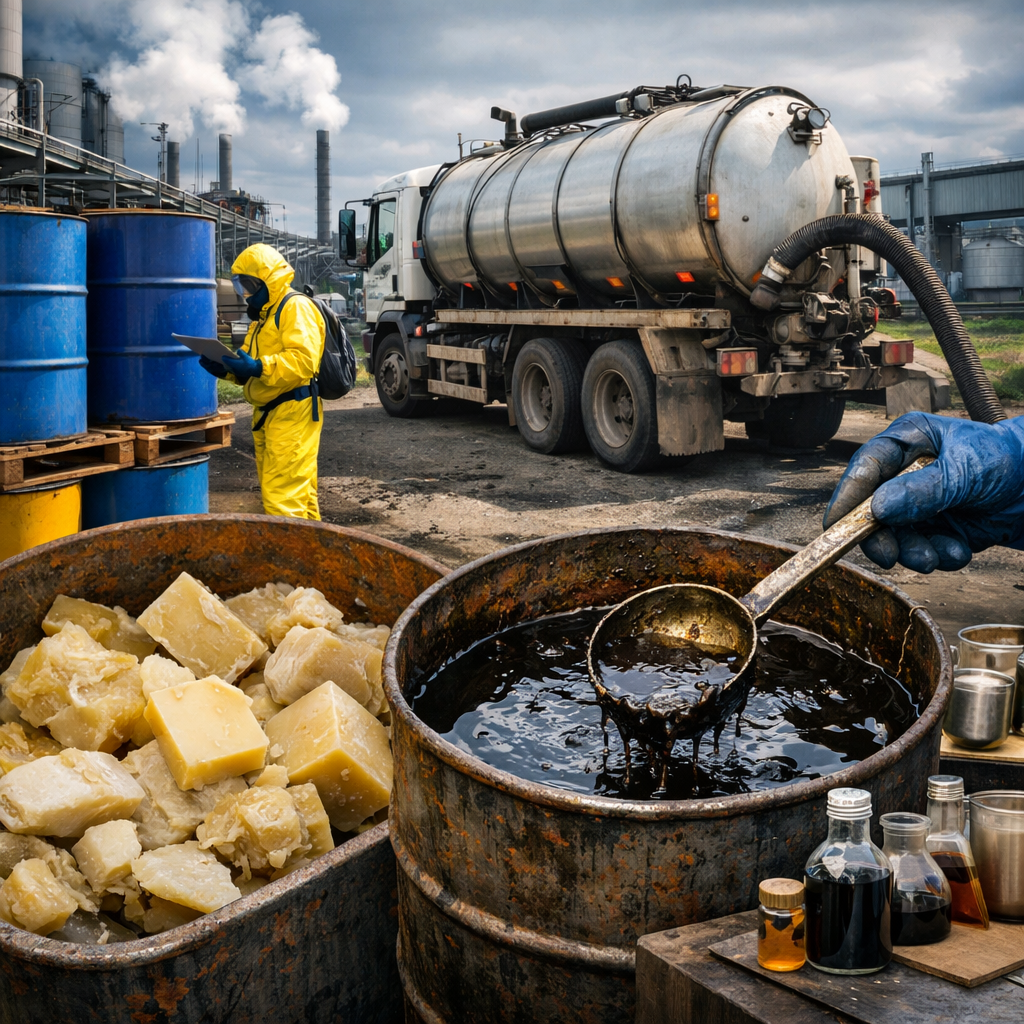
Spent wax masses and lubricants (code 12 01 12*) are generated during metalworking and forming processes where specialized lubricating and protective compounds are used to reduce friction and surface wear.
After completing their operational cycle, these substances lose functional properties and become hazardous materials due to the accumulation of impurities, metal particles, and thermal degradation products.
Wax-based masses and lubricants have a complex composition that includes petroleum components, synthetic additives, and stabilizers, which may pose environmental risks if improperly handled.
Hazardous waste management for this category requires a systematic approach based on the analysis of material origin, usage conditions, and contamination level.
Enterprises working with such substances implement regulated hazardous waste handling as part of their industrial safety and environmental responsibility policies.
Special attention is given to accumulation stages, as storage of hazardous waste in the form of spent waxes and lubricants requires sealed containers and controlled conditions.
Key storage requirements include:
- prevention of leaks and evaporation;
- restricted access for unauthorized personnel;
- proper labeling according to hazard classification.
Equally important is transportation of hazardous waste, which is carried out in accordance with the physical and chemical properties of the material and regulatory standards.
During transportation, the following measures are ensured:
- mechanical stability of containers;
- minimization of spill risks;
- complete and accurate documentation.
Recycling of hazardous waste in this category aims to reduce environmental impact and enable the controlled reuse of components within industrial cycles while meeting technical requirements.
Such processes help decrease accumulated volumes and reduce pressure on production sites.
Environmental services for enterprises play a significant role by providing audits, consulting, and oversight of all stages related to spent lubricant materials.
A comprehensive approach ensures compliance with current regulations and internal environmental standards.
Continuous monitoring of these material flows helps lower environmental risks and promotes responsible industrial resource management.