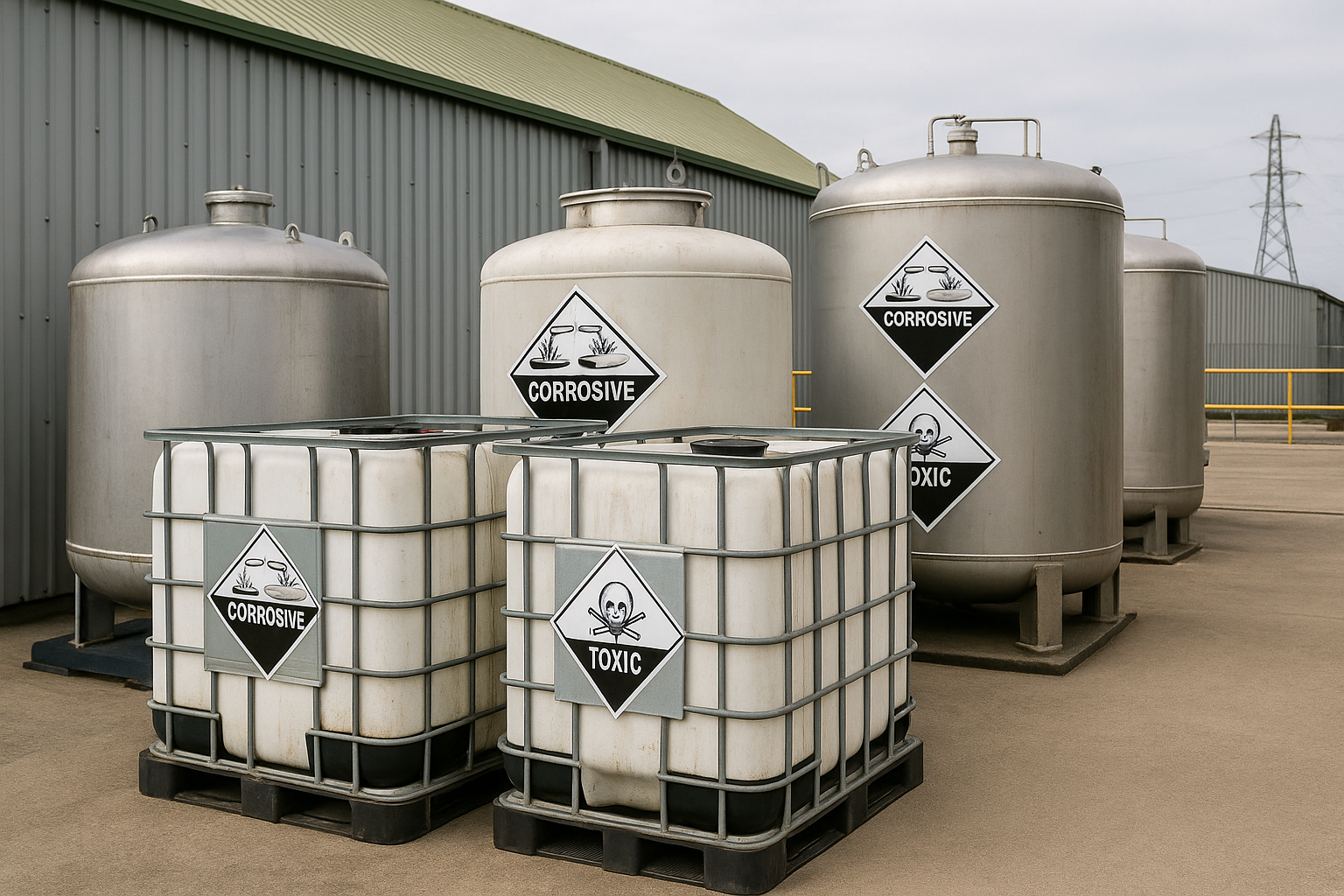
Inorganic chemical waste (code 16 05 07*), containing hazardous substances, is generated during technological processes in the chemical, metallurgical, energy, and pharmaceutical industries.
Such waste often includes heavy metal compounds, acids, alkalis, salts, and reactive mixtures that require strict hazardous waste management.
Main sources of inorganic chemical waste:
- laboratory and industrial reactions;
- metal and surface cleaning;
- galvanizing and coating processes;
- raw material treatment in chemical production.
Proper handling of hazardous waste involves analyzing its chemical composition, classifying it by hazard level, and creating process maps for each substance type.
As part of environmental servicing of enterprises, regular waste audits, storage inspections, and continuous monitoring systems are essential.
Safe hazardous waste storage is possible only with controlled temperature, absence of moisture, and the use of chemically resistant containers.
During hazardous waste transportation, contact with air, water, or reactive agents must be avoided to prevent unwanted chemical reactions.
Efficient hazardous waste processing of inorganic origin focuses on neutralizing toxic substances and recovering components suitable for reuse.
Modern methods include:
- chemical neutralization of acids and alkalis;
- filtration and precipitation of heavy metals;
- thermal decontamination under controlled conditions;
- regeneration of inorganic salts for secondary use.
Every enterprise working with chemical reagents must have an approved emergency response plan for leaks or incidents.
Personnel must undergo safety training on handling inorganic compounds to prevent poisoning or ignition risks.
Technological advancements make it possible to build closed production cycles where reaction residues are reprocessed, reducing hazardous waste generation.
A systematic approach to chemical waste management not only minimizes environmental risks but also optimizes enterprise costs.
Inorganic chemical waste requires a high level of control, discipline, and adherence to international environmental safety standards.