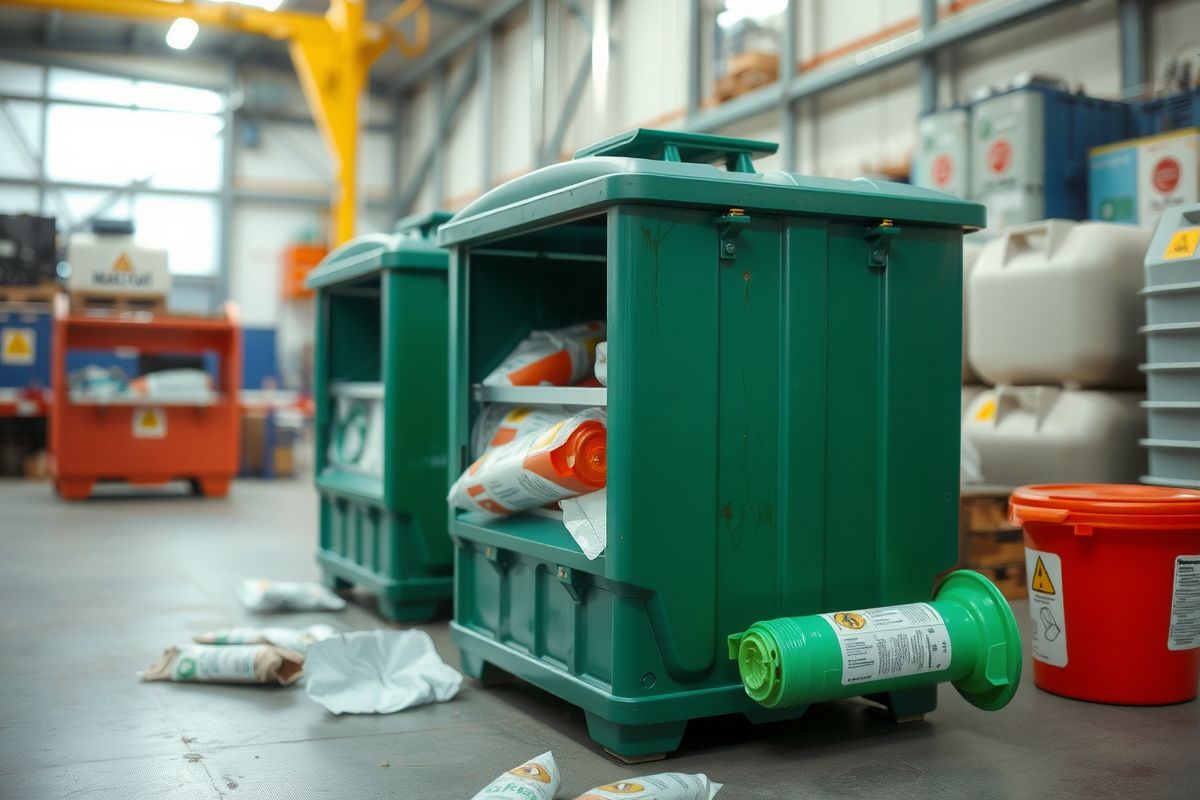
Modern industry faces increasing challenges in the field of medical waste management, especially those of industrial origin. This waste, often classified as hazardous, requires special processing and disposal technologies to minimize its impact on the environment and human health. The growing volume of production of medical preparations, diagnostic equipment, and related materials, such as used absorbents and filtering materials, leads to the need for innovative and effective solutions. Improper handling of such waste can lead to soil, water resources, and air pollution, creating long-term environmental and social problems. Therefore, the issue of implementing advanced technologies is critically important for the sustainable development of industry.
The urgency of this topic is also strengthened by increasing legislative requirements regarding environmental safety and corporate responsibility. Every industrial enterprise that generates medical waste is obliged to ensure its proper collection, transportation, storage, and processing. This is not only a matter of compliance with regulations but also an element of corporate social responsibility that affects the company's reputation. For example, similar challenges arise when handling amalgam in dentistry, where a special approach to mercury waste is also required. Ensuring environmental safety becomes an integral part of the production process, requiring continuous improvement of technologies and the search for new, more environmentally friendly methods of waste management. UtilVtorProm actively helps enterprises in solving these complex tasks, offering comprehensive environmental services.
Innovative methods of thermal destruction of medical waste
Technologies for processing and disposing of medical waste of industrial origin cover a wide range of methods, from thermal to chemical and biological. One of the most effective approaches is thermal destruction, in particular incineration in high-temperature incinerators. The principle of operation of such installations is the complete decomposition of organic substances due to extremely high temperatures (over 850°C), which ensures the destruction of pathogenic microorganisms and toxic compounds. Modern incinerators are equipped with multi-stage flue gas purification systems that minimize the emission of harmful substances into the atmosphere. This includes filters for trapping solid particles, systems for neutralizing acidic gases, and adsorption units for removing heavy metals, similar to those used for purifying gases from the combustion of emulsified hydrocarbons.
In addition to incineration, there are also other thermal methods, such as pyrolysis and gasification. Pyrolysis involves the thermal decomposition of waste in the absence of oxygen, which allows the production of liquid fuel, gas, and solid residue (coke). Gasification is the process of converting organic materials into synthesis gas, which can be used as an energy source. These technologies are more environmentally friendly compared to traditional incineration, as they produce fewer toxic emissions and allow valuable resources to be recovered. The choice of a specific technology depends on the chemical composition of medical waste, its quantity, and the requirements of local legislation. An important aspect is also ensuring personnel safety and process automation to minimize the human factor.
Application of modern systems for the disposal of industrial medical waste
The application of advanced technologies in the field of medical waste management of industrial origin is key to ensuring environmental safety. For example, autoclaving is widely used for sterilizing infectious waste, such as dressings, syringes, and instruments. This equipment operates on the principle of treating waste with hot steam under high pressure, which effectively destroys all microorganisms, making the waste safe for further processing or disposal. Similar technologies are effective for the disposal of biological waste in medical institutions that generate significant volumes of such materials.
Another area of application is chemical disinfection, which is used for liquid medical waste, such as laboratory effluents or disinfectant residues. Special reagents are added to the waste, neutralizing its hazardous properties. After treatment, chemically disinfected waste can be safely discharged into the sewage system or sent for further processing. The effectiveness of these methods is confirmed by numerous studies and practical experience. It is important to note that for each type of waste, an individual technology must be selected, taking into account its composition and potential danger, which is especially relevant when handling cytotoxic and cytostatic drugs.
Management of medical industrial waste
Medical waste of industrial origin is classified according to the National Waste List (NWL) and requires a special approach to its collection, transportation, storage, and processing. Such waste may include residues of pharmaceutical preparations, spent solvents, contaminated materials, and equipment. UtilVtorProm provides a full range of environmental services to enterprises, which allows for proper handling of such waste. This includes the development of individual waste management plans, their labeling, packaging, and safe transportation to processing or disposal sites. It is important that all stages are carried out in compliance with the highest safety standards and environmental regulations.
Examples of waste codes according to NWL that may refer to medical waste of industrial origin include: 18 01 03* (waste that poses a particular danger, for example, sharp objects), 18 01 04 (waste that does not pose a particular danger, for example, dressings without contact with blood), 18 01 06* (chemical substances consisting of or containing hazardous substances), 18 01 08* (cytotoxic and cytostatic drugs). UtilVtorProm guarantees that all waste operations are performed by licensed specialists who have relevant experience and knowledge. We help enterprises avoid fines and environmental risks, ensuring full compliance of their activities with current legislation.
Reliable partner in medical waste management: UtilVtorProm
UtilVtorProm is a recognized leader in the waste management services market, offering a professional approach to solving the most complex environmental problems, including the processing and disposal of medical waste of industrial origin. Our activities are licensed, which confirms our competence and responsibility. We offer comprehensive solutions that cover all stages – from collection and transportation to processing and disposal, ensuring full transparency and compliance with all environmental standards. Our specialists constantly improve their knowledge and skills to provide clients with the most effective and safest solutions. We understand the unique needs of each enterprise and develop individual strategies that correspond to the specifics of their waste and production volumes.
By contacting UtilVtorProm, you get a reliable partner who will ensure the environmental safety of your enterprise and help avoid potential risks. We use modern equipment and advanced technologies, which allows us to effectively handle even the most complex types of waste. Our goal is not only to provide quality services but also to contribute to the formation of a culture of responsible attitude to the environment. For a detailed consultation and development of an individual plan for managing your medical waste, please contact us. We are always ready to provide qualified assistance and offer optimal solutions for your business.