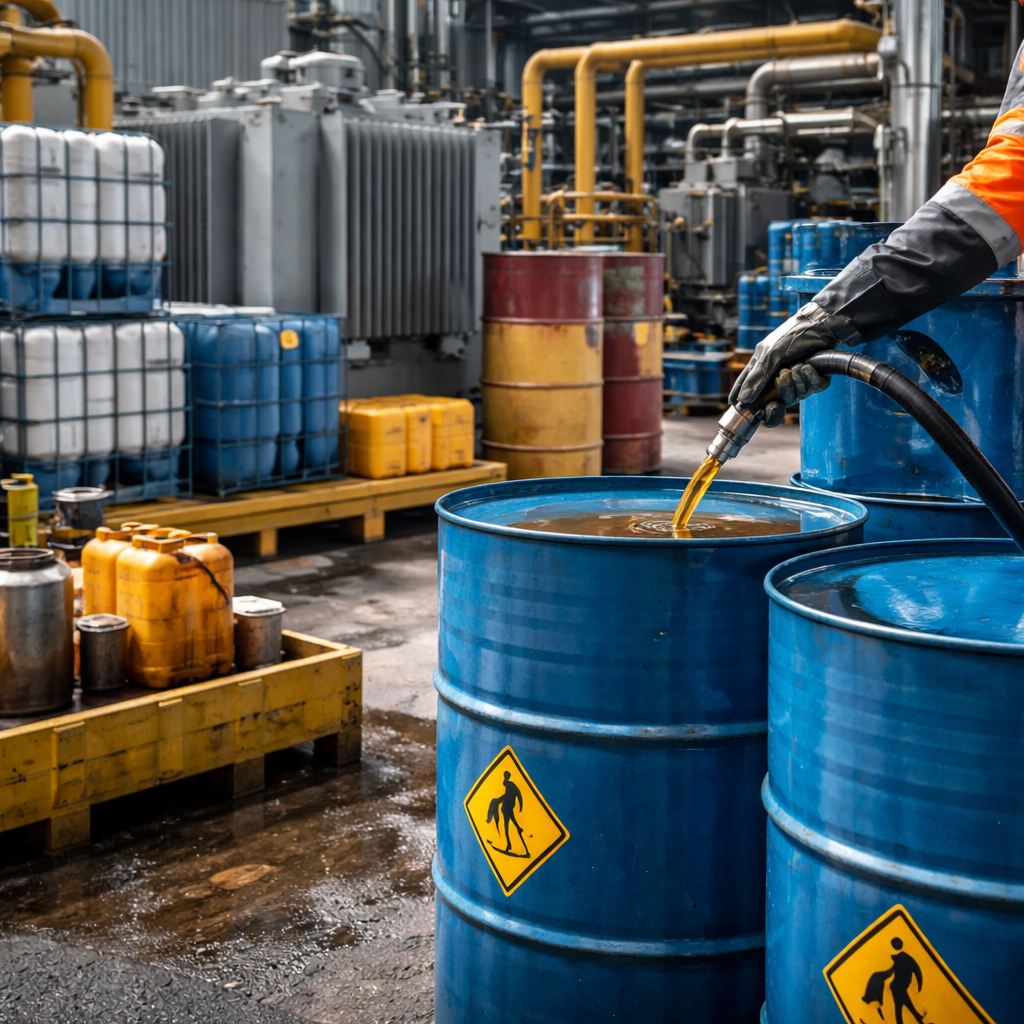
Other insulating and heat transfer oils (code 13 03 10*) are used in industrial systems where stable heat transfer and electrical insulation are required.
These fluids are applied in transformers, heat exchangers, hydraulic systems, and specialized equipment.
Their composition includes synthetic or mineral bases with stabilizing additives to enhance thermal resistance.
Over time, oil properties degrade, leading to contamination and reduced performance.
This creates environmental risks, especially in case of leaks or improper handling of hazardous waste.
Effective hazardous waste management is essential to minimize environmental impact.
Key risks include:
- soil and water contamination: due to leaks
- toxic effects: from chemical components
- accumulation of persistent substances: with slow degradation
Proper handling of hazardous waste involves monitoring equipment and timely replacement of fluids.
Safe storage of hazardous waste is critical, ensuring sealed containers and controlled conditions.
Storage requirements:
- specialized containers: preventing leakage
- protection from precipitation: avoiding spread
- labeling: for identification
Transportation of hazardous waste must comply with safety regulations.
During transportation, it is necessary to ensure:
- sealed packaging: to prevent losses
- documentation: for tracking
- trained personnel: for safe handling
Hazardous waste recycling helps reduce environmental burden and recover useful materials.
Environmental servicing of enterprises includes monitoring and implementation of modern treatment technologies.
A comprehensive approach improves environmental safety and industrial responsibility.