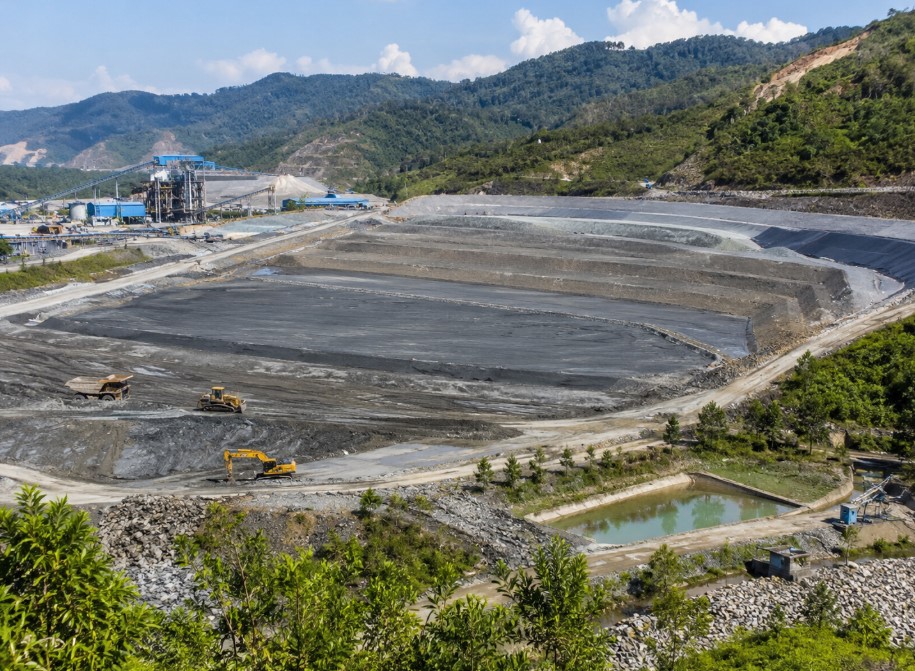
The problem of processing and stabilizing mining industry waste, particularly the so-called "tailings," is one of the most pressing environmental and economic challenges of our time. These wastes, generated in significant volumes after the extraction of valuable components from ore, often contain residues of chemical reagents, heavy metals, and other hazardous substances that can negatively impact the environment and human health. Their uncontrolled accumulation leads to soil degradation, contamination of water resources and atmospheric air, and occupies vast areas of land that could be used for other purposes.
That is why the development and implementation of effective technologies for managing such waste is a critically important task for ensuring the sustainable development of the mining industry. Modern approaches to the processing and stabilization of tailings are aimed not only at minimizing negative impacts on ecosystems but also at extracting residual valuable components or transforming them into useful materials, which reduces the volume of landfilling and creates new economic opportunities. A comprehensive approach to this problem, including scientific research, engineering solutions, and strict adherence to environmental standards, is the key to successful resolution.
Chemical Composition and Physical Properties of Tailings
Tailings are finely crushed rock remaining after the separation of target minerals from ore during the beneficiation process. Their chemical composition is extremely diverse and depends on the type of ore, beneficiation methods, and the specifics of the deposit. They usually consist of gangue minerals (quartz, feldspars, micas), small residues of target minerals, and reagents used in the beneficiation process (flotation reagents, coagulants, flocculants). Sulfide minerals are often present in tailings, which, upon contact with air and water, can oxidize, forming acidic drainage waters that are a source of heavy metal pollution. This makes their management similar to that of other complex wastes, such as "Asbestos-containing waste in asbestos cement production," where it is also important to consider the potential toxicity of the components.
The physical properties of tailings also vary: they can be finely dispersed (silty), sandy, or coarse-grained. Particle size significantly affects their stability, filtration properties, and potential for further processing. For example, finely dispersed tailings are difficult to dewater, and their specific surface area promotes more active interaction with the environment and the release of harmful substances. High moisture content and low strength are typical for many types of tailings, complicating their storage and requiring the application of special stabilization technologies, such as cementation or geosynthetic barriers. Understanding these characteristics is key to choosing optimal waste management methods.
Innovative Tailings Processing Technologies for Secondary Use
Modern tailings processing technologies are aimed at maximizing the extraction of valuable components and transforming waste into resources. One of the main directions is the additional extraction of metals, such as copper, zinc, lead, and rare earth elements, that remain in the tailings. For this, advanced methods of flotation, gravity concentration, magnetic separation, as well as hydrometallurgical processes, including leaching, are used. The development of technologies allows rethinking tailings as raw materials, not just waste. Some companies successfully extract even gold and silver from tailings, which was previously considered economically unfeasible.
Another important direction is the use of stabilized tailings in construction and for the reclamation of disturbed lands. After appropriate treatment (e.g., mixing with cement, lime, or other binders), tailings can be used as aggregate for concrete, components for bricks, road surfacing, or for creating artificial soils. This approach is similar to using "Concrete, bricks, facing tiles and ceramics Waste Code 17 01" as secondary raw materials, where construction waste finds new life. Such solutions not only reduce the volume of waste requiring disposal but also reduce the need for quarrying natural building materials, contributing to a circular economy. The potential of tailings as secondary raw materials is enormous and constantly being researched.
Environmentally Safe Management of Mining Industry Waste
Effective management of mining industry waste requires strict adherence to environmental norms and rules. Tailings, depending on their composition and potential hazard, are classified according to the National Waste List (NWL). For example, tailings containing hazardous substances or having increased acidity may be classified as hazardous waste, such as 01 03 04* (wastes generating acidic drainage waters from the processing of metallic minerals) or 01 03 05* (other wastes from the processing of metallic minerals containing hazardous substances). Proper identification and classification are the first step to safe handling, which is also important for other waste categories, as in the case of "Batteries and accumulators as hazardous waste: effective management for environmental protection."
The company UtilVtorProm provides comprehensive environmental services to enterprises, including the collection, transportation, storage, and processing of mining industry waste. We understand the specifics and risks associated with tailings and offer individual solutions for each client. Our specialists ensure full compliance with all regulatory requirements, minimizing environmental risks and ensuring the legality of all operations. This includes developing waste management projects, monitoring the state of the environment, and implementing the best available technologies for their stabilization and processing, which helps enterprises avoid fines and improve their environmental reputation. Our goal is to ensure responsible and environmentally conscious management of all types of industrial waste.
Partnership with UtilVtorProm for Sustainable Development of the Mining Industry
Cooperation with UtilVtorProm is a choice of a reliable and professional partner in the field of mining industry waste management. We have all the necessary licenses and permits to carry out activities, which guarantees the legality and safety of all stages of waste handling. Our team of experts possesses deep knowledge and many years of experience in developing and implementing effective solutions for the processing and stabilization of tailings, as well as other industrial waste. We strive for innovation and constantly improve our technologies to offer clients the most modern and environmentally safe waste management methods. By contacting UtilVtorProm, you receive a comprehensive approach, individual solutions, and a guarantee of adherence to the highest standards of quality and environmental safety. Contact us today to discuss your needs and find optimal solutions for your enterprise.