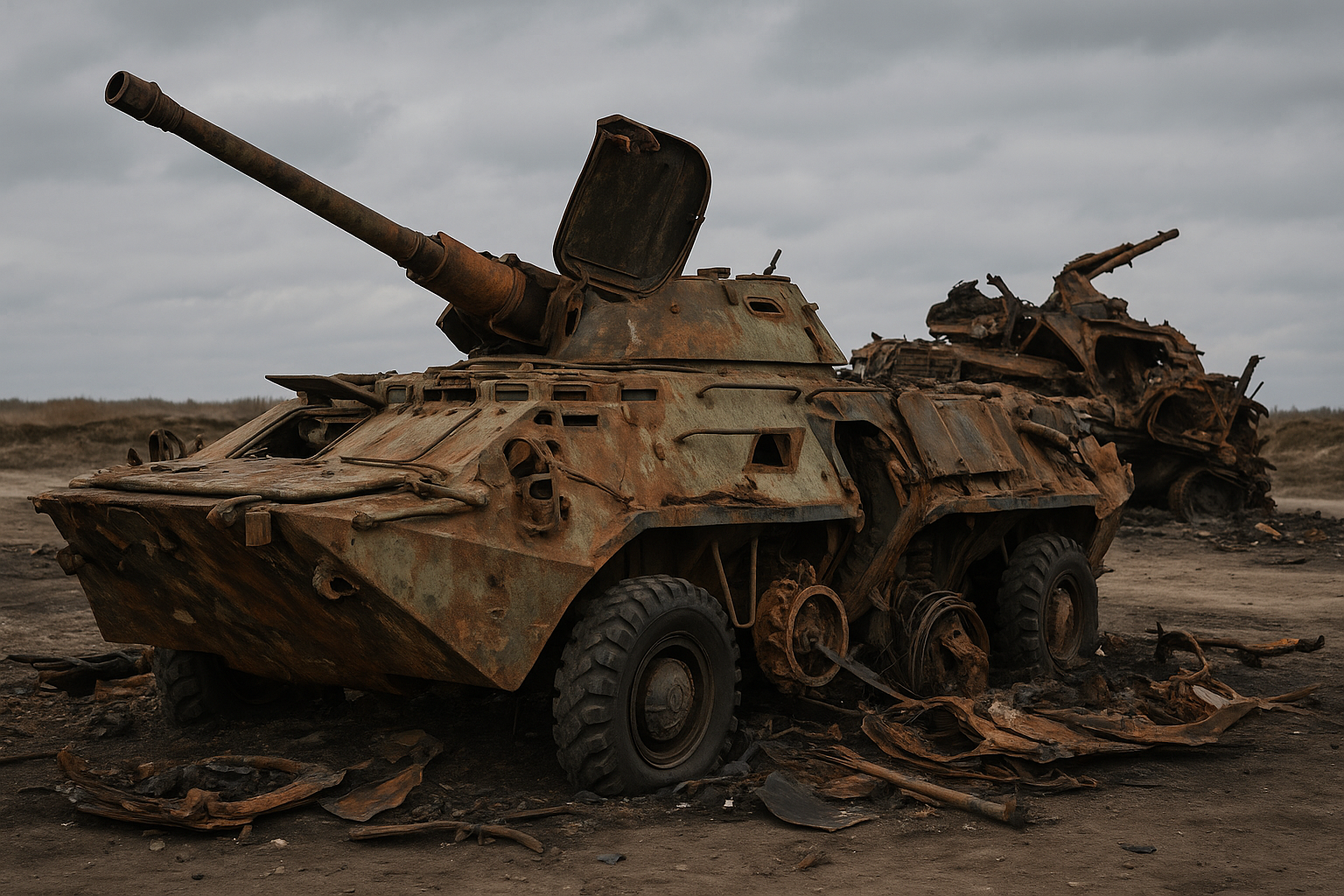
Destroyed military equipment (16 12 50)* often contains hazardous materials such as fuel residues, lubricants, explosives, batteries, and heavy metals.
Hazardous waste management includes analysis of the equipment and classification of all hazardous components.
Handling of hazardous waste starts with draining fluids, dismantling dangerous systems, and isolating contaminated parts.
Environmental servicing of enterprises working in this area includes:
- monitoring contaminated areas
- inventorying hazardous substances
- reporting to environmental authorities
Storage of hazardous waste should be carried out in sealed containers on secure, controlled sites.
Transportation of hazardous waste requires licensed carriers using sealed vehicles and proper documentation.
Processing of hazardous waste involves thermal treatment, chemical neutralization, and battery recycling at certified facilities.
Key risks include:
- fuel leakage into the soil
- residual explosives in weapon systems
- toxic exposure to workers and the environment
Safe handling of hazardous waste prevents environmental disasters and protects human life.
Ongoing environmental servicing of enterprises is essential to maintaining community and environmental safety.