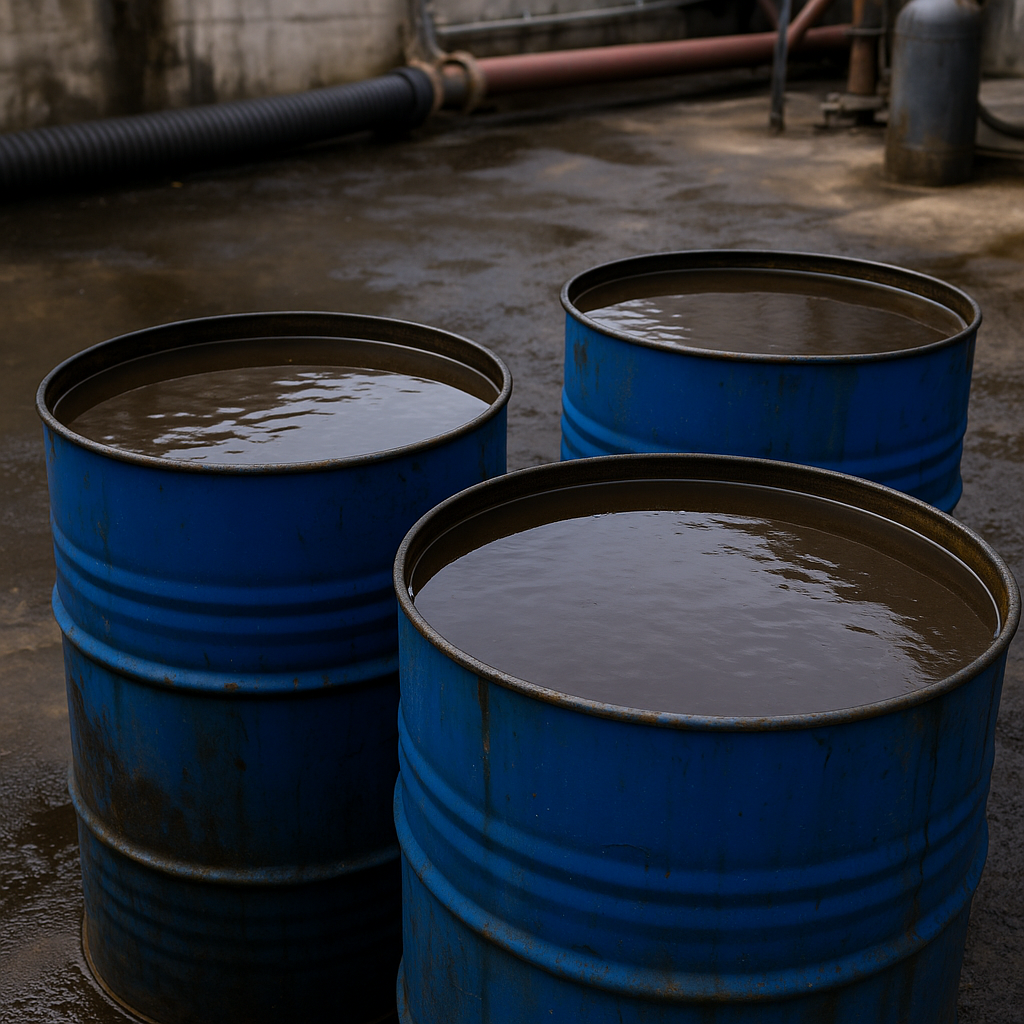
Aqueous liquid waste from gas treatment and similar waste (19 01 06)* is generated during gas scrubbing, filtration, or neutralization processes and can contain heavy metals, acids, and other contaminants.
Hazardous waste management involves identifying the chemical makeup, tracking volumes, and routing materials for compliant handling.
Handling of hazardous waste requires leak-proof systems and isolation from drains, soil, and public waterways.
Environmental servicing for enterprises includes routine sampling, filter maintenance, and optimization of gas treatment systems.
Storage of hazardous waste must use sealed tanks with leak detection systems and secondary containment infrastructure.
Transportation of hazardous waste must involve:
- corrosion-resistant tankers
- sealed valves and pressure relief systems
- temperature and pressure monitoring
Processing of hazardous waste may include chemical neutralization, sedimentation, membrane separation, or controlled evaporation.
Main risks include:
- spills or tank ruptures
- toxic reactions during improper mixing
- contamination of groundwater or rivers
Safe handling of hazardous waste involves automated monitoring, staff training, and certified processing routes.
Ongoing environmental servicing of enterprises ensures regulatory compliance and minimizes environmental liabilities.