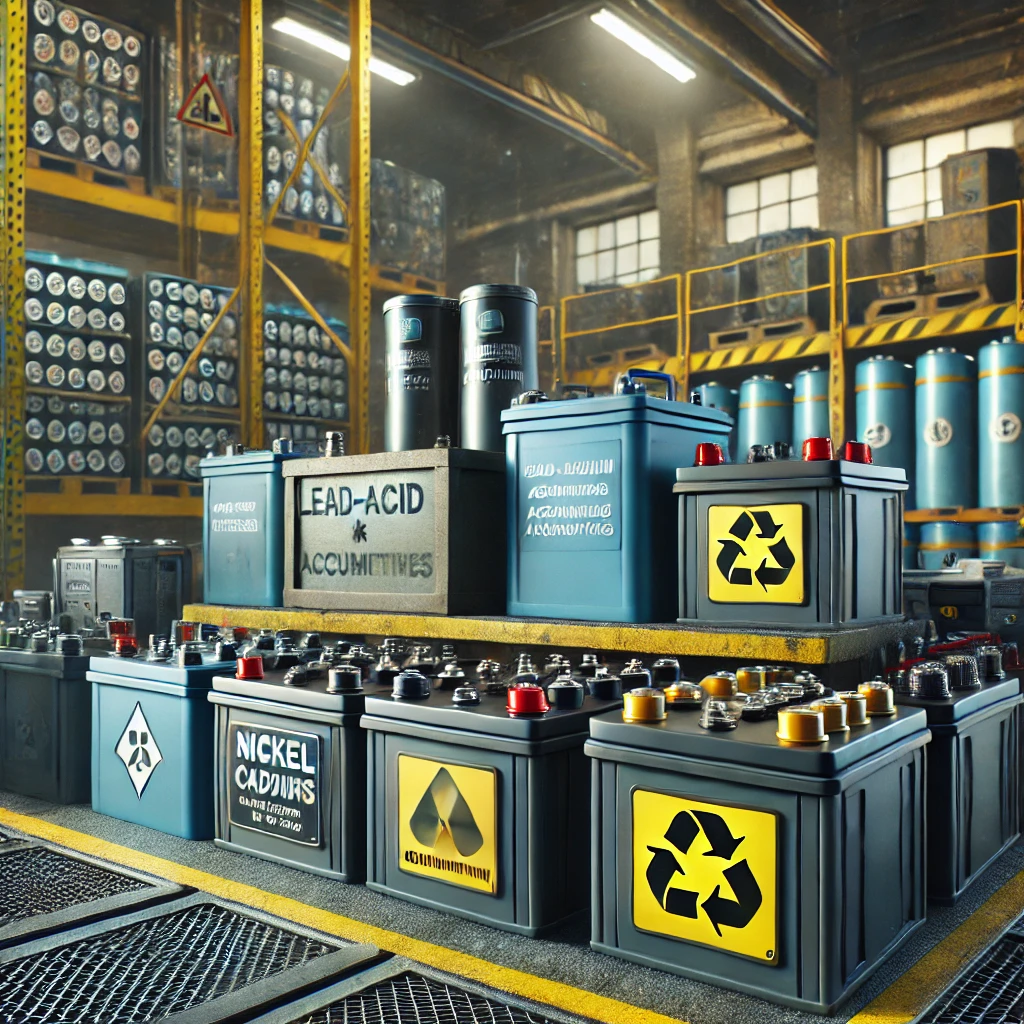
Batteries and accumulators (code 16 06 01*, 16 06 02*, 16 06 03*) are an essential part of modern life, but once their service life ends, they become hazardous waste. This is especially true for elements containing heavy metals such as lead, mercury, and cadmium. Improper handling of such materials can cause significant harm to the environment and human health.
Hazardous batteries and accumulators classified under code 20 01 33* include:
- lead-acid batteries
- nickel-cadmium accumulators
- lithium-ion power cells
- mixed and unsorted batteries
Proper hazardous waste management consists of several key steps. The first step is organizing the safe storage of hazardous waste. It is important to use airtight containers to prevent toxic leaks and exposure to moisture.
The next stage is the transportation of hazardous waste to specialized facilities. Certified vehicles that meet environmental standards must be used for this purpose. In the case of batteries and accumulators, proper container labeling and documentation must be ensured.
The following step is hazardous waste recycling. This process allows the extraction of valuable metals and reduces the amount of toxic substances that could enter the environment. Recovered materials are often used in the production of new batteries, contributing to resource conservation.
Environmental servicing for businesses includes the development of comprehensive solutions to reduce the number of hazardous batteries in waste streams. This may involve setting up collection systems for used batteries, training personnel, and monitoring safe storage and transportation processes.
The main risks of improper hazardous waste handling include:
- soil and water contamination with heavy metals
- negative impact on human health due to inhalation of toxic fumes
- increased risk of lithium battery fires when physically damaged
To minimize these threats, effective hazardous waste handling strategies must be implemented. Collaborating with reliable companies specializing in the transportation and recycling of such materials is highly recommended.
Adhering to environmental regulations not only helps avoid fines but also promotes responsible resource use. Effective hazardous waste management reduces the negative impact on the environment and makes industrial operations more environmentally sustainable.