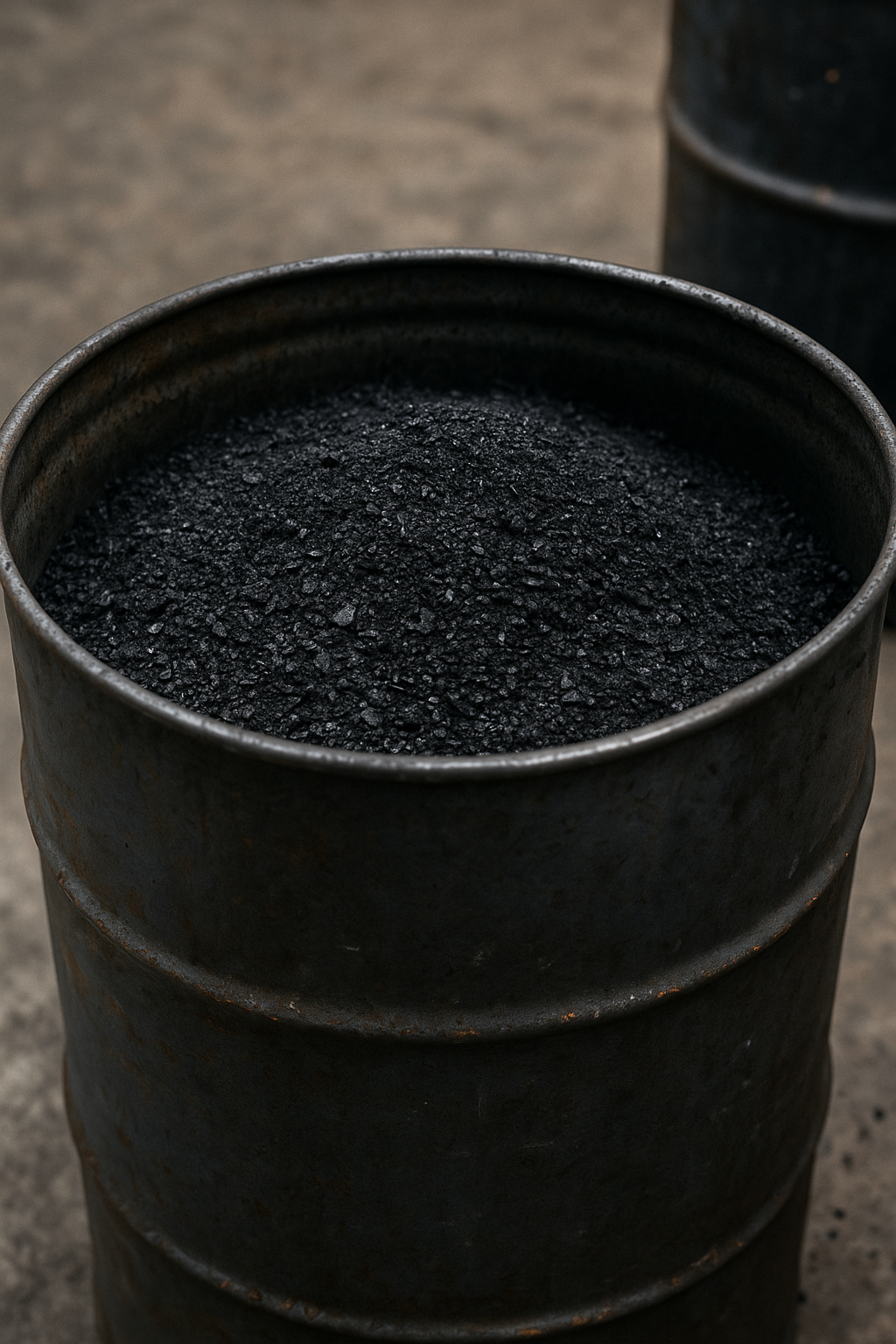
Spent activated carbon from flue gas treatment (19 01 10)* is classified as hazardous due to the accumulation of toxic compounds, including heavy metals and carcinogenic gases.
Hazardous waste management begins with material analysis, proper labeling, and documentation for regulatory control.
Handling of hazardous waste like saturated carbon demands sealed systems and strict personal safety protocols.
Environmental servicing of enterprises includes sampling, waste tracking, and regulatory reporting to minimize environmental risks.
Storage of hazardous waste involves use of sealed containers with vapor control and inert gas to avoid emissions.
Transportation of hazardous waste must be managed carefully with the following safeguards:
- certified packaging
- airtight, temperature-resistant containers
- continuous monitoring of seal integrity
Processing of hazardous waste may include thermal destruction, chemical neutralization, or stabilization before secure disposal.
Key risks include:
- release of dioxins and VOCs under heat
- high concentration of carcinogens
- flammability under enclosed pressure
Comprehensive handling of hazardous waste requires trained personnel, safety infrastructure, and regulatory alignment.
Sustainable environmental servicing for enterprises ensures legal compliance and reduces toxic exposure risks.