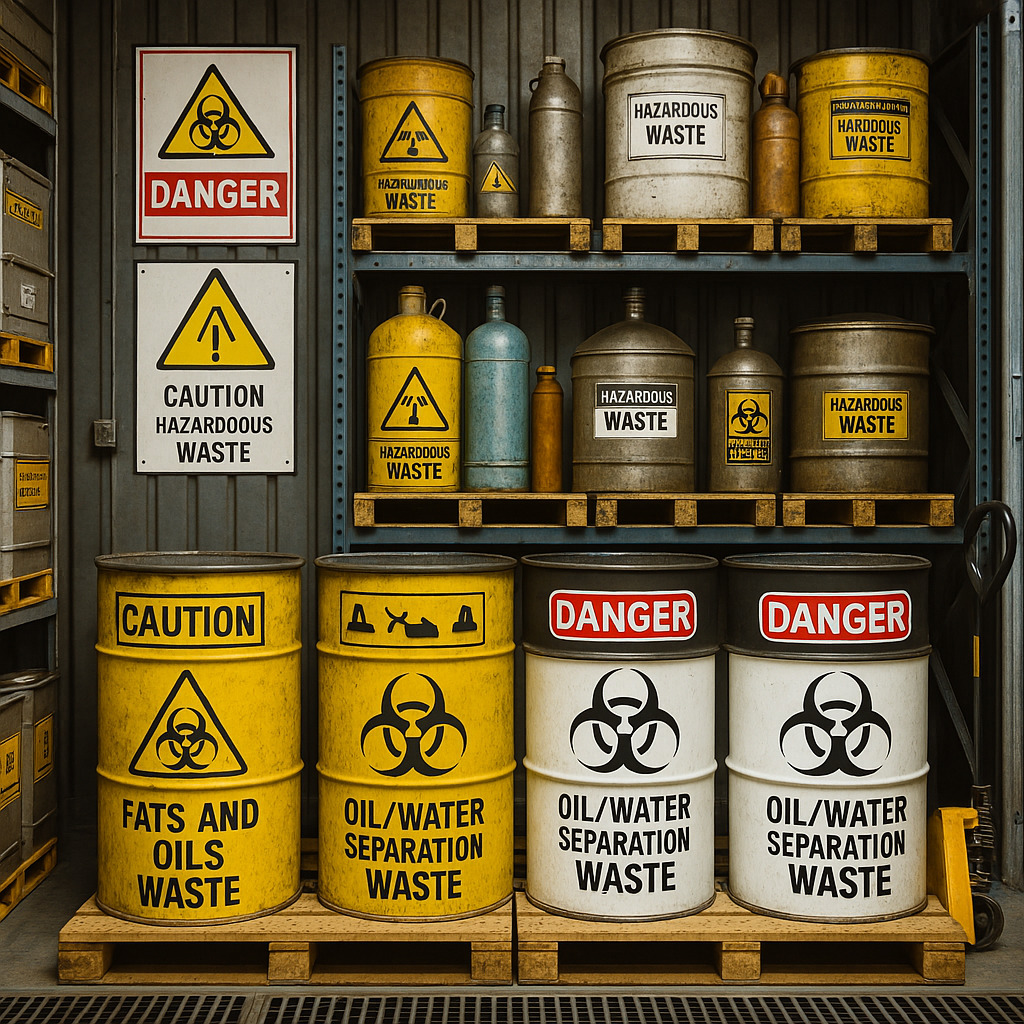
Fats and oil mixtures from oil-water separation other than those listed under code 19 08 09 (code 19 08 10*) are generated at wastewater treatment plants from food, petrochemical, and industrial sources.
Hazardous waste management of these substances is essential to prevent equipment damage and environmental pollution.
These wastes include:
- animal and vegetable fats
- mineral oil residues
- surfactants and emulsifiers
- emulsified hazardous substances
Hazardous waste handling involves dewatering, centrifugation, and separation of oil from water.
Hazardous waste storage must use sealed, lightproof containers to prevent decomposition and gas emissions.
Hazardous waste transportation requires heat-resistant tankers with documentation.
Hazardous waste recycling options include chemical treatment, biological processing, or high-temperature incineration.
Environmental servicing should include audits, oil separation maintenance, and staff training.
Risks of mishandling include:
- contamination of soil and water
- sewage clogging
- gas buildup and explosion risk
- foul odors and pathogen spread