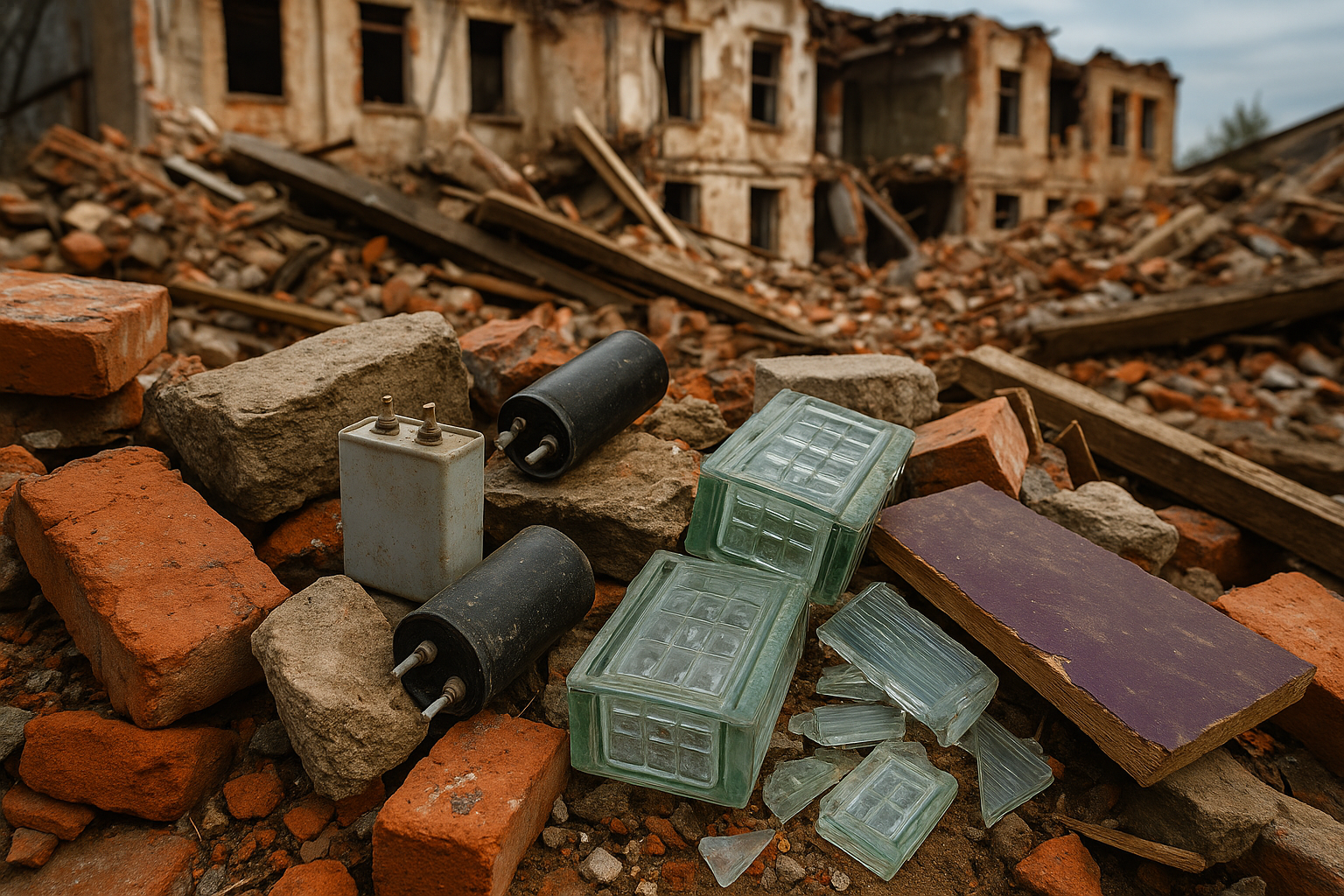
Construction and demolition waste containing PCB-based insulators, resin-based flooring, glass block sealants, and capacitors (17 09 02)* is classified as highly hazardous due to persistent organic pollutants — polychlorinated biphenyls (PCBs).
Hazardous waste management must begin with identifying buildings constructed before the 1990s and confirming the presence of PCBs.
Handling of hazardous waste requires manual dismantling, safe packaging, and total avoidance of air exposure.
Environmental servicing of enterprises includes:
- air and surface sampling for PCBs
- tracking and recording each extracted component
- cooperation with licensed PCB disposal firms
Storage of hazardous waste must be:
- in triple-layer sealed containers
- located in ventilated, secure areas
- under constant temperature and contamination control
Transportation of hazardous waste must comply with certification, packaging, and documentation standards, ensuring no leaks or breaches.
Processing of hazardous waste is done through thermal destruction or chemical breakdown of PCB molecules.
Risks include:
- toxic vapor release
- groundwater contamination
- bioaccumulation in the food chain
Safe handling of hazardous waste requires technical expertise and total control.
Robust environmental servicing of enterprises working with PCB-containing materials ensures ecological and human safety.