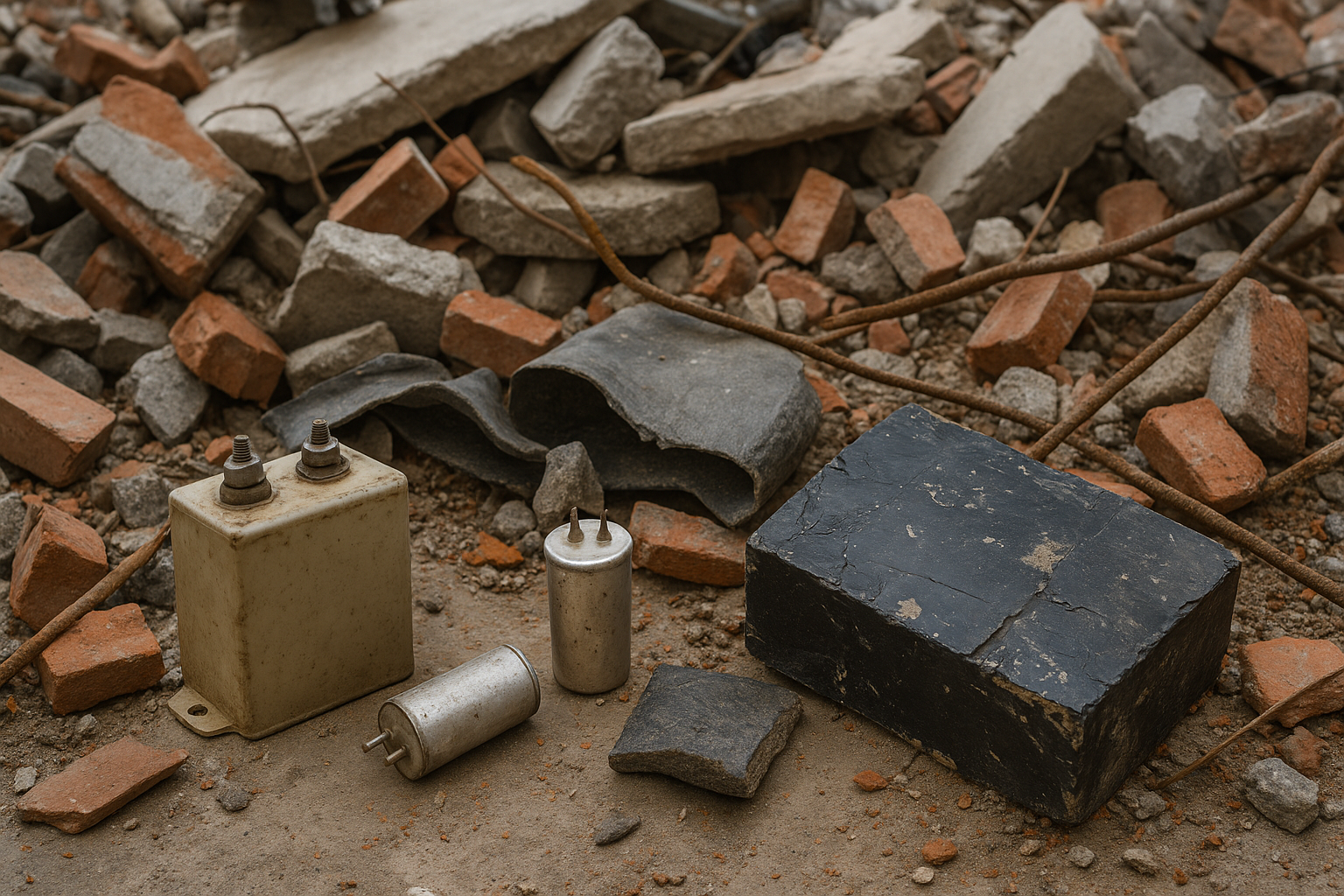
Demolition waste containing PCB-based insulators, floor coatings, and capacitors (16 12 34)* poses a significant hazard due to the toxicity of polychlorinated biphenyls (PCBs).
Hazardous waste management starts with identifying and isolating PCB-containing components from general demolition debris.
Handling of hazardous waste requires careful dismantling to prevent the release of toxic particles and vapors.
Environmental servicing of enterprises should include:
- pre-demolition environmental audits
- monitoring of dismantled components
- reporting to regulatory agencies
Storage of hazardous waste takes place in sealed containers within controlled access zones.
Transportation of hazardous waste follows international safety standards using certified transport and sealed containers.
Processing of hazardous waste includes thermal treatment and chemical neutralization of PCBs.
Key risks include:
- PCB leakage into soil and water
- toxic vapor emissions
- bioaccumulation of PCBs in food chains
Responsible handling of hazardous waste minimizes risks to people and the environment.
Continuous environmental servicing of enterprises aligns with global sustainability and safety standards.