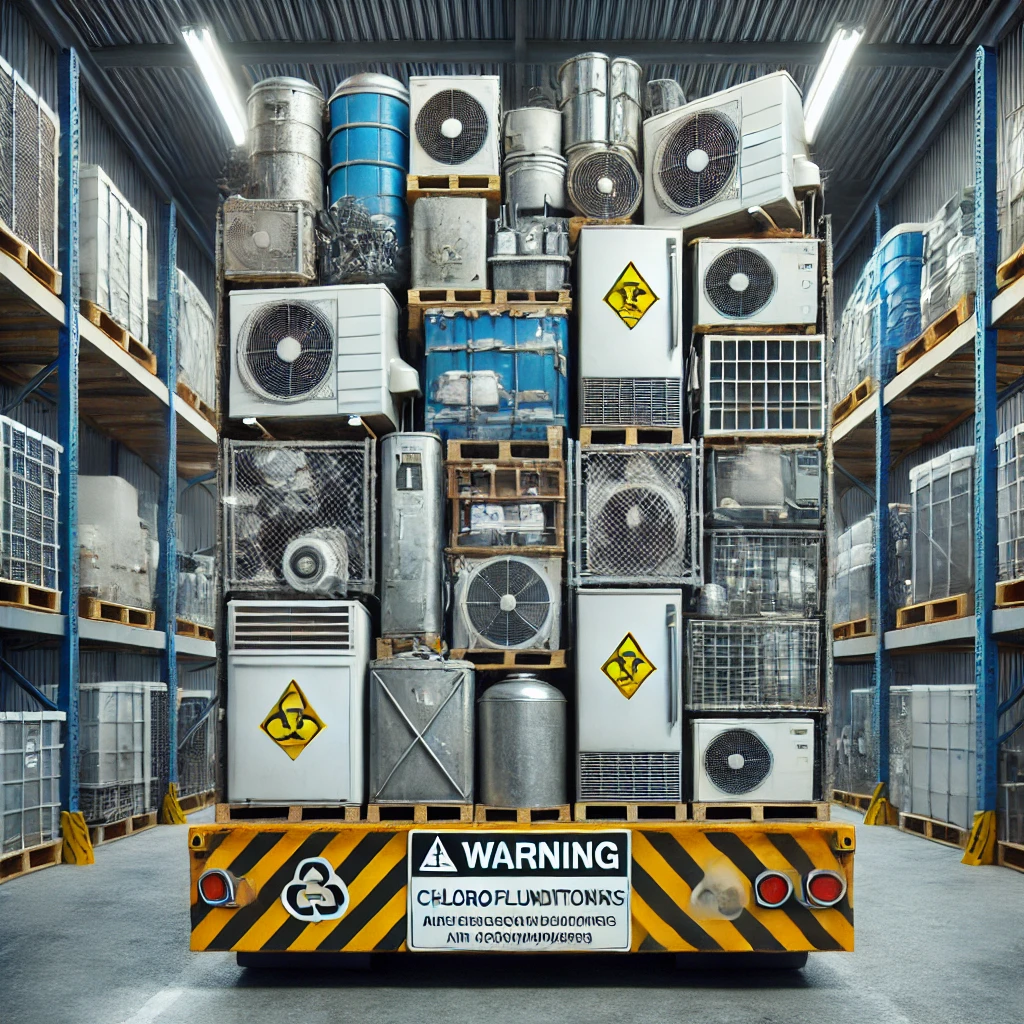
Waste from equipment containing chlorofluorocarbons (code 20 01 23*) poses a significant threat to the environment due to gas emissions that contribute to ozone depletion and increased greenhouse effects. Such waste includes refrigerators, air conditioners, industrial cooling systems, and other equipment that operates on refrigerants.
Hazardous waste management of this category requires strict control and specialized processing methods. If equipment containing chlorofluorocarbons is not properly dismantled and treated, harmful substances may leak into the atmosphere, even after the equipment is decommissioned.
Key sources of this waste include:
- old household refrigerators and freezers
- air conditioners and climate control systems
- industrial refrigeration units
- insulation materials containing chlorofluorocarbons
Proper hazardous waste handling involves collecting equipment and inspecting it for hazardous substances. Before dismantling, it is essential to determine the type of chlorofluorocarbon used and select an appropriate method for its safe removal.
Hazardous waste storage for this type of material must be carried out in specially designated areas that prevent chemical leaks. Proper labeling of waste is also necessary to avoid accidental damage or mixing with other waste types.
Hazardous waste transportation of chlorofluorocarbon-containing equipment requires specialized vehicles that ensure the containment of harmful substances. Improper transport can lead to gas leaks and air contamination.
Hazardous waste recycling of this type involves extracting and neutralizing harmful gases before further material processing. Special technologies allow the safe removal of refrigerants, while the remaining equipment parts can be repurposed.
Environmental servicing for businesses plays a crucial role in reducing the amount of such waste. Implementing responsible collection and recycling programs for refrigeration equipment minimizes its environmental impact.
Key risks of improper handling of such hazardous waste include:
- chlorofluorocarbon emissions that deplete the ozone layer
- intensified greenhouse effects due to refrigerants released into the air
- fire hazards during improper dismantling of equipment
- worker exposure to toxic chemical substances
Following environmental regulations and utilizing modern hazardous waste recycling methods help minimize harmful effects and make the process safer for the environment.