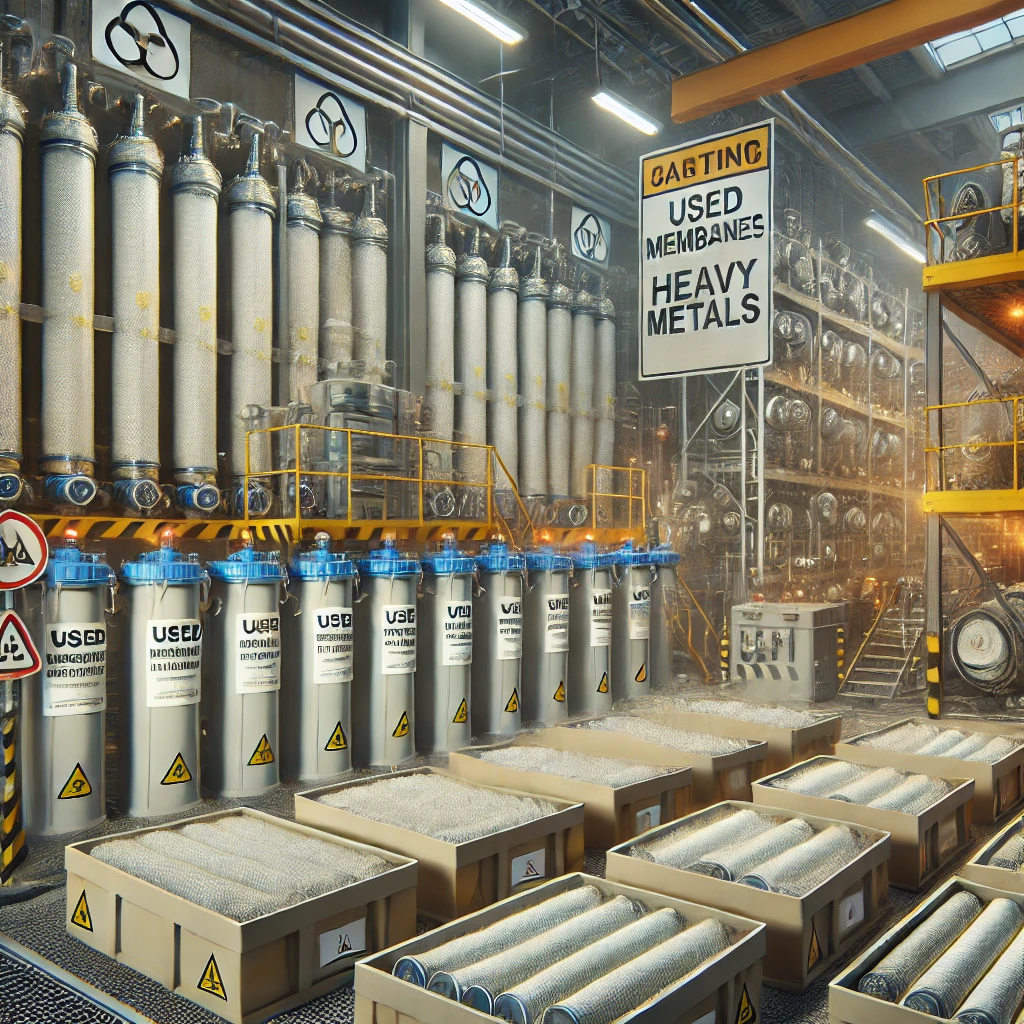
Waste from membrane systems containing heavy metals (code 19 08 08*) is generated during the operation of reverse osmosis, nanofiltration, and similar water purification systems. Membranes accumulate hazardous substances such as lead, cadmium, mercury, and chromium, which pose serious environmental and health risks.
Hazardous waste management of spent membranes is essential for companies using such filtration systems. Once exhausted, membranes lose functionality and become contamination sources.
Key characteristics of this waste include:
- presence of adsorbed heavy metals in membrane structures
- mix of organic and inorganic compounds
- susceptibility to physical and chemical degradation
- difficulty separating embedded contaminants
Hazardous waste handling of these materials requires proper labeling, isolation, and minimal exposure to external agents.
Hazardous waste storage must take place in sealed containers within designated zones, preventing the release of toxic metals.
Hazardous waste transportation requires corrosion-resistant containers and complete safety documentation.
Hazardous waste recycling options include: chemical extraction of metals, pyrolysis, or plasma treatment followed by safe stabilization.
Environmental servicing for companies using membrane systems should include regular replacement, analysis of accumulated waste, and safer process alternatives.
Improper handling risks include:
- heavy metal leakage into water or soil
- bioaccumulation in plants and animals
- health hazards from dust inhalation or skin contact
- formation of toxic compounds under sunlight or humidity
Innovative recycling technologies help minimize harm and ensure closed-loop, environmentally responsible operations.