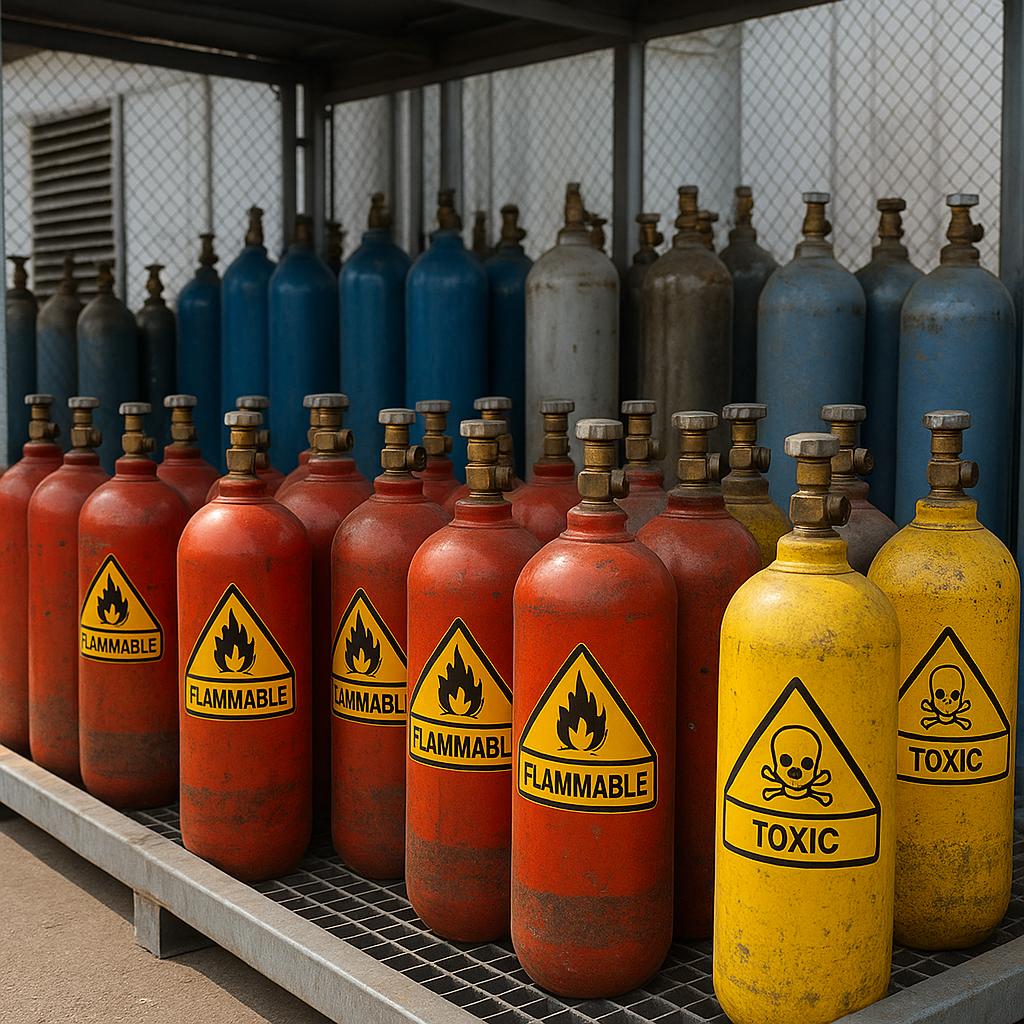
Pressurized gas containers containing hazardous substances (code 16 05 04*) are classified as highly hazardous waste due to the risks of explosion, fire, and poisoning.
Such waste requires thorough hazardous waste management considering the physical and chemical properties of gases, pressure, and container type.
Main risks during storage include:
- potential cylinder leakage;
- ignition or explosion in case of release;
- formation of toxic or explosive mixtures;
- risk of mechanical damage.
Systematic handling of hazardous waste gases involves regular cylinder inspections, pressure control, and clear labeling of all containers.
As part of environmental servicing of enterprises, gas storage facilities are audited, hazardous materials are inventoried, and container expiration dates are monitored.
Safe hazardous waste storage of gaseous materials requires placement in ventilated, isolated rooms away from heat and direct sunlight.
Secure hazardous waste transportation is carried out using specialized vehicles equipped with fixation systems, protective caps, and certified safety valves.
Modern hazardous waste processing of this type involves removing residual gas, degassing, washing cylinders, and conducting technical inspections.
Typical operations include:
- monitoring cylinder pressure levels;
- degassing using inert substances;
- gas recovery for reuse.
Companies handling pressurized gases must have emergency response plans including personnel evacuation and leak containment.
Special attention is given to worker training and provision of personal protective equipment.
Remote monitoring systems allow real-time tracking of pressure and temperature changes.
Integrating enterprise environmental servicing into waste management systems reduces industrial accident risks and increases environmental safety.
Thus, the control, storage, and processing of pressurized gases require both technological discipline and a responsible environmental approach.