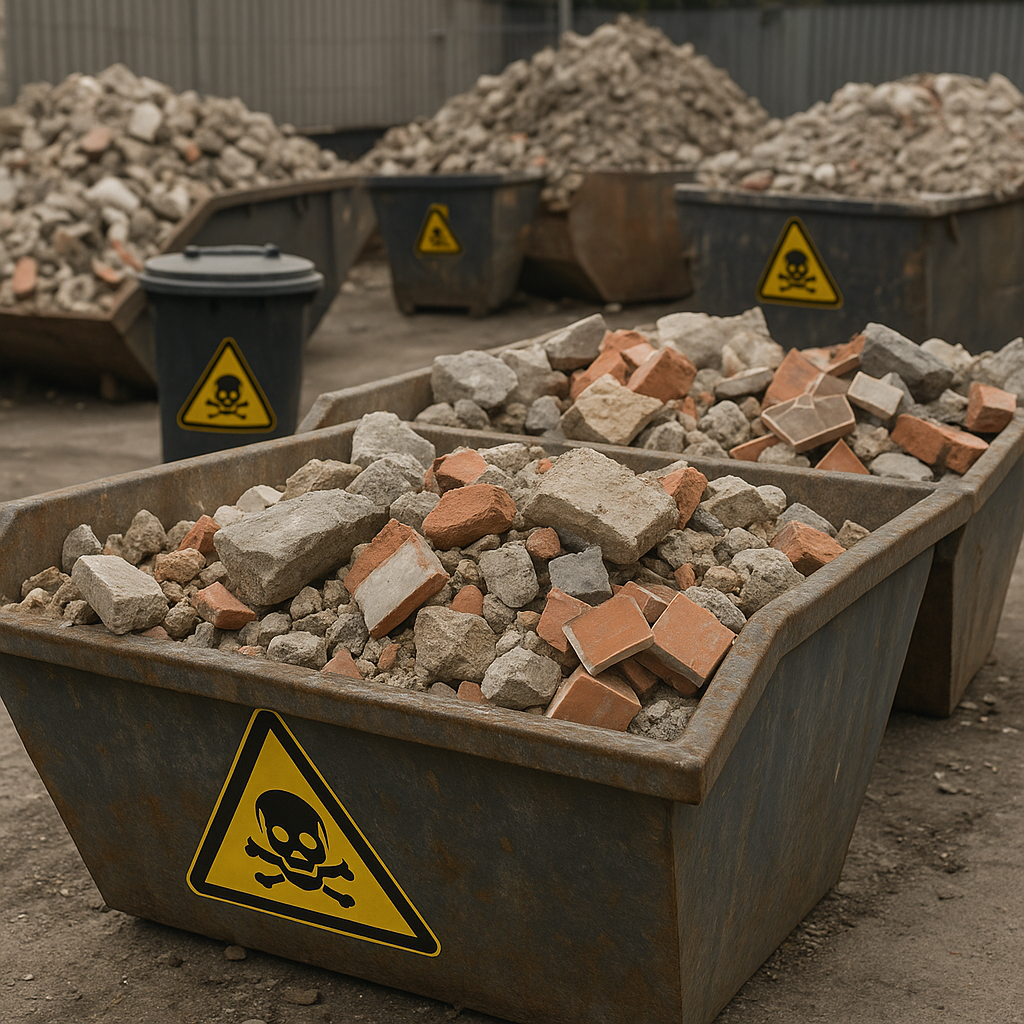
Concrete, bricks, tiles, and ceramics (code 16 12 04*, 17 01 06*) are considered hazardous waste due to toxic additives or contaminants.
Proper hazardous waste management minimizes risks to the environment and human health.
Key hazards include:
- soil and water contamination;
- accumulation of carcinogens;
- chemical reactions when mixed;
- risks for workers.
Effective handling of hazardous waste requires composition analysis, labeling, and proper processing plans.
Environmental servicing of enterprises ensures compliance at all stages of material handling.
Secure hazardous waste storage involves sealed containers and protected facilities.
Safe hazardous waste transportation requires certified packaging and vehicles.
Modern technologies enable hazardous waste processing, producing secondary raw materials.
Methods include:
- thermal treatment;
- chemical neutralization;
- stabilization techniques.
The main challenge is the large volume of contaminated building waste generated.
Systematic control is therefore essential.
Training personnel reduces risks of accidents.
A comprehensive approach strengthens corporate reputation and protects ecosystems.
Ultimately, safe handling of such waste contributes to sustainable development.