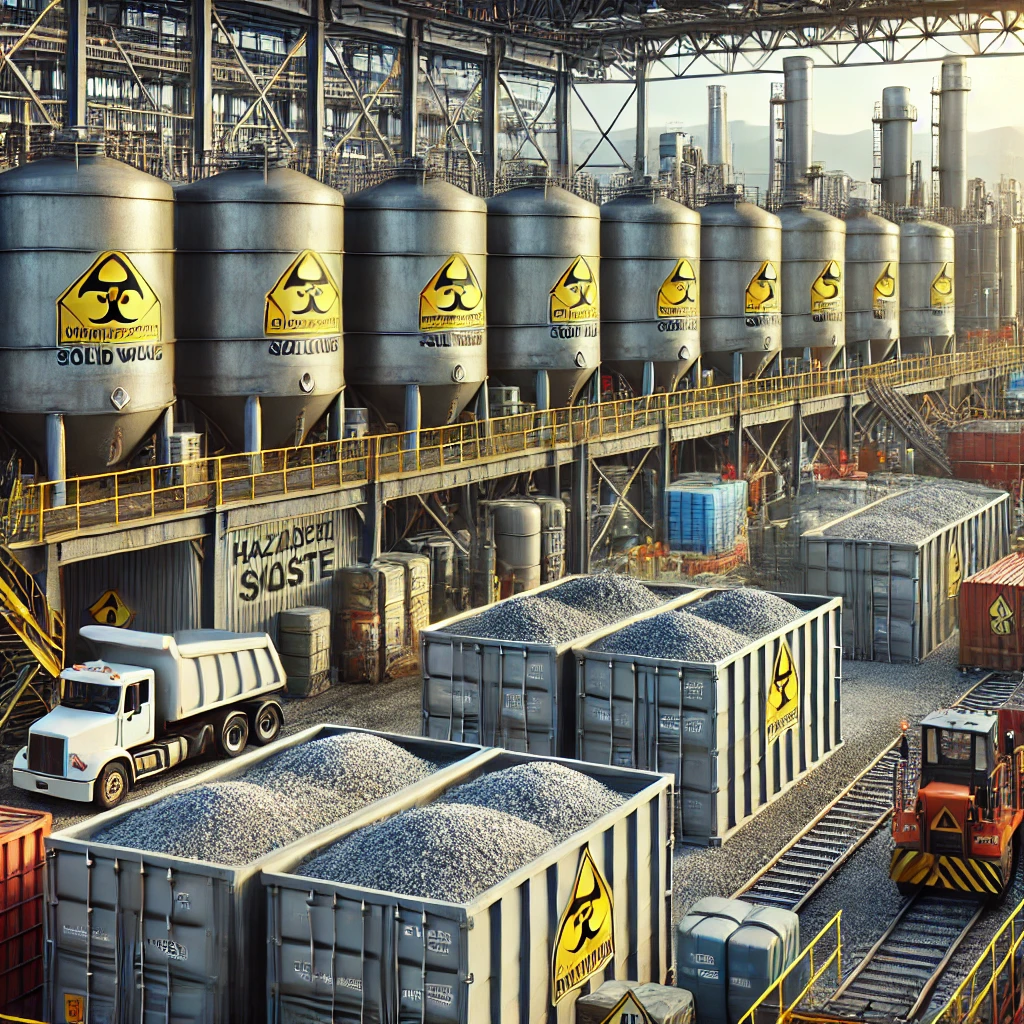
Solid waste from soil remediation containing hazardous substances (code 19 13 01*) is generated during mechanical, chemical, and thermal treatment of contaminated land. These materials may contain heavy metals, toxic organic compounds, petroleum residues, and other dangerous components that threaten the environment and human health.
Effective hazardous waste management for this category involves proper identification, sorting, and processing. This approach reduces the spread of toxic substances and minimizes their impact on ecosystems.
The main types of hazardous solid waste from soil remediation include:
- solid particles containing heavy metals, pesticides, and chemical reagents
- residual filtration materials used in soil purification
- contaminated clay and sandy masses extracted during cleaning processes
- residual products from thermal or biological soil treatment
Proper hazardous waste handling of this type requires strict monitoring and selection of optimal treatment methods. Uncontrolled storage of such waste can lead to secondary contamination of soil and water sources.
Hazardous waste storage for solid remediation waste should be conducted in specialized bunkers, sealed containers, or designated landfill sites equipped with leak prevention systems. Proper labeling of waste ensures safe further processing.
Hazardous waste transportation for solid waste must be carried out in sealed containers to prevent the spread of hazardous particles. Strict adherence to transport regulations reduces the risks associated with toxic material movement.
Hazardous waste recycling for solid residues includes chemical neutralization, thermal destruction, and stabilization of hazardous components. Some treated materials can be reused in industrial or construction applications.
Environmental servicing for enterprises involved in contaminated soil remediation should include strategies for reducing hazardous waste generation, implementing advanced purification technologies, and monitoring the quality of processed materials.
The main risks of improper hazardous waste handling for solid residues include:
- contamination of soil and water with heavy metals and toxic compounds
- air pollution from hazardous dust particles
- chemical reactions when interacting with other waste materials
- the need for specialized equipment for safe storage and transportation
Modern hazardous waste recycling technologies help reduce environmental damage and make soil remediation more sustainable and effective.